How’s Your Day Going: Meaning and How to Respond
You hear this question in everyday conversations, but knowing how to respond naturally is not always easy. The right reply can change based on the setting, the other person, and how much they really want to know. For English learners especially, small talk like this can feel harder than it looks. Understanding the phrase helps make daily interactions smoother and more comfortable.
Key Takeaways
- “How’s your day going” is a friendly, semi-formal conversational opener that asks about your day up to the present moment.
- People use it to show care, start small talk, or maintain social connection in casual, school, and workplace settings.
- Good responses depend on context, from short polite answers like “It’s going well, thanks” to slightly longer replies when the relationship is closer.
What It Means
Definition and Usage
“How is your day going?” is one of the most common English questions. It means “What has your day been like up to now?” or “How are things going today?” The phrase asks about the part of the day that has already happened and suggests that the day is still continuing.
Grammatically, it uses the present continuous tense: “is going.” In simple terms, that tense shows an action or situation in progress. So the speaker is asking about your day as it is unfolding right now, not only about a finished past event.
In real conversation, the full form is often shortened to “How’s your day going?” English also uses close variations such as “How’s your day so far?” “How are things going today?” and “How’s everything going?” If you are comparing common expressions, you may also notice that meaning depends on context, much like in short phrase guides such as safe travels meaning.
Typical Social Contexts
This question is a conversation opener. People use it to begin talking in a warm, easy way without asking something too personal. It often functions as a check-in, especially when someone wants to sound friendly rather than formal.
You will hear it in many places:
- between coworkers in workplace small talk
- from teachers, classmates, or staff at school
- between friends meeting during the day
- in customer service or client conversations
- in semi-formal email greetings or messages
The speaker’s intention matters. Sometimes they truly want details. Other times they simply want a polite exchange, similar to “How are you doing today?” In both cases, the question helps create social comfort and shows basic interest in the other person.
Common Response Examples
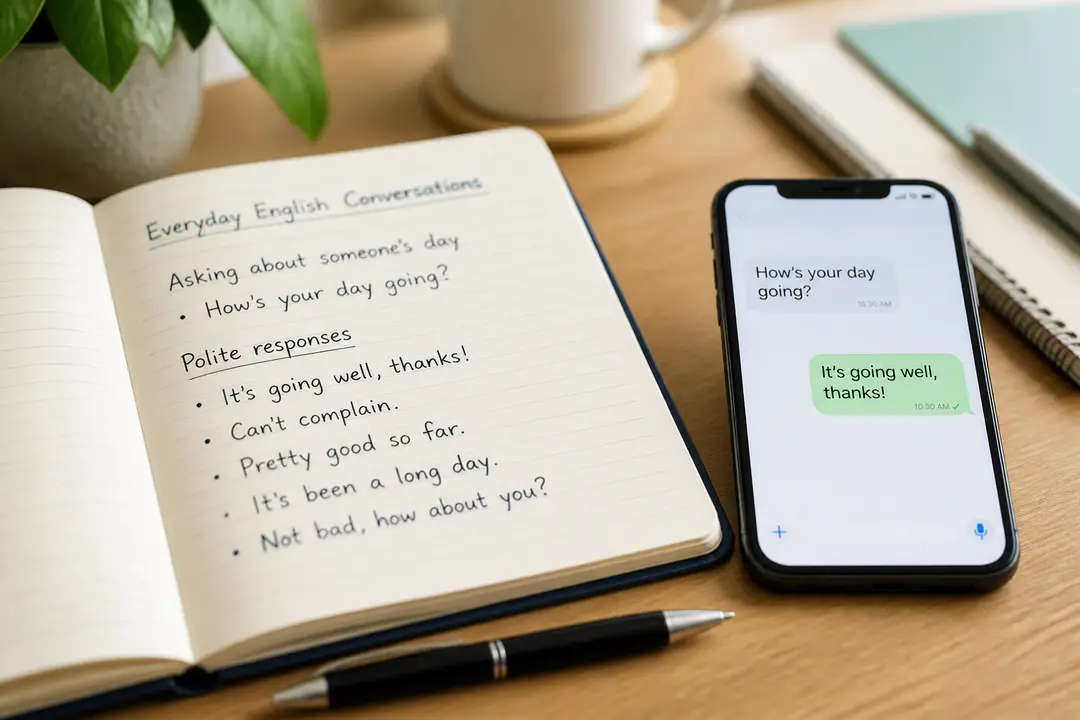
- Casual with friends: “Pretty good so far.”
- Casual with friends: “It’s going well. Just busy.”
- Casual with friends: “Not bad. I’ve been running around all morning.”
- Professional: “It’s going well, thank you. How about yours?”
- Professional: “Busy, but good so far.”
- Professional: “Good, thanks. I’ve had a full morning.”
- Semi-formal: “It’s been good, thanks for asking.”
- Semi-formal: “So far, so good.”
- If your day is difficult: “It’s been a bit hectic, but I’m managing.”
- If you want to stay private: “It’s going okay, thanks.”
| Context | Tone | Example response | Best use |
|---|---|---|---|
| Friend | Relaxed | “Pretty good. How about you?” | Everyday casual talk |
| Coworker | Polite | “It’s going well, thanks.” | Office small talk |
| Manager or client | Semi-formal | “Good, thank you. It’s been a productive day so far.” | Professional check-ins |
| Acquaintance | Neutral | “Not bad, thanks.” | Brief social exchange |
| Hard day | Honest but controlled | “A little busy, but I’m okay.” | When you want to be truthful without oversharing |
Tone and Intention
Tone changes what this question means. Said warmly, it shows real interest and invites a genuine answer. Said quickly in passing, it often works like small talk, where a short response is enough.
Listen for clues such as voice, facial expression, and situation. A close friend who stops and waits probably wants a real answer. A cashier, coworker in the hallway, or client at the start of a meeting often expects a polite, brief reply.
English has many phrases where tone carries meaning beyond the words themselves, which is also true in slang questions like what does ONB mean. With “How’s your day going,” tone tells you whether the speaker is making small talk or opening the door to a deeper conversation.
When to Elaborate or Keep It Brief
Keep your answer brief when the setting is professional, public, or rushed. In these moments, one sentence is usually enough. A simple reply such as “Good, thanks” or “Busy, but going well” sounds natural and polite.
Elaborate a little more when you know the person well, when they clearly sound interested, or when the conversation has time to continue. You can add one extra detail, such as “It’s going well. I finished a big project this morning.” That feels friendly without becoming too long.
A good rule is to match the relationship and the moment:
- If the person is a stranger or client, stay short and polite.
- If the person is a coworker or classmate, give a short answer with one detail.
- If the person is a close friend, you can be more honest and specific.
Etiquette
In English-speaking settings, this phrase is polite because it shows attention to the other person. Still, etiquette depends on formality, timing, and closeness. In many workplaces, the safest response is warm but controlled, especially in first meetings or client conversations.
These etiquette tips help:
- Answer the question before changing the topic.
- Add “thanks” in professional or semi-formal situations.
- Return the question if you want to keep the conversation balanced.
- Keep negative replies calm and brief unless the relationship is close.
- Notice whether the speaker is stopping to listen or simply greeting you in passing.
Related check-in phrases include “How’s your day been?” and “How’s your day so far?” The second one sounds especially natural when the day is not over yet. In polite exchanges, short meaning-based phrases often work this way, including common expressions like safe travels meaning, where tone adds warmth beyond the literal words.
Common Mistakes to Avoid
- Giving no answer at all: Ignoring the question can sound cold or rude.
- Oversharing immediately: Long personal details can feel uncomfortable in casual or workplace small talk.
- Sounding too negative: Replies like “Terrible” or “My day is awful” can make light conversation awkward unless the relationship is close.
- Using an overly formal reply: Something very stiff can sound unnatural in friendly conversation.
- Forgetting the social cue: If someone asks while walking past, they usually expect a short answer, not a long story.
- Not matching tone: A cheerful question often calls for a polite, steady response, even if your day is busy.
If you are choosing wording for work instead of small talk, a closing line like looking forward to working with you follows the same idea: match tone to the relationship and setting.
FAQs
Is “How’s your day going” the same as “How are you”?
Not exactly. “How are you” asks generally about your condition, while “How’s your day going” asks specifically about your day up to now.
Can I answer with just “Good”?
Yes. “Good,” “Pretty good,” or “It’s going well” are all natural short answers. In professional settings, adding “thanks” sounds more polished.
Is this phrase casual or formal?
It is usually casual to semi-formal. It works well with friends, classmates, coworkers, and many clients, but it is less formal than very traditional greetings.
What if my day is not going well?
You can be honest without being too heavy. Try replies like “A bit busy, but I’m okay” or “It’s been a long day, but I’m managing.”
Conclusion
“How’s your day going” is a polite, friendly conversational tool that helps people connect in everyday English. The best response depends on the context and your relationship with the other person. Adapting your answer to fit the moment will help you communicate more naturally and effectively.