

TYSM Meaning: Definition & Usage
TYSM meaning is “thank you so much”. It is a common acronym in texts, social media, and chat apps, used to express warm, enthusiastic gratitude in a quick way. People use it when a plain “thanks” feels a little too short or flat, especially in casual digital conversations.
In modern communication, TYSM signals more than speed. It often adds friendliness, appreciation, and emotional tone, which is why it remains popular across age groups, especially among younger users in the USA. You will see it in texting, comments, group chats, and even casual work messages.
What Does ‘TYSM’ Mean?
Full form
TYSM stands for “thank you so much”. It is a shorthand way to say sincere thanks without typing the full phrase. In everyday digital writing, it works as a fast, familiar expression of appreciation.
Tone and feeling
Compared with a simple “thanks,” TYSM feels warmer and more expressive. It often shows real excitement, relief, or affection. The exact tone depends on the message, but it usually sounds casual, friendly, and positive.
For example, “tysm for helping me” sounds more heartfelt than just “thanks.” If someone adds emojis, the tone can feel even softer or more cheerful, such as “tysm 😊” or “TYSM!!!” That extra style helps show personality and social connection, not just convenience.
Where it came from
TYSM grew out of early internet chatrooms and SMS culture in the late 1990s and early 2000s. It developed from “TY”, which already meant “thank you,” and added “so much” for stronger emphasis. That history explains why it still feels natural in fast online conversations today.
How people read it
Most readers understand TYSM immediately, especially on platforms like Instagram, TikTok, Discord, WhatsApp, X, and Slack. It has also crossed language boundaries, so many non-English-speaking users recognize it in online spaces. If you are chatting casually, most people will read it as genuine and upbeat.
In very formal situations, though, spelling out “thank you so much” is usually better. TYSM fits casual communication best, while a full phrase sounds more polished in academic, professional, or official writing.
- Meaning: thank you so much
- Main purpose: quick but warm gratitude
- Common tone: casual, friendly, appreciative
- Best setting: texts, comments, chats, and informal work messages
Where TYSM Is Used
Casual chats
TYSM is most common in personal texting and social messaging. People use it after getting help, advice, gifts, reminders, or emotional support. In these settings, it sounds natural and easy.
Social platforms
On social media, TYSM often appears in replies, comments, and direct messages. A person might thank someone for a compliment, a repost, or useful information. If you want another quick example of casual online use, this guide to SM in text shows how short forms depend on platform and tone.
Work chats
TYSM also appears in informal team chats, especially when coworkers already have a relaxed tone. It can work in Slack or messaging threads when the environment is friendly. In a formal email to a manager or client, use the full phrase instead.
Basic etiquette
- Use TYSM with friends, classmates, teammates, and familiar coworkers.
- Use full wording in formal emails, applications, or official requests.
- Add emojis only when the conversation already feels casual.
- Use all caps sparingly, since “TYSM!!!” can sound extra excited.
Examples of ‘TYSM’ in Sentences
Everyday message examples
- Hey, I finally got the tickets! tysm for helping me find them!
- Just got my exam results back! tysm for all your support.
- TYSM, you saved me!
- TYSM for the notes you saved me.
- Tysm that tip actually worked.
- tysm for reminding me about the meeting.
- Omg tysm for sending that link so fast.
How tone changes the meaning
These examples all express thanks, but the feeling changes slightly with context. “TYSM, you saved me!” sounds excited and relieved, while “tysm for the notes” sounds appreciative and friendly. A phrase can carry emotion in the same way that it means a lot to me adds warmth beyond a basic thank-you.
Common mistakes to avoid
- Do not use TYSM in very formal writing unless the situation is clearly casual.
- Do not assume it fits every audience; some readers prefer full words in professional settings.
- Do not overuse it in one conversation, or it can start to feel automatic.
Similar Terms
Quick options
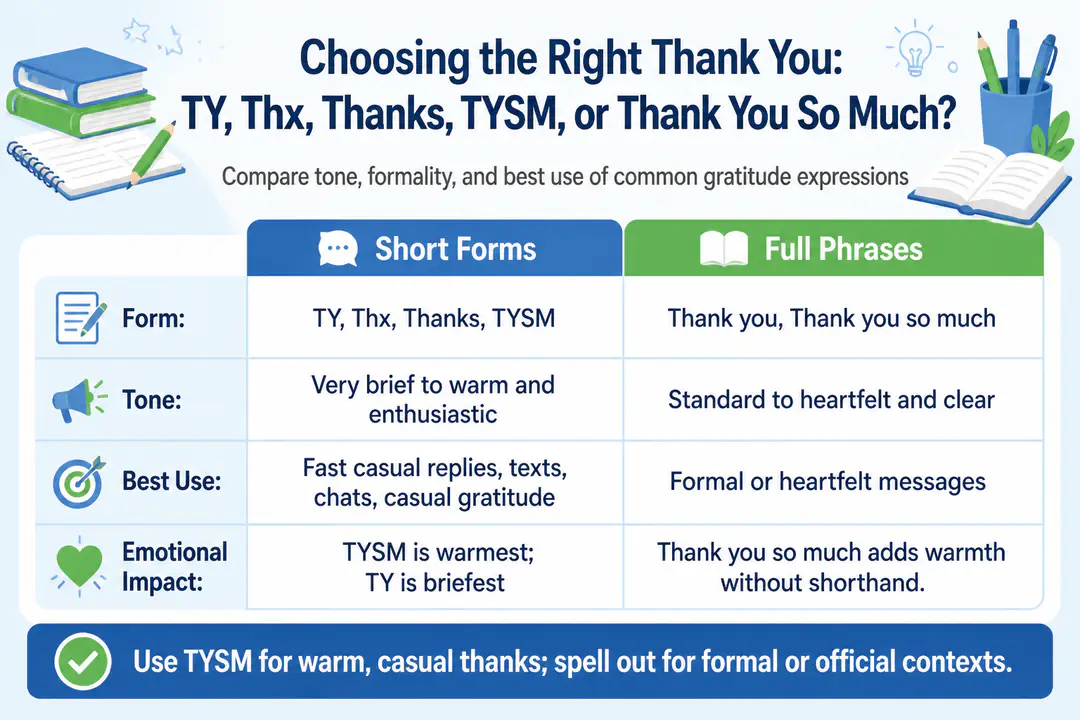
- TY – very short for “thank you”; less emotional than TYSM
- Thx – casual and common; slightly more neutral
- Thanks – simple, clear, and versatile
- Thank you – more standard and polished
- Thank you so much – best when you want warmth without shorthand
When to choose each one
Use TY when speed matters most. Use thx or thanks when you want a casual but less emotional tone. Use TYSM when you want your gratitude to feel stronger and more personal, which is why it often appears in guides about TYSM in chat and similar message shorthand.
| Form | Tone | Best Use |
|---|---|---|
| TY | Very brief | Fast casual replies |
| Thx | Casual | Texts and quick chats |
| Thanks | Neutral-friendly | Most everyday situations |
| TYSM | Warm and enthusiastic | Casual gratitude with emphasis |
| Thank you so much | Warm and clear | Formal or heartfelt messages |
FAQs
Is TYSM rude or polite?
TYSM is polite in casual digital communication. It shows appreciation clearly, but it is too informal for some professional or official situations.
Can I use TYSM at work?
Yes, in relaxed work chats it can sound friendly and natural. In formal emails or messages to clients, write out “thank you so much” instead.
Does TYSM mean more than thanks?
Yes. TYSM usually feels warmer and more emotional than a plain “thanks,” which is why people use it when they want extra emphasis.
Do people still use TYSM?
Yes. It remains widely used across texting apps, social media platforms, and chat spaces, especially among Gen Z and Millennials.
Conclusion
TYSM is a useful shorthand for casual digital conversations when you want your thanks to sound quick, warm, and sincere.