Have a Great Weekend: Meaning and Proper Use
Have a great weekend means that you hope someone enjoys their weekend. It is a friendly, positive phrase often used at the end of a conversation, message, or email, especially on Friday or before a break. People say it to coworkers, classmates, clients, friends, and others when they do not expect to see them again until after the weekend.
The phrase is simple, polite, and widely understood in everyday English. It works well in both casual and semi-formal situations, though the exact tone can change depending on the words around it. If you want to sound warmer, more enthusiastic, or more relaxed, you can choose a slightly different version.
What Does ‘Have a Great Weekend’ Mean?
Basic meaning
At its core, have a great weekend is a good wish. You are telling someone that you hope their weekend is pleasant, enjoyable, or restful. It does not describe your own plans. Instead, it shows friendliness and consideration toward the other person.
The phrase is very close in meaning to “have a good weekend.” The word “great” simply adds a little more energy and positivity. In that way, it sounds slightly more enthusiastic than “good,” but both expressions serve the same purpose.
Tone and intent
The tone is usually warm, polite, and natural. In a workplace, it can help end a conversation on a friendly note. In personal communication, it can sound caring without becoming too emotional or too formal.
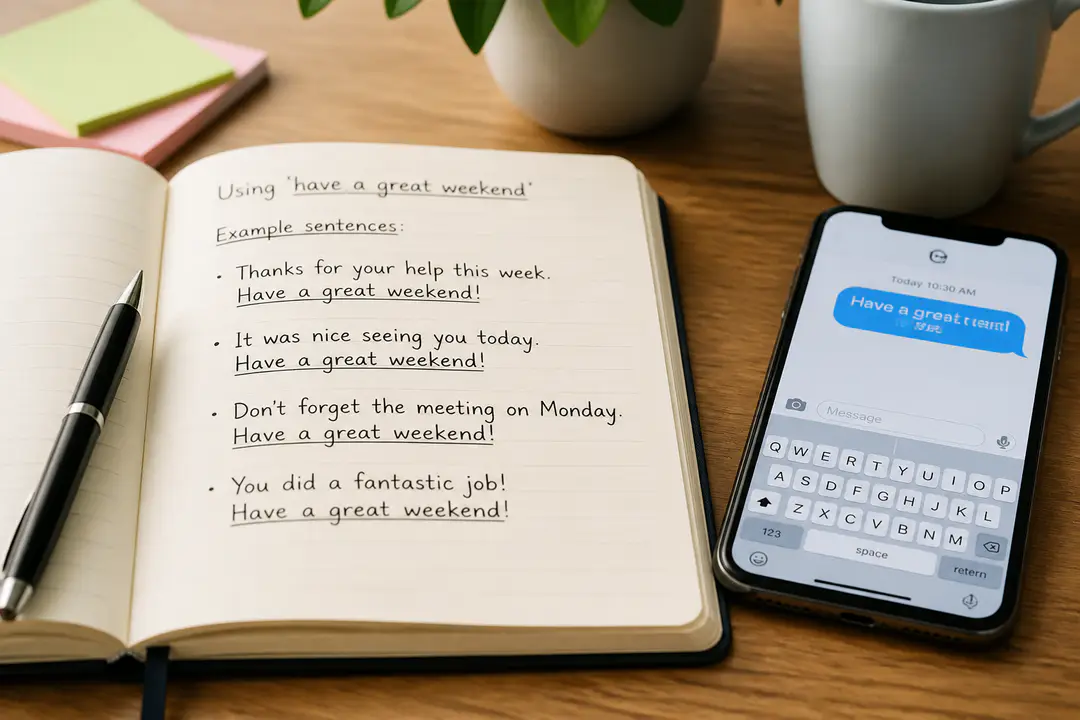
It is also common in email sign-offs. For example, someone might write, “Thanks for your help. Have a great weekend!” In that setting, an exclamation point often makes the message sound more cheerful, while a comma can make it feel a little calmer.
Common contexts
You usually use this phrase when the weekend is about to begin and you will not see the person again until after it ends. That is why it is especially common with coworkers, classmates, customers, or teachers on Friday afternoon. If you are already planning to meet the person on Saturday or Sunday, a different closing often sounds better.
For example, if you expect to meet them during the weekend, “See you this weekend” is more accurate than wishing them a weekend as if you will be apart. The same kind of choice matters in other set expressions too, especially in professional phrasing such as looking forward to working with you, where context changes the tone.
Simple alternatives
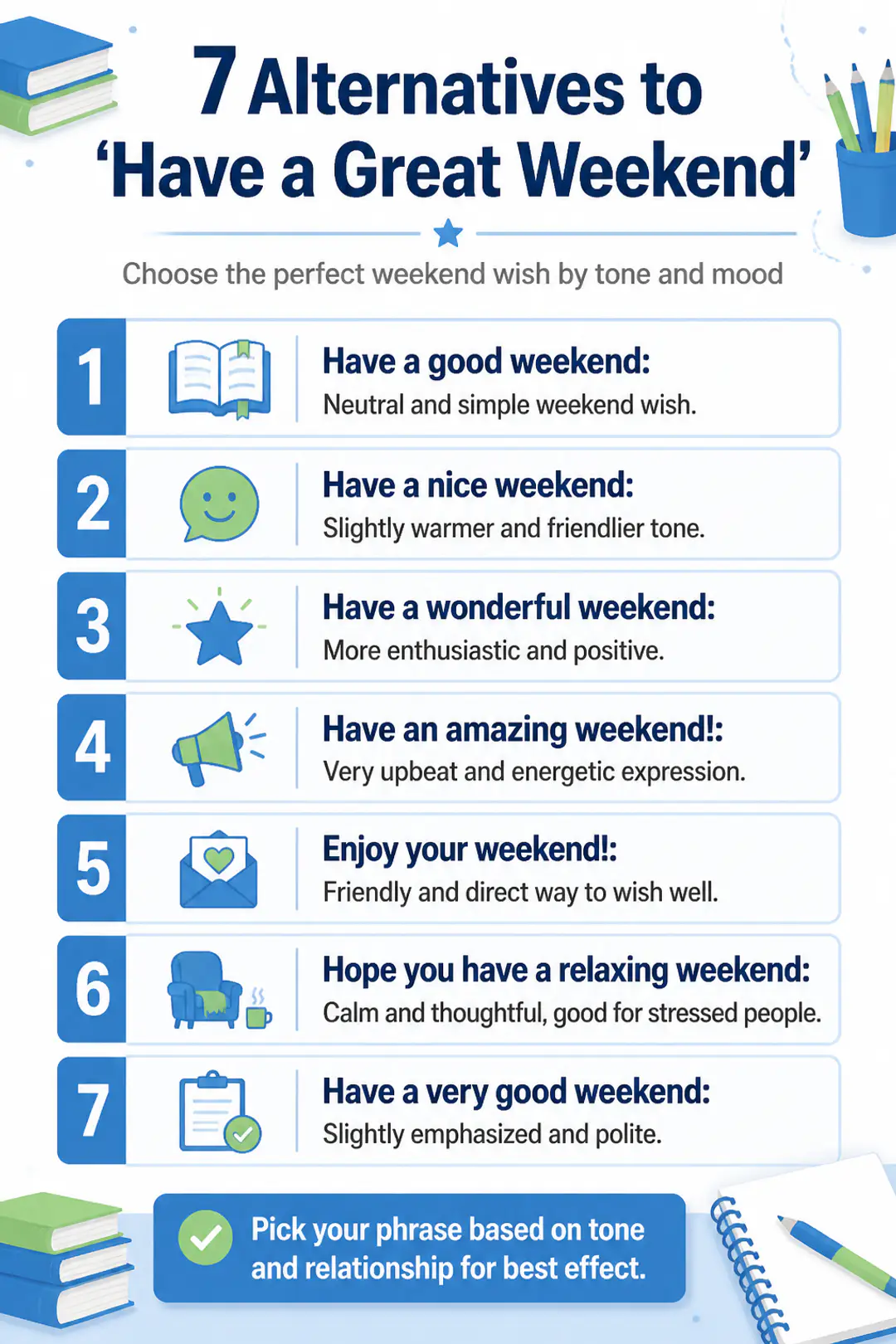
If you want to say the same thing in a different way, you have several good options. Some sound warmer, some more excited, and some more relaxed.
- Have a good weekend
- Have a nice weekend
- Have a wonderful weekend
- Have an amazing weekend!
- Enjoy your weekend!
- Hope you have a relaxing weekend.
- Have a very good weekend
“Have a nice weekend” is often felt as a slightly warmer version of “have a good weekend,” while “have a wonderful weekend” and “have an amazing weekend” sound more enthusiastic. “Hope you have a relaxing weekend” works well when you know the person has had a busy week.
Quick examples
Here are a few natural examples:
- Have a great weekend, Maya. See you on Monday.
- Thanks again for your help. Have a great weekend!
- That is all for today, everyone. Have a great weekend.
- You are heading out already? Okay, have a great weekend!
If someone says it to you, common replies are simple. “Thanks, you too!” is the most common response. You can also say, “Appreciate it, hope yours is great too!” if you want to sound a little more personal.
Using ‘Have a Great Weekend’
Best times to say it
Use the phrase near the end of the workweek or just before a weekend break. It fits naturally in spoken goodbyes, text messages, and professional emails. The key idea is timing: you say it when the weekend is about to start, not in the middle of it.
It is especially appropriate when ending a conversation with someone you will not meet again until Monday or later. A phrase like how’s your day going opens a conversation, while this one closes it in a friendly way.
How formal should it be?
This phrase is polite enough for most workplaces but still sounds natural. In a formal email, you can place it after your final sentence, such as “Thank you for the update. Have a great weekend.” In casual speech, you can make it lighter with an exclamation point or the person’s name.
You can also adapt it for special weekends. For example, “Have a great Thanksgiving weekend” or “Have a great holiday weekend” sounds specific and thoughtful.
Alternatives
Choose by tone
- Neutral: Have a good weekend.
- Warm: Have a nice weekend.
- Enthusiastic: Have a wonderful weekend.
- Very upbeat: Have an amazing weekend!
- Friendly and direct: Enjoy your weekend!
- Calm and thoughtful: Hope you have a relaxing weekend.
- Slightly emphasized: Have a very good weekend.
Choose by relationship
| Situation | Good choice |
|---|---|
| Coworker email | Have a great weekend. |
| Client message | Have a nice weekend. |
| Close friend | Have an amazing weekend! |
| Someone tired or stressed | Hope you have a relaxing weekend. |
| You will see them Saturday | See you this weekend. |
The best option depends on your relationship and the mood you want to create. In the same way, careful wording matters in expressions of thanks too, especially if you want to say it means a lot to me without sounding too formal or too intense.
Examples of ‘Have a Great Weekend’ in Sentences
Work and school examples
- Great work this week, team. Have a great weekend.
- Thanks for sending the report. Have a great weekend!
- See you in class on Monday. Have a great weekend, everyone.
- I will review this first thing next week. Have a great weekend.
Casual examples
- You are leaving now? Okay, have a great weekend!
- Have a great weekend, Sam. Enjoy the break.
- We finished early for once, so have a great weekend.
- Thanks for calling. Have a great weekend!
Reply examples
- Thanks, you too!
- Appreciate it, hope yours is great too!
- Thank you. Enjoy your weekend as well.
- Thanks so much. Have a good one!
Etiquette Tips for Using ‘Have a Great Weekend’
When it is polite
This phrase is polite when it matches the situation. Say it near the end of the week, as a closing remark, and when you do not expect to see the person until after the weekend. It is friendly without being too personal, so it works well in many everyday settings.
When to avoid it
Do not use it if the weekend has already started and the timing feels late. It is also less suitable if you know you will meet the person over the weekend, because “See you this weekend” is clearer. If the context is very serious or unhappy, a cheerful weekend wish can sound out of place.
Small style choices
In emails, this phrase often appears as a sign-off after the main message. An exclamation point makes it more lively, while a period keeps it simple. If you want to sound especially considerate, choose a variation that fits the person’s week, such as “Hope you have a relaxing weekend.”
FAQs
Is “have a great weekend” formal or informal?
It is best described as polite and semi-formal. It works in casual conversation and in many professional emails.
Can I say it in a work email?
Yes. It is a common and friendly way to close a message at the end of the week.
What is the difference between “good” and “great” weekend?
Both mean the same thing in general use. “Great” sounds a bit more enthusiastic than “good.”
How should I reply to it?
The most common reply is “Thanks, you too!” If you want a warmer response, say, “Appreciate it, hope yours is great too!”
Conclusion
Have a great weekend works best as a friendly closing near the end of the week, especially when you want to sound polite, natural, and thoughtful.