
Keep up the Good Work: Meaning and Usage
Keep up the good work means continue doing well. People use it to praise someone and encourage them to maintain the same effort, quality, or success. It is common in everyday speech, school feedback, coaching, and many workplace conversations, but it sounds too informal for very formal business or legal writing.
The phrase is friendly, positive, and easy to understand. It works best when someone has already done something well and you want to encourage more of the same. In many cases, adding a brief reason makes it sound warmer and more sincere.
What Does ‘Keep Up the Good Work’ Mean?
Core meaning
The expression means continue doing good work or maintain your current level of success. Grammatically, it is an imperative sentence, which means it gives encouragement in the form of a direct statement. Even though it is direct, it usually sounds supportive rather than demanding.
You say it to someone who is already performing well. The message is not just “you did well once,” but “you are doing well now, and I want you to continue.” That makes it both praise and encouragement at the same time.
Typical situations
This phrase appears in many common settings. Teachers say it to students, managers say it to employees, coaches say it to players, and friends say it to each other. It is especially natural in spoken English and informal written messages.
- Academic feedback: after a student shows steady improvement
- Workplace encouragement: after strong performance on a task
- Coaching: when a player or trainee is progressing well
- Friendly support: when someone is making a good effort
Tone and etiquette
The tone is polite, friendly, and encouraging. Still, it is generally informal, so it fits quick emails, conversations, comments, and notes better than formal evaluations or official reports. In more formal communication, more specific praise often sounds stronger.
If you are choosing between this phrase and a more formal expression, tone matters. A message that sounds warm and conversational can be perfect in one setting and too casual in another, much like phrases such as looking forward to working with you feel natural in email but need the right context.
Why specificity helps
On its own, the phrase is positive, but it becomes more meaningful when you mention what the person did well. Compare “Keep up the good work” with “Keep up the good work on your weekly reports; they have been clear and organized.” The second version feels more genuine because it names the achievement.
That is also why overusing the phrase can weaken it. If you say it too often without details, it starts to sound automatic instead of thoughtful. Good encouragement feels personal, not recycled.
Simple examples
- “Your presentation was clear and confident. Keep up the good work.”
- “You have improved a lot in math this term. Keep up the good work.”
- “The team handled that project well. Keep up the good work.”
- “You have been very consistent with your practice. Keep it up.”
Useful alternatives
You do not always need to repeat the same phrase. Depending on the situation, you can say Well done, Excellent work, or You exceeded expectations. These alternatives can sound more precise, more formal, or more enthusiastic.
How to Use ‘Keep Up the Good Work’
Best times to say it
Use the phrase after someone has shown real effort, progress, or success. It works well when the person is in the middle of doing something and needs motivation to continue. It is less about celebrating a finished result and more about encouraging continued performance.
In casual settings, the phrase sounds natural and friendly. In professional settings, it still works in conversations, short emails, or team chats, but formal reviews usually call for more exact wording. If your message needs a more official tone, replace it with specific praise rather than relying on a general compliment.
How to make it sound natural
The easiest way to use it well is to pair it with a clear reason. Mention the task, habit, or improvement you noticed, then add the phrase. That keeps your praise from sounding vague, just as direct expressions like please be advised can sound stiff if the tone does not match the situation.
- Name the action: “You handled the client call well.”
- Add encouragement: “Keep up the good work.”
- Be specific when possible: mention progress, effort, or results
Sentence Examples
Casual examples
- “You have been so consistent with your workouts. Keep up the good work.”
- “Your room looks much neater now. Keep up the good work.”
- “You are getting better at cooking every week. Keep up the good work.”
- “You have stayed positive through a hard time. Keep up the good work.”
Professional and academic examples
- “Your reports have been accurate and easy to follow. Keep up the good work.”
- “You asked thoughtful questions in class today. Keep up the good work.”
- “The customer praised your patience and clarity. Keep up the good work.”
- “You have shown strong improvement in meeting deadlines. Keep up the good work.”
Examples with more warmth
- “I can see how much effort you are putting in. Keep up the good work.”
- “Your progress has been impressive lately. Keep up the good work.”
- “You are handling a lot, and you are doing it well. Keep up the good work.”
Alternatives
Good substitutes
- Well done – simple praise for a job completed well
- Excellent work – stronger and slightly more polished
- Great job – casual and common in speech
- Keep it up – shorter, very informal encouragement
- You exceeded expectations – useful in professional feedback
- I’m impressed with your progress – personal and encouraging
- All your hard work is paying off – good when improvement is visible
When to choose each one
| Phrase | Best use | Tone |
|---|---|---|
| Keep up the good work | Ongoing effort or progress | Friendly, encouraging |
| Well done | Completed task | Simple, positive |
| Excellent work | Professional praise | Polished, strong |
| Keep it up | Casual support | Informal |
| You exceeded expectations | Formal or high-level praise | Specific, professional |
Choosing the right alternative depends on relationship, setting, and tone. For example, a short phrase may suit a friendly message, while a workplace review benefits from more precise language. The same principle applies to everyday expressions such as have a great weekend, where tone shifts slightly depending on who is speaking and why.
Common Mistakes to Avoid
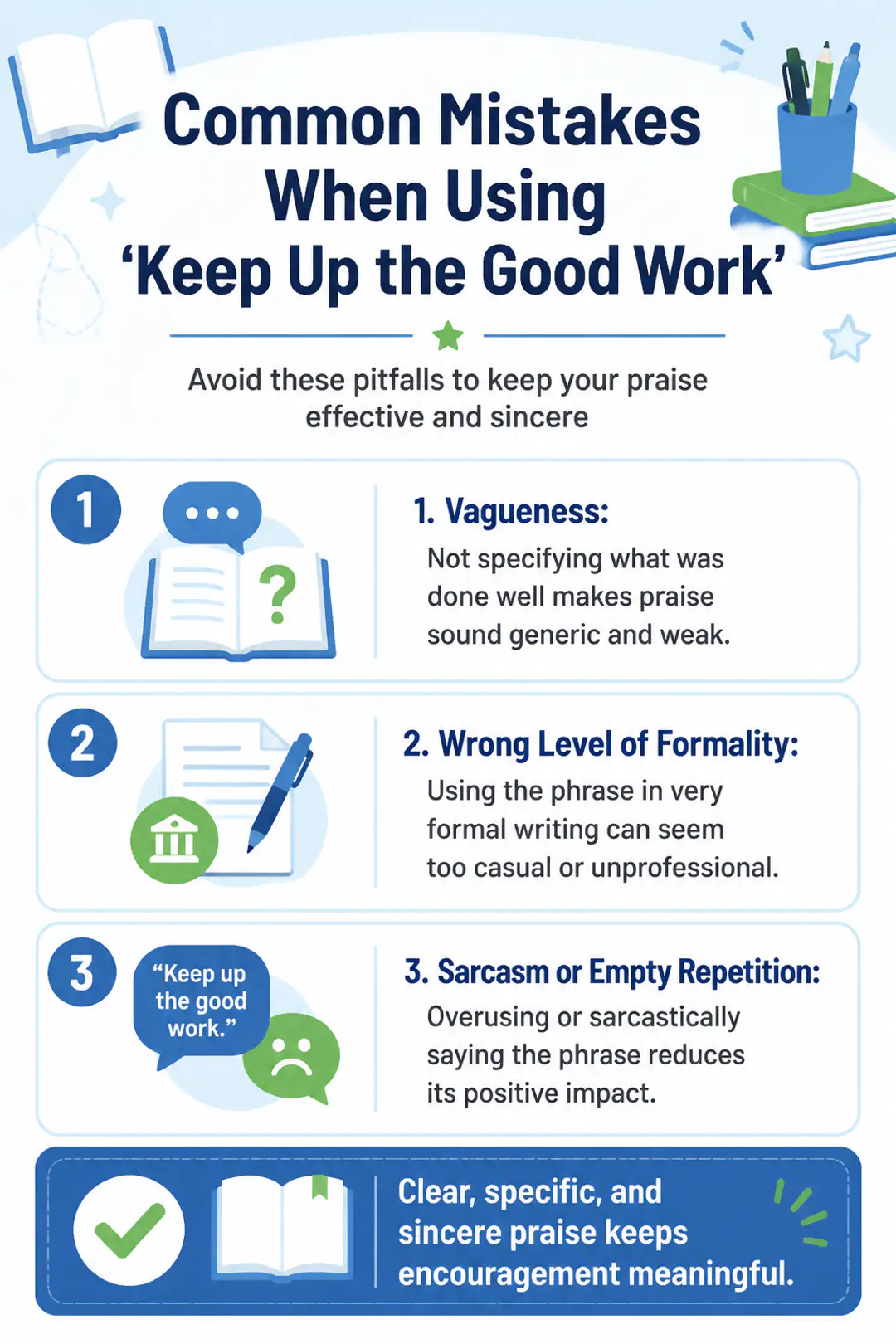
Vagueness
One common mistake is using the phrase without saying what the person did well. Praise feels stronger when it points to a specific action, habit, or result. Otherwise, it can sound generic or careless.
Wrong level of formality
Another mistake is using it in very formal writing, such as legal documents, official reports, or formal performance evaluations. In those settings, direct and specific wording usually works better. A formal review should describe achievements clearly instead of relying on a casual phrase.
Sarcasm or empty repetition
The phrase can become negative if it is used sarcastically. Tone changes meaning, so a sentence that sounds encouraging in one voice can sound dismissive in another. Repeating it too often also reduces its impact and can make your praise seem routine.
FAQs
Is ‘keep up the good work’ formal?
No. It is polite and widely accepted, but it is generally informal. It fits everyday and many professional situations, though very formal writing usually needs more specific language.
Can I use ‘keep up the good work’ at work?
Yes. It works well in workplace conversations, quick emails, and supportive feedback. It is most effective when you add a brief explanation of what the person did well.
Is ‘keep up the good work’ grammatically correct?
Yes. It is a correct imperative sentence. It gives encouragement by telling someone to continue their strong performance.
What is a better alternative in formal feedback?
Try a more specific line such as “Excellent work on this project” or “You exceeded expectations in meeting deadlines.” Specific praise sounds clearer and more professional.
Conclusion
“Keep up the good work” is a simple, positive way to encourage someone to continue doing well. It works best in everyday and lightly professional communication, especially when you add a clear reason.