Advance Happy Birthday: Meaning and Correct Usage
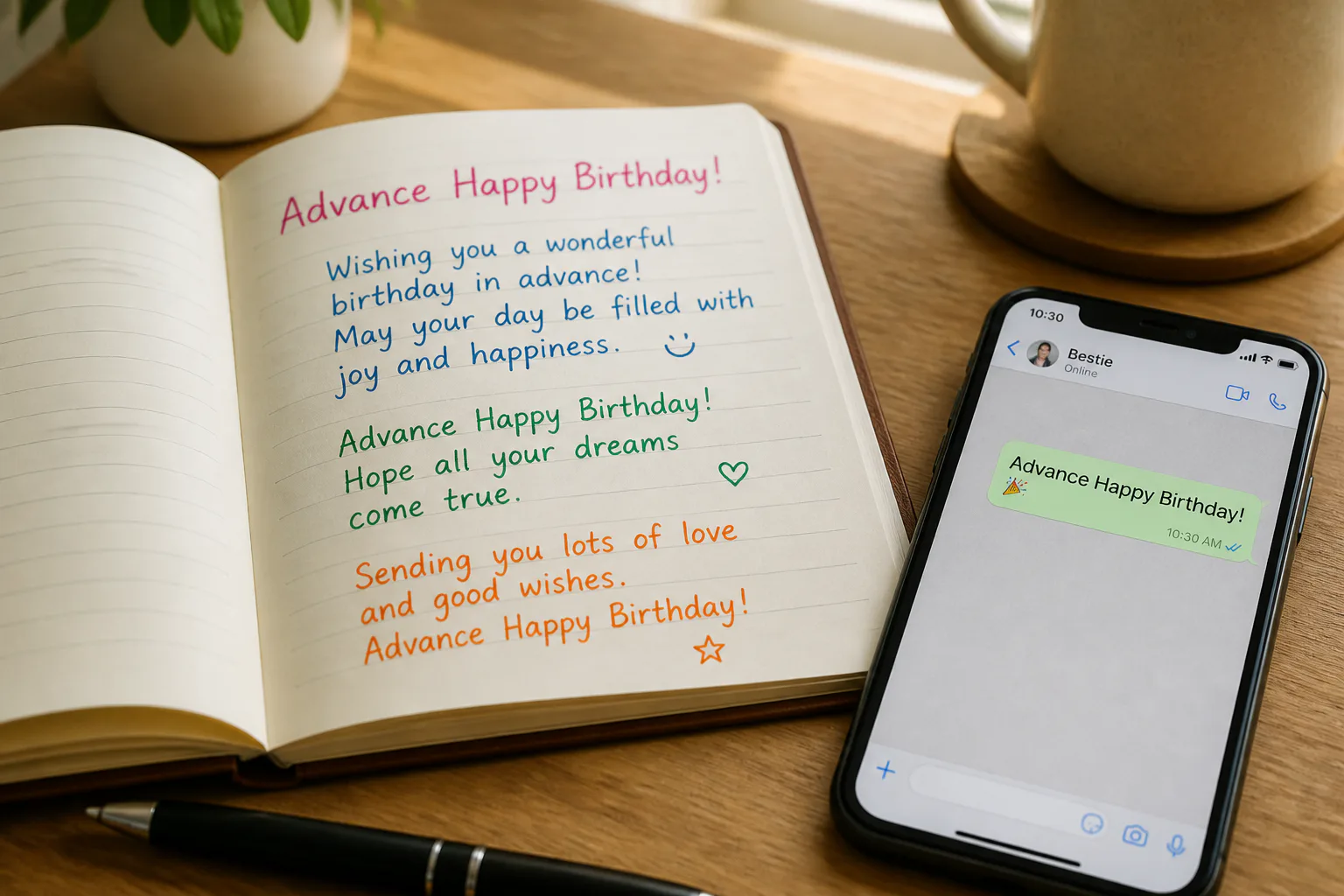
“Advance happy birthday” refers to wishing someone a happy birthday before their actual birthday arrives. In everyday English, the more natural phrasing is usually “happy birthday in advance”, but many people still say or write “advance happy birthday” in texts, cards, and social messages. Both forms point to the same idea: you are sending your good wishes early because you may be busy, away, or unable to contact the person on the day itself.
Used correctly, the phrase sounds thoughtful rather than awkward. The key is to make it clear that your message is an early birthday wish, keep the tone warm, and choose wording that fits your relationship with the person.
What Does ‘Advance Happy Birthday’ Mean?
Basic meaning
In this context, advance means beforehand or earlier than the expected time. So when someone says “advance happy birthday,” they mean “happy birthday before the day arrives” or “I am wishing you a happy birthday early.”
The phrase is common in informal communication, especially in messaging apps, social media posts, and casual conversation. In more polished English, people often prefer “happy birthday in advance” because it sounds smoother and follows standard word order more naturally.
How to use it correctly
If you want your message to sound natural, place the idea of “in advance” after the birthday greeting. For example, instead of writing “Advance happy birthday,” write “Happy birthday in advance!” That small change makes the sentence clearer and more idiomatic.
You can also expand the message so it feels more personal. A short note such as “Happy birthday in advance. I may not get to message you on the day, so I wanted to wish you a wonderful year ahead” sounds thoughtful and complete.
Common forms people use
- Happy birthday in advance.
- Wishing you a happy birthday in advance.
- Many happy returns in advance.
- Just sending my birthday wishes a little early.
These versions all express the same idea, but some sound more natural than others. If you want the safest and clearest form, use “happy birthday in advance”. If you want a fuller explanation of the phrase itself, this guide on happy birthday in advance meaning gives the standard form many English speakers prefer.
Examples in conversation and writing
Here are a few natural ways the phrase appears in real communication:
- “Happy birthday in advance, Priya. I hope your day is full of joy.”
- “Wishing you a very happy birthday in advance since I will be traveling tomorrow.”
- “Just in case I miss the date, happy birthday in advance.”
- “Advance happy birthday to you” is understandable, but “happy birthday in advance to you” sounds better.
Etiquette to keep in mind
Early birthday wishes are usually seen as kind and practical, especially if you explain why you are sending them ahead of time. Still, context matters. Some people enjoy being the first to receive wishes, while others prefer greetings on the exact date.
A good rule is simple: send the early message only when there is a reason, such as travel, time-zone differences, a planned absence, or uncertainty about being available. If there is no reason, waiting until the day itself often feels more appropriate.
When to Say ‘Happy Birthday in Advance’
Appropriate situations
People send early birthday wishes when they know they may miss the actual birthday. This often happens before a trip, during a busy work schedule, or when someone will be offline. It is also common in group settings where people may not get another chance to speak privately.
Early wishes can also show care and planning. In some cases, they make the person feel remembered rather than overlooked. If you want more variety in your wording, you can also compare a few another way to say happy birthday options so your message does not feel repetitive.
Why people use it
Most people use the phrase for practical reasons, but it also carries a social purpose. It signals, “I remembered your birthday, and I did not want to miss the chance to say something kind.” That intention matters more than the exact wording.
| Situation | Is an early wish appropriate? | Why |
|---|---|---|
| You will be traveling | Yes | You may not be able to contact them on the day |
| You work in a different time zone | Yes | Timing can make same-day wishes difficult |
| You simply want to be first | Sometimes | Fine with close friends, less ideal in formal settings |
| You forgot and are guessing the date | No | This can feel careless rather than thoughtful |
Examples of ‘Advance Happy Birthday’ Messages
Short casual messages
- Happy birthday in advance!
- Wishing you a happy birthday in advance, my friend.
- Just saying happy birthday a little early.
- Advance birthday wishes to you and your family.
Warm personal messages
- Happy birthday in advance. I hope your special day brings you happiness, good health, and lots of laughter.
- Wishing you a very happy birthday in advance since I may not be able to message you on the day. Have a beautiful celebration.
- Sending you my birthday wishes early. Happy birthday in advance, and may the year ahead be kind to you.
Professional or polite messages
- Happy birthday in advance. Wishing you a pleasant and memorable day.
- Please accept my warm birthday wishes in advance. I hope you have a wonderful celebration.
- Wishing you a happy birthday in advance and continued success in the year ahead.
Better wording choices
If “advance happy birthday” feels slightly stiff to you, that instinct is correct. In polished writing, these alternatives usually sound better:
- Happy birthday in advance
- Early birthday wishes
- Sending my birthday wishes ahead of time
- Wishing you a wonderful birthday a little early
Many speakers also like to rotate their wording with other happy birthday synonyms so the message feels more natural and personal.
Etiquette Tips for Wishing Happy Birthday Early
Best practices
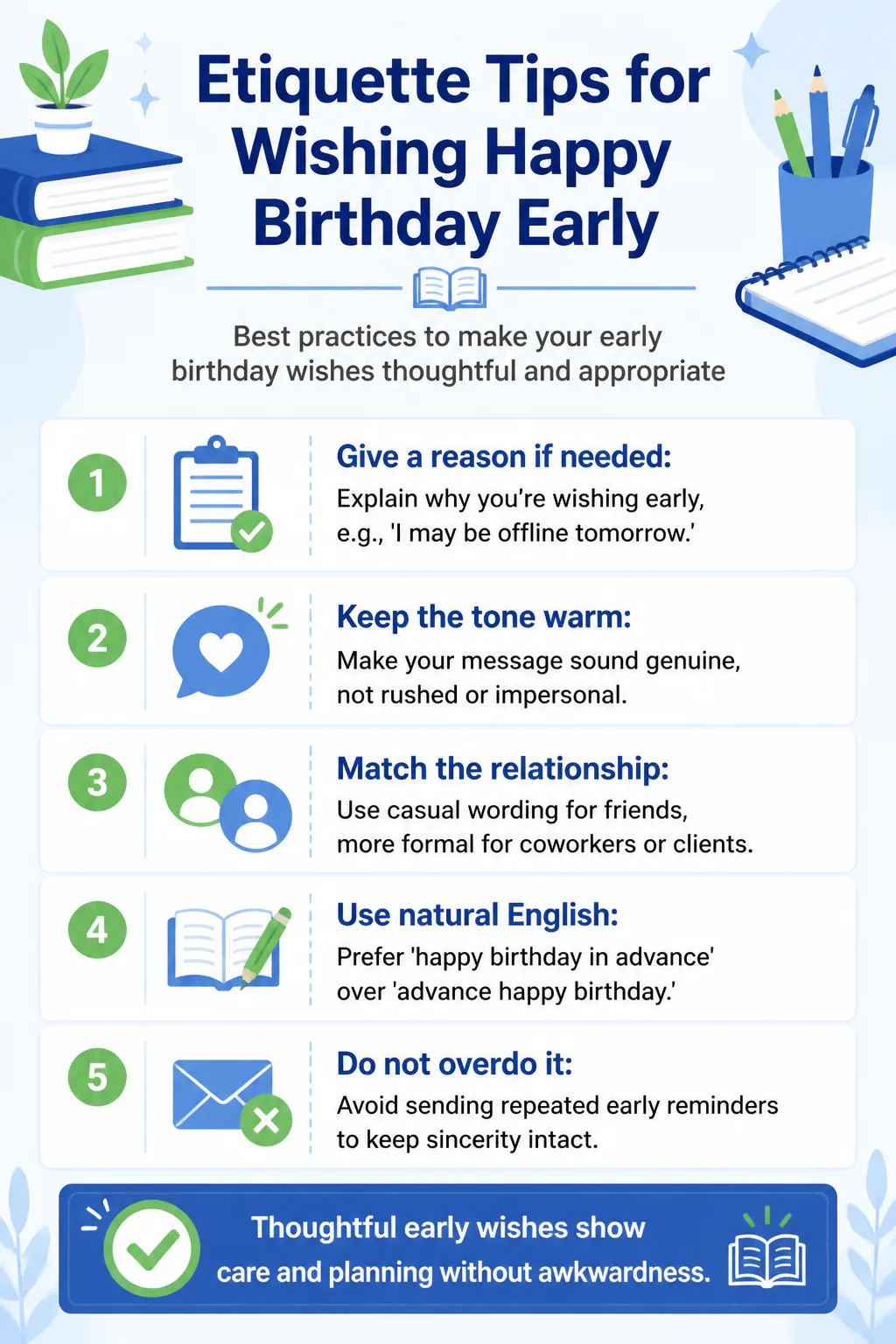
- Give a reason if needed. A short explanation like “I may be offline tomorrow” makes the message feel considerate.
- Keep the tone warm. Even a short early wish should sound genuine, not rushed.
- Match the relationship. Casual wording suits friends, while cleaner phrasing fits coworkers or clients.
- Use natural English. “Happy birthday in advance” is usually better than “advance happy birthday.”
- Do not overdo it. Sending repeated early reminders can make the message feel less sincere.
What to avoid
- Do not send an early wish so far ahead that it feels random.
- Do not make the message about your inconvenience.
- Do not use overly dramatic wording in formal situations.
- Do not assume everyone likes early greetings.
Common Mistakes and How to Avoid Them
Awkward word order
The most common mistake is using “advance happy birthday” as if it were the standard English phrase. People will understand it, but it sounds less natural than “happy birthday in advance.” If you want smooth, correct wording, put “in advance” after the greeting.
Too little context
Another mistake is sending an early wish with no explanation in a situation where timing matters. A short line such as “I may be busy tomorrow” prevents confusion and makes the message feel intentional. Without context, the message can seem abrupt.
Using the wrong tone
Some messages are too casual for professional relationships, while others are too formal for close friends. Choose the level of warmth based on who will receive the message. A friend may enjoy “Happy birthday in advance, have fun,” while a colleague may prefer “Wishing you a happy birthday in advance.”
Forgetting the actual birthday
An early wish should not replace the real date if the relationship is close. If the person matters to you, a short follow-up on the birthday itself is a good idea. The early message shows planning, but the day-of message shows presence.
FAQs
Is “advance happy birthday” grammatically correct?
It is understandable, but it is not the most natural phrasing in English. “Happy birthday in advance” is the clearer and more standard form.
What does “advance” mean in a birthday wish?
It means beforehand or earlier than the actual birthday. You are giving the birthday greeting ahead of time.
Is it polite to wish someone happy birthday early?
Yes, especially when you have a clear reason such as travel, work, or being unavailable on the day. Most people see it as thoughtful when the message is sincere.
Can I use it in a formal message?
Yes. In formal writing, use phrasing like “Wishing you a happy birthday in advance” rather than “advance happy birthday.”
Conclusion
Using “happy birthday in advance” is the clearest way to send an early birthday wish, especially when you have a practical reason and want the message to sound thoughtful.