ONB Slang: Slang Definition & Usage
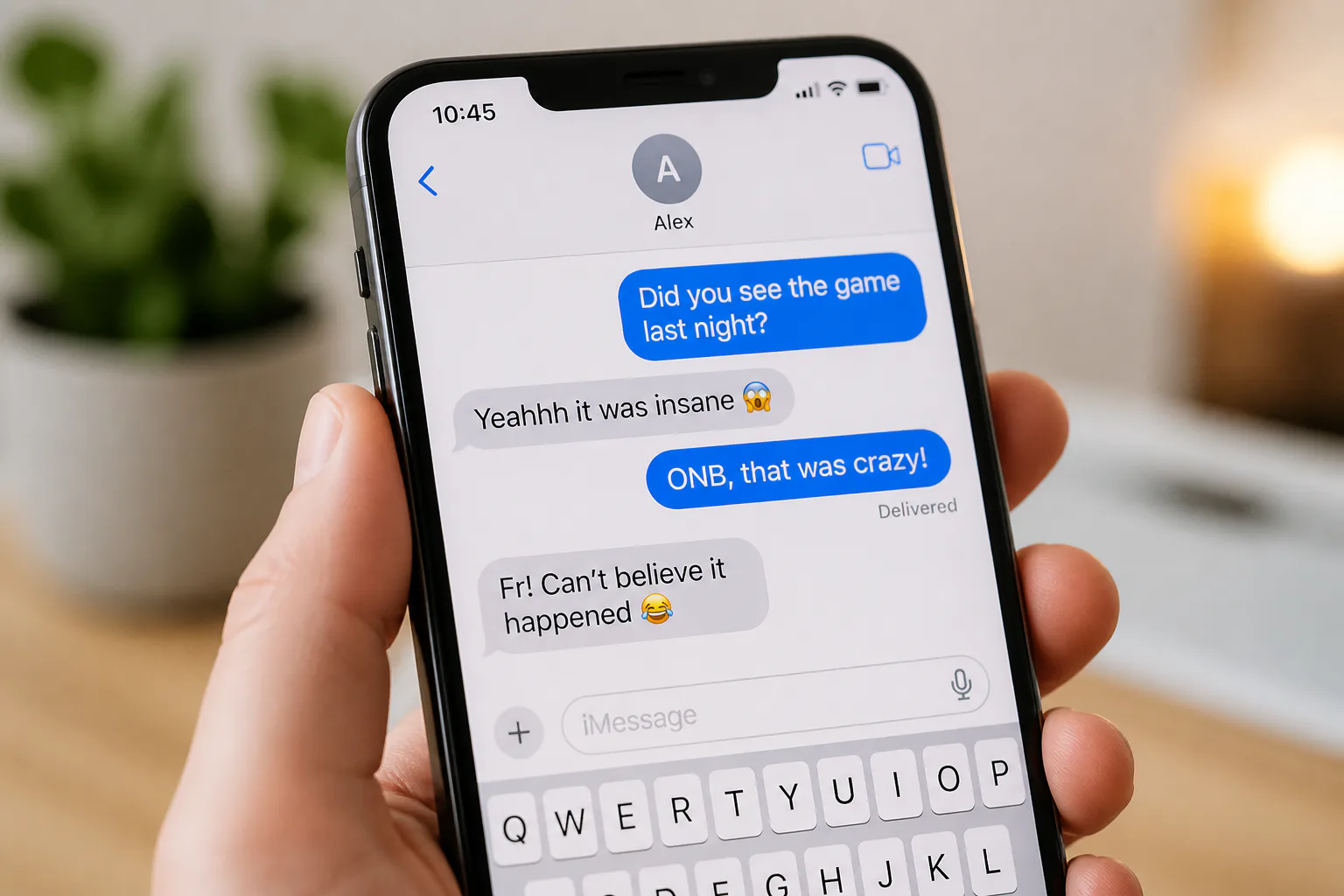
ONB slang usually means “on bro” in texting and online speech. People use it to show they are serious, telling the truth, making a strong promise, or emphasizing a point. In many US online spaces, especially youth slang and rap-influenced internet language, ONB works like saying “for real,” “I swear,” or “I’m not lying.”
For example, someone might text, “ONB that game was crazy,” or “I’m pulling up, ONB.” In both cases, the speaker is adding force and sincerity. The exact tone depends on the conversation, but the core idea stays the same: the speaker wants their words to sound firm, real, and believable.
What Does ‘ONB’ Mean?
Core definition
In current slang, ONB most often stands for “on bro”. That phrase is part of a wider pattern in informal English where a speaker “puts something on” a person, relationship, or value to signal seriousness. In practice, saying “on bro” means “I mean it,” “I’m telling the truth,” or “I swear on my bro.”
Used this way, ONB is not random internet shorthand. It carries a tone of loyalty, emphasis, and personal credibility. A person types it when they want their message to land with more weight than a plain statement would.
How the phrase works
ONB usually appears at the start or end of a sentence. It can strengthen a claim, back up a promise, or respond to doubt. If one person says, “You really did that?” the other might answer, “ONB, I did,” to insist they are being truthful.
That same pattern appears across many text conversations where short forms replace full spoken phrases. If you want a broader breakdown of what ONB means in text, the key idea is consistent: it adds seriousness and social emphasis.
Common shades of meaning
Even though ONB has one main meaning, it can express slightly different things depending on context:
- Truthfulness: “ONB, that really happened.”
- A promise: “ONB, I got you tomorrow.”
- Strong agreement: “ONB, you’re right.”
- Emotional emphasis: “ONB that was the funniest thing all day.”
Readers should pay attention to the sentence around it. ONB does not usually change the factual content of a message. It changes the force, tone, and level of personal commitment behind the message.
Where it comes from
ONB comes out of spoken slang that later moved into texting, social media captions, comments, and direct messages. It is closely tied to African American Vernacular English influence on wider internet slang, especially language popularized through rap, regional street speech, meme culture, and youth communication online.
Like many abbreviations, ONB spread because it is fast to type and easy to recognize inside communities that already know the phrase. Once users see it repeatedly in chats and posts, it becomes part of their normal texting vocabulary.
Examples in real-style sentences
These examples show how ONB functions in natural modern usage:
- “ONB, I wasn’t even mad, just surprised.”
- “He said he’s coming tonight, ONB.”
- “ONB that food was fire.”
- “I’ll send it when I get home, ONB.”
- “You thought I was joking? ONB, I was dead serious.”
Notice that ONB is usually casual, not formal. You would expect it in texts, DMs, comment threads, group chats, or captions, not in school essays, work emails, or professional reports.
Possible confusion
Some people seeing ONB for the first time assume it has a technical or platform-specific meaning. In slang contexts, though, “on bro” is the reading most people intend. A shorter ONB meaning summary can help, but usage always matters most because slang relies heavily on tone and community knowledge.
It is also possible for people to use abbreviations differently in niche groups. Still, in mainstream US texting and online slang, “on bro” is the standard interpretation readers should know first.
Common Usage of ‘ONB’
Typical situations
- To swear something is true: “ONB, I saw it happen.”
- To make a promise sound firm: “ONB, I’ll be there.”
- To back up an opinion: “ONB, that’s his best song.”
- To answer disbelief: “ONB, I’m not lying.”
- To add hype or intensity: “ONB that party was wild.”
Placement in a sentence
- At the beginning: “ONB, you need to watch that.”
- In the middle: “I’m ONB not playing with him anymore.”
- At the end: “That story was true, ONB.”
Beginning and ending placement are the most common because they make the emphasis clearer. Middle placement happens too, but it can sound more regional or more tied to spoken rhythm.
Where ‘ONB’ Appears
Who uses it
ONB is most common in casual US digital communication, especially among teens, young adults, and users influenced by hip-hop language, gaming chats, TikTok-style short-form content, and group messaging culture. It often appears in spaces where people write the way they speak, with compressed spelling and strong emotional tone.
Its meaning also depends on shared social understanding. In communities familiar with internet shorthand, ONB reads naturally as emphasis. In more formal or older-speaking spaces, it may confuse readers, much like newer abbreviations such as SM in text can mean different things depending on who is writing.
Nuance and etiquette
Because ONB carries a serious tone, it works best in informal conversations with people who already understand the slang. It can sound intense if the topic is minor. Saying “ONB I need fries right now” is playful, but using it too often can make your messages sound exaggerated.
It also has a relational tone. Since “bro” is part of the phrase, ONB feels tied to friendship, loyalty, or closeness, even when users type it casually. That social feeling is part of why the phrase has remained recognizable online.
Alternatives
Close alternatives
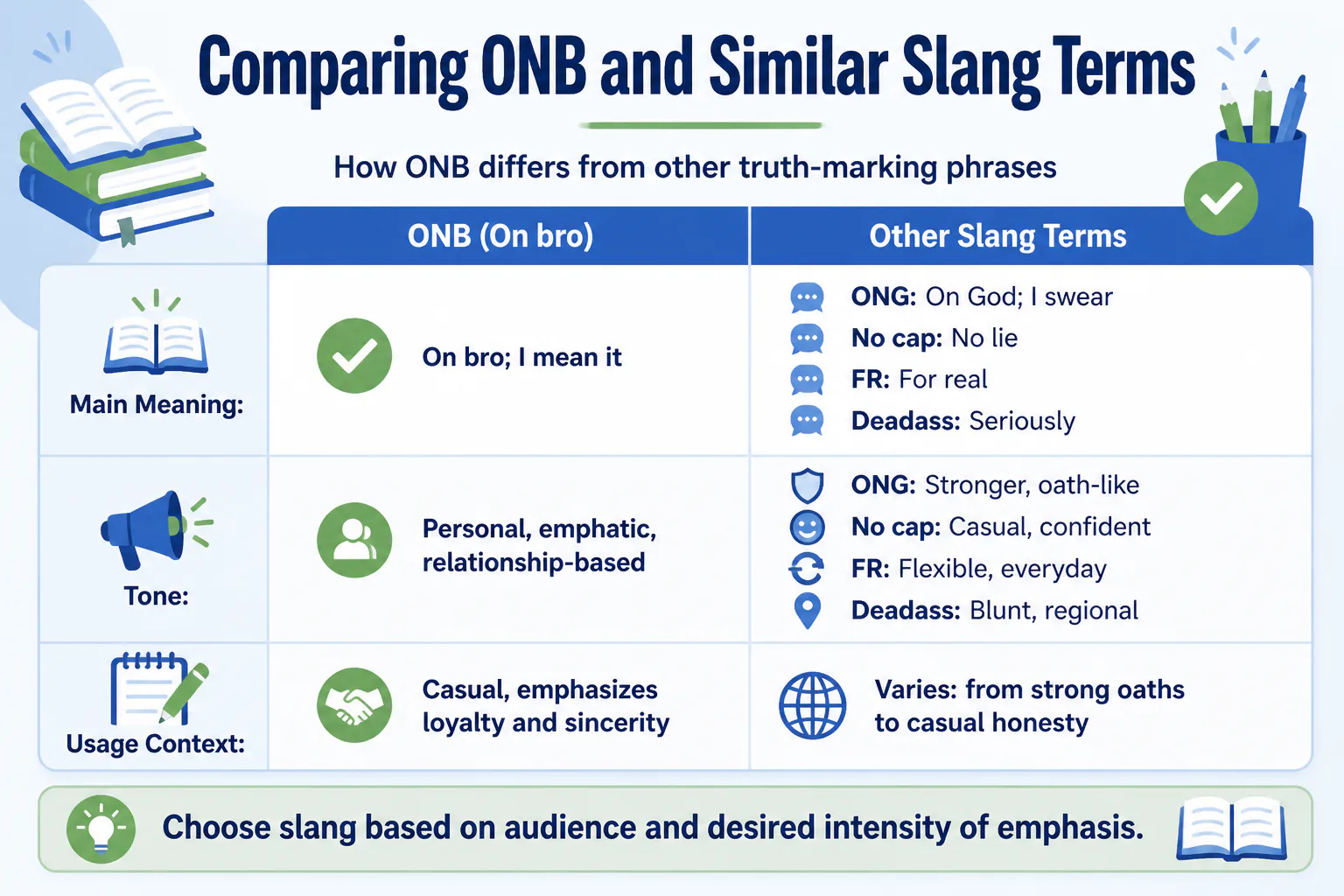
- FR or for real – used to show sincerity or agreement.
- Ong – short for “on God,” another strong truth-marking phrase.
- No cap – means “no lie” or “I’m being honest.”
- I swear – a plain-English version with similar force.
- Deadass – used to mean seriously or truthfully in some US slang.
How they differ
| Term | Main meaning | Tone |
|---|---|---|
| ONB | On bro; I mean it | Personal, emphatic |
| ONG | On God; I swear | Stronger, oath-like |
| No cap | No lie | Casual, confident |
| FR | For real | Flexible, everyday |
| Deadass | Seriously | Blunt, regional in feel |
These expressions overlap, but they are not identical. ONB feels more relationship-based than FR, and less broad than no cap. The best choice depends on your audience and how intense you want your message to sound.
FAQs
Does ONB always mean “on bro”?
In US texting and online slang, yes, that is the main meaning readers should assume first. Context matters, but “on bro” is the standard slang reading.
Is ONB positive or negative?
It is neither by itself. ONB adds emphasis, so it can appear in positive, negative, serious, or joking messages.
Can I use ONB in formal writing?
No. ONB belongs to casual speech, texting, and online conversation. It looks out of place in academic, business, or professional writing.
Is ONB the same as ONG?
No. They are similar because both stress truth or seriousness, but ONB means “on bro,” while ONG means “on God.” The tone and social feel are slightly different.
Conclusion
ONB usually means “on bro”, so reading it as a marker of sincerity or emphasis will help you understand how people use it in texts and online slang.