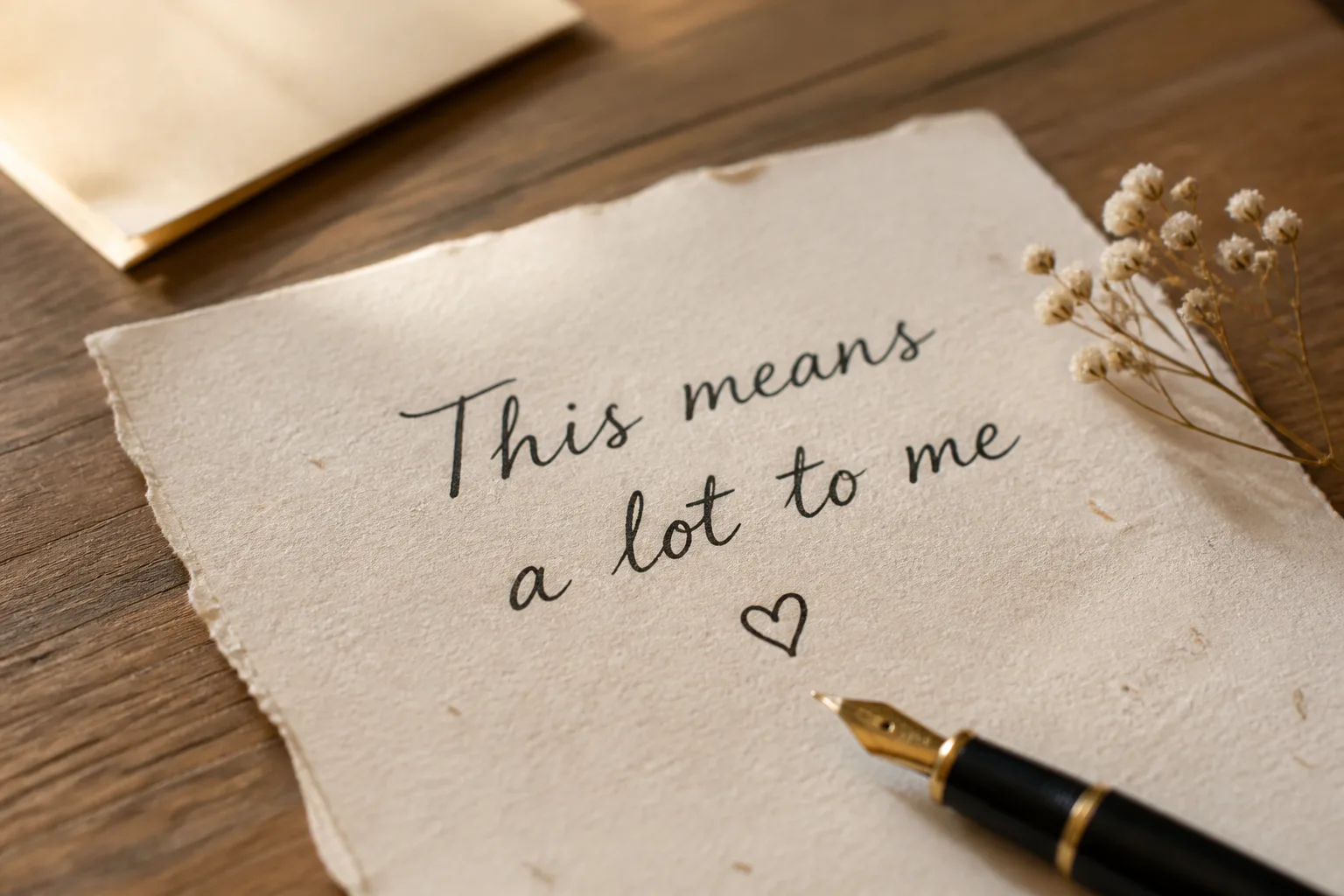
This Means a Lot to Me Meaning: Usage, Tone, and Examples
“This means a lot to me” means that something is deeply important to you on a personal or emotional level. People use it to show sincere gratitude, appreciation, or emotional connection in everyday English. It often appears when someone has done something thoughtful, offered support, or given something that feels especially meaningful.
The phrase is common in both spoken and written English because it sounds warm, natural, and honest. It does not just say that you like something. It tells the other person that their action, words, or gift had a real emotional effect on you.
Meaning of ‘This Means a Lot to Me’
Core definition
The phrase means that something has strong personal value. When you say “this means a lot to me,” you are telling someone that what they did, said, or gave matters to you in a serious and heartfelt way. The emphasis is emotional, not material.
For example, if a friend supports you during a hard time, you might say, “Your message means a lot to me.” In that case, you are not only thanking them. You are also showing that their kindness reached you emotionally.
Emotional significance
This phrase carries warmth, sincerity, and vulnerability. It often appears in moments where a person wants to express more than a simple “thanks.” A plain thank-you is polite, but “this means a lot to me” suggests that the situation touches your feelings, memories, goals, or sense of being cared for.
That is why the phrase is often used for support, recognition, gifts with personal meaning, or acts of kindness. In many situations, it creates closeness because it tells the other person their effort truly mattered. If you want a closely related explanation, the phrase it means a lot to me works in the same heartfelt way.
Social context
In everyday English, the phrase is appropriate in personal, social, academic, and professional settings. You can say it to a friend, family member, teacher, colleague, or manager, as long as the tone fits the relationship. It sounds respectful and genuine in most contexts.
Still, tone matters. If the situation is small or casual, the phrase can sound stronger than needed. Saying it after a major favor, a meaningful compliment, or emotional support sounds natural. Saying it after something very minor, like someone handing you a pen, can sound exaggerated.
What it really communicates
When native speakers hear this phrase, they usually understand several messages at once:
- You appreciate what happened.
- You feel emotionally affected by it.
- You want the other person to know their action mattered.
- You are being sincere, not just polite.
Because of that, the phrase is often stronger than “thank you” and softer than a long emotional speech. It gives just enough feeling without sounding dramatic if used in the right moment.
Example sentences
Here are a few simple examples that show its meaning clearly. You might say, “Thank you for coming today. This means a lot to me.” You could also say, “Your support during my interview process means a lot to me.”
Another example is, “Getting this award means a lot to me because my family encouraged me for years.” In each case, the speaker is expressing personal importance, not just general happiness.
When and How to Use the Phrase
Best situations
Use the phrase when you want to express genuine emotional appreciation. It fits moments of kindness, encouragement, loyalty, recognition, or thoughtful gifts. In many cases, it works best when the other person made an effort that had a clear personal effect on you.
Professional English also allows this phrase, especially in messages of thanks. For example, you might write it after receiving mentoring, support on a project, or a kind recommendation. Other warm workplace phrases, such as looking forward to working with you, also help build a respectful and positive tone.
How to sound natural
The phrase often sounds most natural when you explain why it means a lot. That extra detail makes your words feel specific and sincere. Compare “This means a lot to me” with “This means a lot to me because I worked hard for this opportunity.” The second version feels fuller and more personal.
You can also place it at the beginning, middle, or end of a sentence. All three are normal in conversation and writing:
- “This means a lot to me. Thank you.”
- “Your support means a lot to me.”
- “Thank you again, it really means a lot to me.”
Examples in Sentences
Personal situations
- “Thank you for remembering my birthday. This means a lot to me.”
- “Having you here today means a lot to me.”
- “Your advice means a lot to me because I trust your judgment.”
- “This gift means a lot to me since it reminds me of my grandmother.”
Professional or academic situations
- “Your recommendation means a lot to me, and I appreciate your time.”
- “Getting accepted into the program means a lot to me.”
- “Thank you for your feedback. It means a lot to me as I improve my work.”
- “Your support on this project means a lot to me.”
Digital communication
- “Thanks for checking in. That means a lot to me.”
- “Your message really means a lot to me today.”
- “I saw your comment, and it means a lot to me.”
- “TYSM for your help” is common in chat, but it is more casual than full phrases like this; if you see that abbreviation often, TYSM in chat simply means “thank you so much.”
Alternatives
Close alternatives
- “I really appreciate this.”
- “I appreciate it more than you know.”
- “This is very important to me.”
- “I’m truly grateful.”
- “That was very thoughtful of you.”
- “I can’t tell you how much this means to me.”
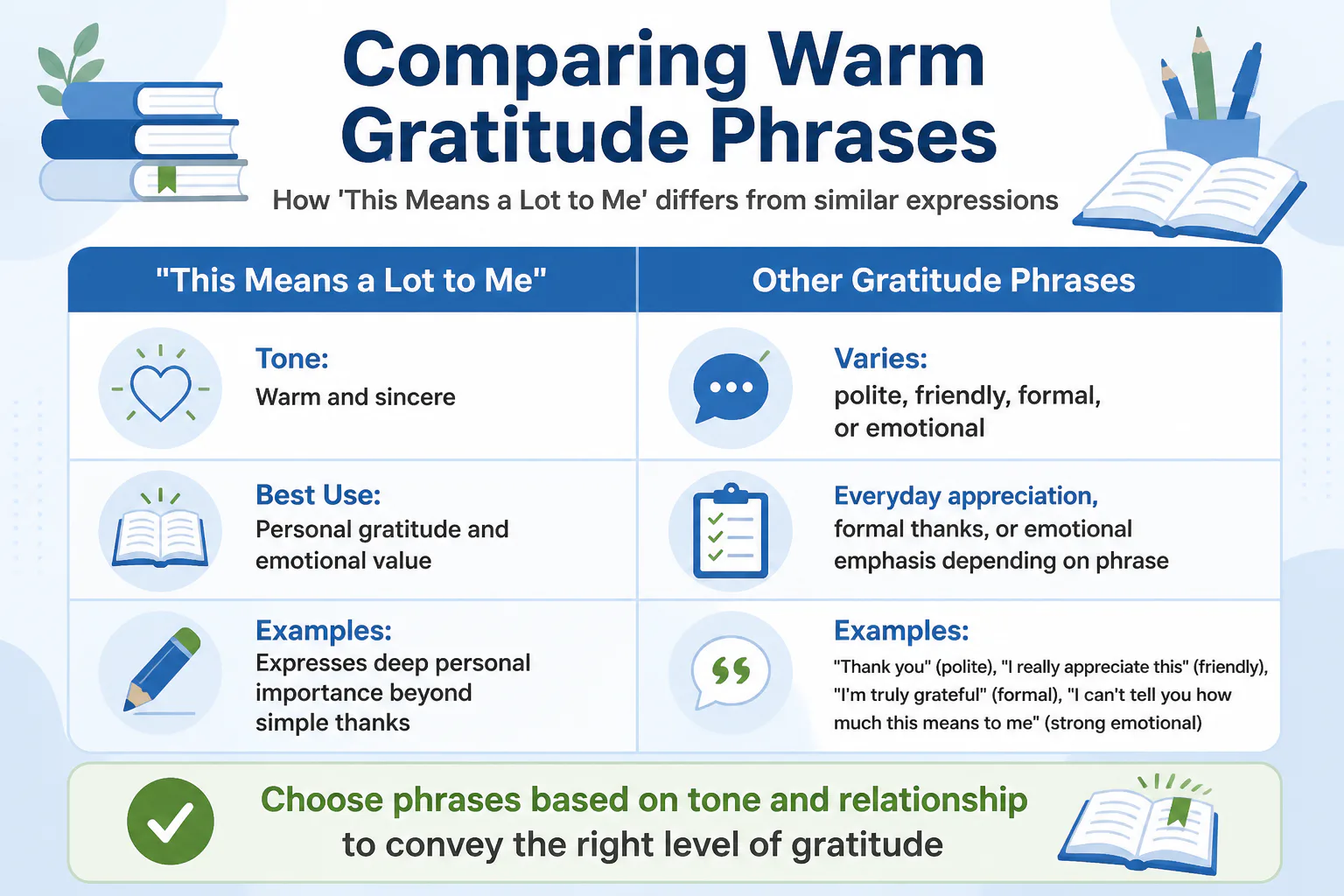
How they differ
- “Thank you” is polite but more general.
- “I really appreciate this” is warm and common, but a little less emotional.
- “This is very important to me” stresses importance more than gratitude.
- “I’m truly grateful” sounds sincere and slightly more formal.
- “I can’t tell you how much this means to me” is stronger and more emotional.
| Expression | Tone | Best use |
|---|---|---|
| This means a lot to me | Warm and sincere | Personal gratitude and emotional value |
| Thank you | Polite and neutral | Everyday appreciation |
| I really appreciate this | Friendly and genuine | Personal or professional thanks |
| I’m truly grateful | Respectful and slightly formal | Serious thanks or formal messages |
Common Mistakes to Avoid
Overusing it
One common mistake is using the phrase for very small things too often. If every minor action “means a lot,” your words can start to sound automatic instead of sincere. Save it for moments that truly carry emotional weight or clear personal importance.
Using it without context
Another mistake is saying the phrase with no explanation in formal writing where a little detail would help. Adding a short reason makes the message clearer and stronger. For example, “Your guidance means a lot to me as I start this new role” sounds more natural than the phrase alone.
Matching the tone
Be careful to match the phrase to the relationship and setting. In close personal situations, it can sound tender and heartfelt. In professional settings, it still works well, but keeping the rest of the message clear and measured helps it sound polished rather than overly emotional.
FAQs
Is “this means a lot to me” the same as “thank you”?
No. It includes thanks, but it also shows deeper emotional importance. It tells the other person that their action affected you personally.
Can I use this phrase at work?
Yes. It works well in professional messages when someone has helped, supported, or encouraged you. It sounds best when the rest of the message is respectful and specific.
Does the phrase sound romantic?
Not by itself. It can be romantic in the right situation, but it is also common between friends, family members, coworkers, students, and teachers.
Is it formal or informal?
It sits in the middle. The phrase is natural in casual speech, but it is also acceptable in many formal or semi-formal situations because it is polite and sincere.
Conclusion
“This means a lot to me” is useful when you want your English to sound sincere, warm, and personal. Use it for moments that genuinely matter so your gratitude feels natural and clear.