SM Full Form in Chat: Meanings and Usage Explained
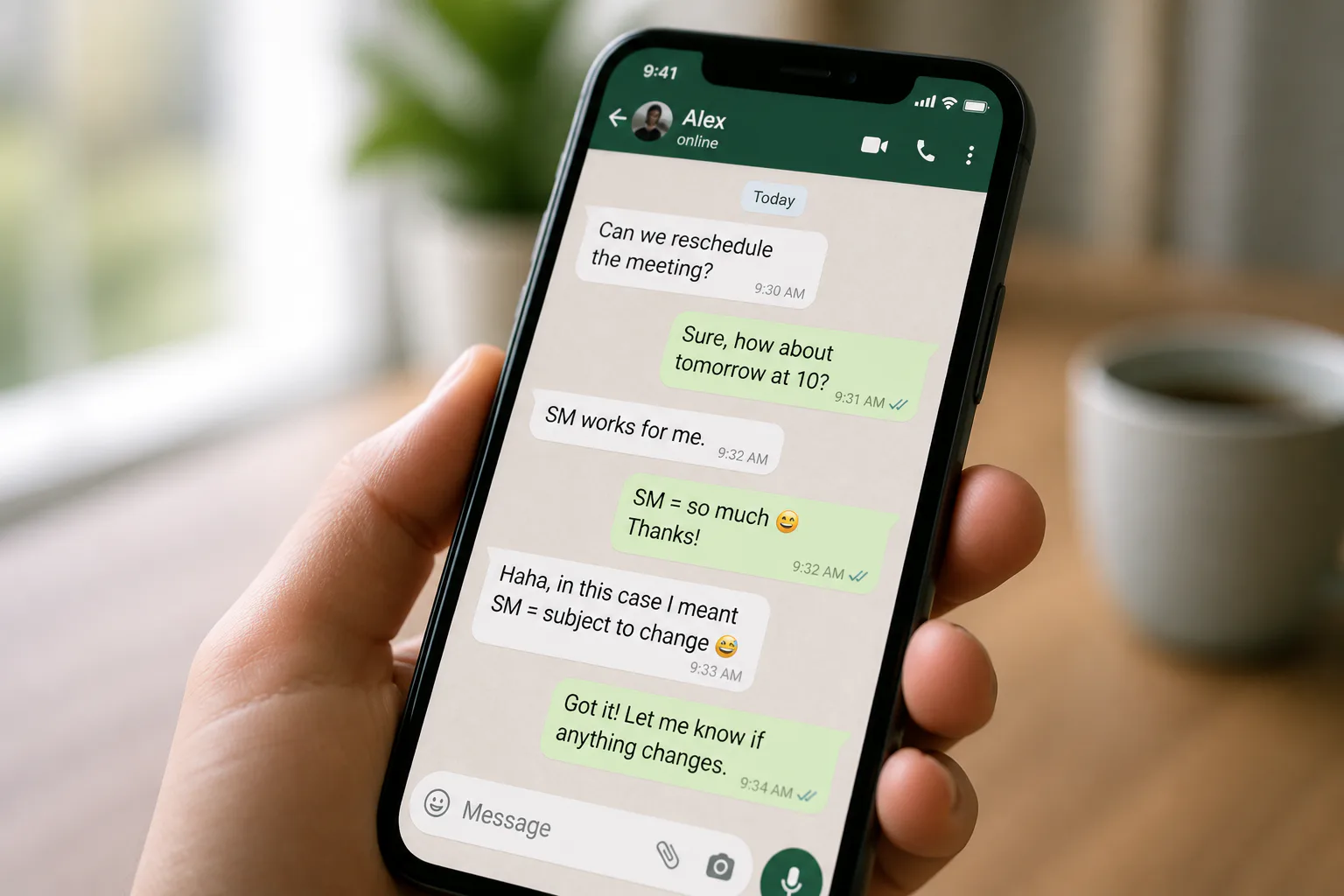
SM full form in chat usually means so much. People use it in texts, DMs, comments, and social apps to shorten phrases like “I love this so much” or “thank you so much.” In some conversations, though, SM can mean something else, so the tone, topic, and surrounding words matter.
If you are trying to read SM correctly, the safest approach is simple: check whether the message is emotional, casual, funny, or tied to a specific online community. In most everyday messaging, “so much” is the intended meaning. Less often, it can stand for phrases such as “sad moment” or other niche shorthand.
What Does ‘sm’ Mean in Chat?
Most common meaning
In chat, sm most often means “so much”. It is used to add emphasis without typing the full phrase. You will see it in friendly messages, reaction posts, captions, and quick replies where people want to sound casual and fast.
Examples include “I miss you sm,” “That movie made me laugh sm,” and “Thanks sm for helping me.” In each case, SM strengthens the feeling behind the sentence. It works the same way “so much” would work in normal writing, just in a shorter form.
How context changes the meaning
Even though “so much” is the standard meaning, SM does not always mean the same thing in every message. If the conversation is clearly emotional or dramatic, some users use it for “sad moment.” If the topic is highly niche, such as fandom, gaming, or private friend-group slang, it can have a custom meaning known only to that circle.
That is why context matters more than the letters alone. A sentence like “I love this sm” clearly points to “so much.” But “Ugh, sm” after bad news can signal a reaction phrase instead of emphasis.
Quick ways to read it correctly
- If SM follows a feeling word like love, miss, hate, or thank, it almost always means so much.
- If the message is short and emotional, it can be a reaction-based meaning.
- If the chat involves inside jokes, ask for clarification before assuming.
- If the sentence sounds complete when you replace SM with “so much,” that is usually the right read.
Writers often shorten emotional phrases this way because chat language rewards speed. That is also why similar abbreviations appear in related guides about TYSM meaning in chat, where the same idea of “so much” shows up in a longer shortcut.
Common sentence patterns
| Chat phrase | Likely meaning of SM | Full sentence |
|---|---|---|
| I miss you sm | So much | I miss you so much |
| Thanks sm | So much | Thanks so much |
| I love this sm | So much | I love this so much |
| sm 🙁 | Depends on context | Could be a reaction or niche shorthand |
Common Uses of ‘sm’ in Messaging
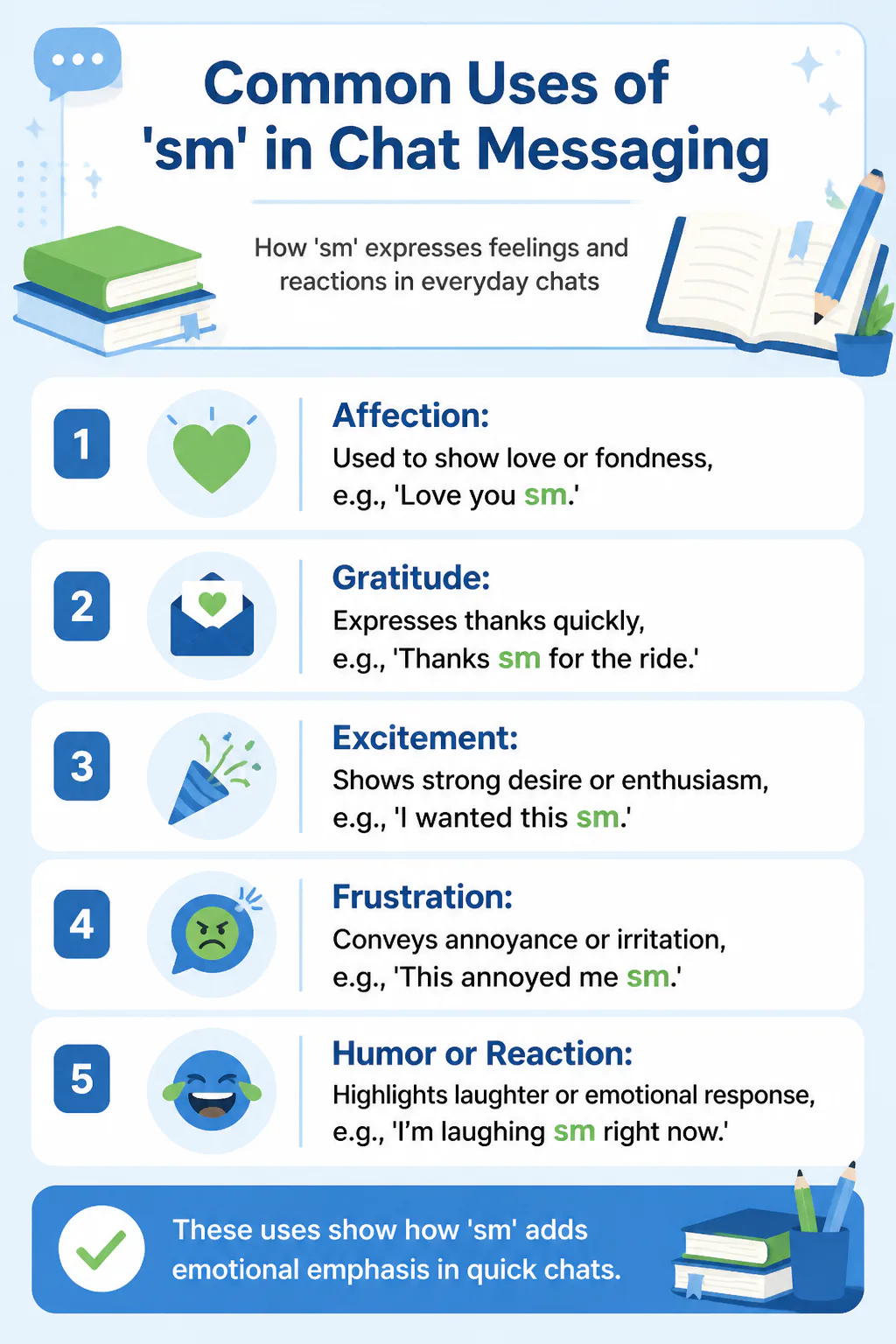
Everyday chat situations
- Affection: “Love you sm.”
- Gratitude: “Thanks sm for the ride.”
- Excitement: “I wanted this sm.”
- Frustration: “This annoyed me sm.”
- Humor or reaction: “I’m laughing sm right now.”
Where you see it most
- Text messages
- Instagram comments and captions
- TikTok replies
- Snapchat chats
- Discord and casual group chats
In plain texting culture, people use SM the same way they use other quick abbreviations, and the broader SM meaning in text stays close to what you see in chat apps.
Examples of ‘sm’ in Chat Conversations
How SM appears in everyday messages
Here are a few natural examples that show how SM works in conversation. Replacing it with “so much” makes the meaning clear right away.
- Friend 1: I miss our old class sm.
Friend 2: Same, it was actually fun. - Person A: Thanks sm for checking on me.
Person B: Of course, anytime. - User 1: I love this song sm.
User 2: It has been on repeat all week.
When the meaning is less obvious
Now compare that with a message like “sm…” after someone shares bad news. That version is harder to decode because it does not fit neatly into a sentence. In cases like that, readers often rely on tone markers, emojis, or earlier messages.
Why context still matters
Short forms can also overlap with other slang patterns, much like CM meaning in text changes based on who is speaking and where the message appears.
Other Possible Meanings of ‘sm’
Less common interpretations
- Sad moment, used after something disappointing or awkward.
- Social media, more common in marketing or creator conversations than in casual chat.
- Send me, rare, but some users shorten it this way in direct messages.
- Sometime-specific inside slang, private friend groups often invent their own meanings.
Meanings to treat carefully
Some abbreviations get assigned many random expansions online, but most are not useful in real chat reading. For everyday messaging in 2026, “so much” remains the interpretation you should try first. Only switch meanings if the sentence clearly does not work that way.
How to Interpret ‘sm’ Based on Context
Check the words around it
The fastest way to decode SM is to plug in “so much” and see whether the sentence sounds natural. “I appreciate you sm” works perfectly, so the meaning is obvious. If the sentence still feels broken, then look at tone, emojis, punctuation, and the topic being discussed.
Notice tone and platform
On apps built around fast reactions, people trim words more aggressively than they would in email or school writing. A cheerful message, compliment, or thank-you almost always points to “so much.” A vague standalone “sm” in a dramatic exchange can point to a reaction-based meaning instead.
Use this simple checklist
- Replace SM with “so much.”
- Read the full sentence aloud in your head.
- Check whether the mood is positive, negative, or sarcastic.
- Look for clues in previous messages.
- If needed, ask the sender what they meant.
That final step is often best because slang changes quickly, and some groups use abbreviations in ways that do not match wider internet usage.
FAQs
Does SM always mean so much?
No. It usually means “so much,” but some users also use it for “sad moment” or a private shorthand that only makes sense in context.
What is the full form of SM in Instagram chat?
In Instagram chat, the full form is usually “so much.” For example, “love this sm” means “love this so much.”
Is SM formal or informal?
SM is informal. It fits casual chats, comments, and texts, but it should not be used in formal writing, work emails, or academic assignments.
How do I reply if I do not understand SM?
Ask directly and casually. A simple reply like “What does SM mean here?” avoids confusion and keeps the conversation clear.
Conclusion
In most chats, SM means so much, and context helps when a message could mean something else.