

Beautiful Ways to Say Rest in Peace: Heartfelt Alternatives
Finding the right words after a loss can feel unexpectedly hard. Familiar expressions may seem too brief, while more elaborate wording can feel out of place in a tender moment. Many people struggle to balance warmth, respect, and sincerity when writing a message of remembrance. This guide explores language choices for cards, memorials, messages, and quiet personal reflection.
Key Takeaways
- Beautiful alternatives to “rest in peace” can express sympathy with warmth, dignity, and emotional care.
- Phrases range from classic expressions to poetic lines, spiritual wording, and culturally sensitive variations.
- The right phrase depends on your relationship to the person, the family’s beliefs, and the tone you want your message to carry.
Introduction to Condolence Expressions
Words of condolence do more than acknowledge death. They honor a life, support the grieving, and create a small moment of comfort in a painful time. Even a short phrase can feel deeply meaningful when it matches the person, the occasion, and the family’s values.
That is why many people look beyond the standard wording. A more personal expression can sound softer, more loving, or more reflective. In the same way people choose between phrases like safe journey wishes based on tone, condolence language also carries subtle emotional differences.
Beautiful Alternatives to ‘Rest in Peace’
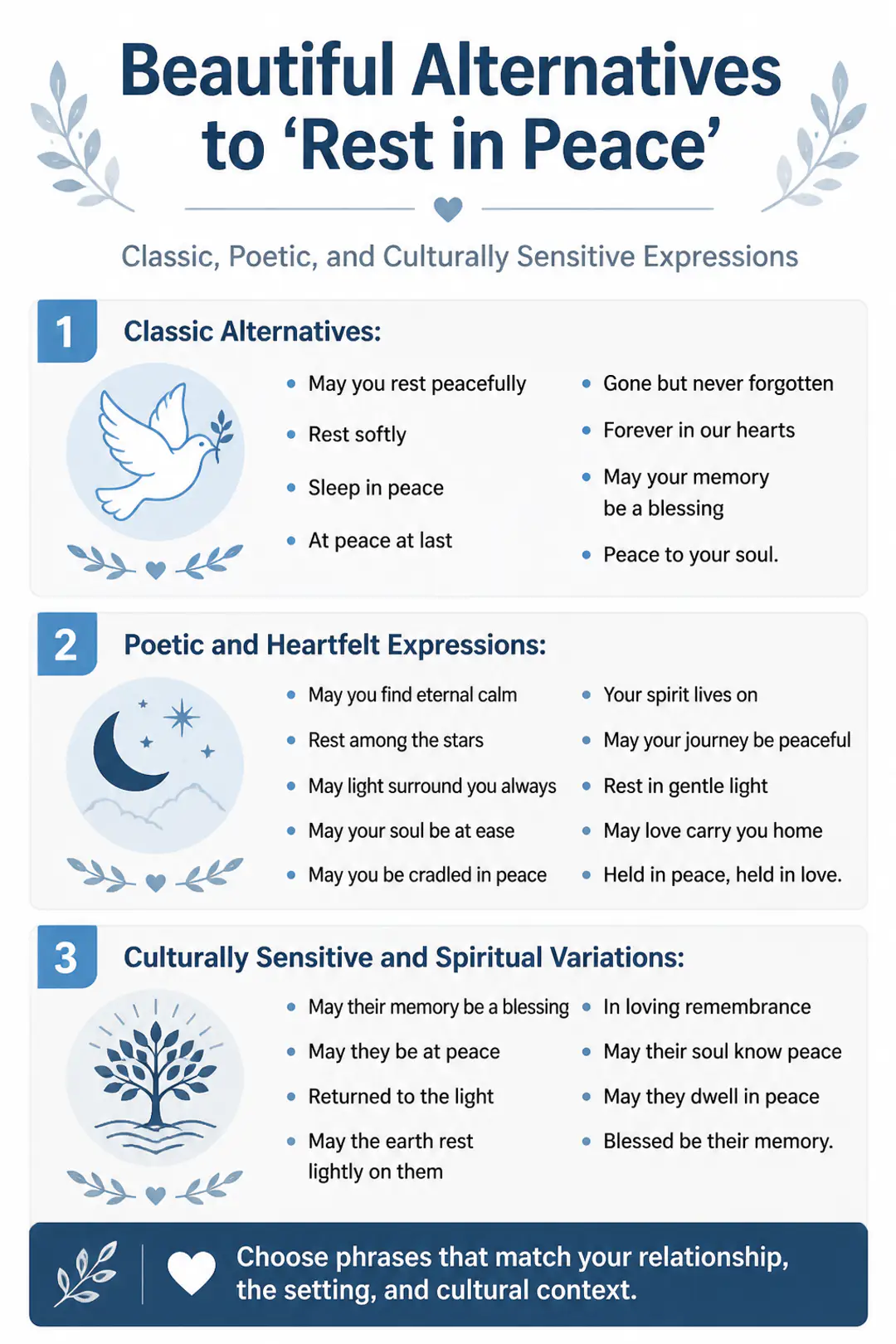
Classic Alternatives
- May you rest peacefully, gentle and traditional, ideal for sympathy cards and funeral programs.
- Rest softly, a tender variation that feels intimate and calm.
- Sleep in peace, familiar and soothing, often used in memorial notes.
- At peace at last, suitable when speaking of someone who suffered or endured a long illness.
- Gone but never forgotten, best when you want to emphasize remembrance as much as loss.
- Forever in our hearts, warm and affectionate, especially fitting for family tributes.
- May your memory be a blessing, respectful and widely appreciated in reflective condolence messages.
- Peace to your soul, simple and dignified, with a spiritual tone that is not overly specific.
Poetic and Heartfelt Expressions
- May you find eternal calm, elegant and serene, suited to formal messages or memorial readings.
- Rest among the stars, lyrical and comforting, often chosen for a softer, more poetic tribute.
- May light surround you always, a graceful phrase that suggests comfort, warmth, and gentle remembrance.
- May your soul be at ease, thoughtful and measured, appropriate for both close and formal relationships.
- May you be cradled in peace, deeply tender, especially fitting for personal notes.
- Your spirit lives on, best when honoring legacy, character, and lasting influence.
- May your journey be peaceful, works well for those who prefer imagery of passage rather than finality.
- Rest in gentle light, soft, elegant wording for remembrance posts or tribute cards.
- May love carry you home, emotional and intimate, often suited to very close loss.
- Held in peace, held in love, a comforting phrase for memorial keepsakes or condolence notes.
Some people prefer imagery that suggests movement, comfort, or release rather than stillness alone. If that softer wording appeals to you, phrases built around safe travels meaning can also inspire gentler memorial language such as “may your journey be peaceful.”
Culturally Sensitive and Spiritual Variations
- May their memory be a blessing, a cherished expression in Jewish contexts and respectful when used appropriately.
- May they be at peace, broadly suitable across many beliefs because it is gentle and nonprescriptive.
- Returned to the light, spiritual in tone, best used when the family is comfortable with that language.
- May the earth rest lightly on them, traditional and poetic, often used in Irish remembrance settings.
- In loving remembrance, neutral, respectful, and appropriate for cards, obituaries, and floral tributes.
- May their soul know peace, suitable when a spiritual tone feels welcome but strong religious wording does not.
- May they dwell in peace, formal and reverent, often fitting for written tributes.
- Blessed be their memory, best used when you know the family welcomes spiritual language.
| Style | Example Phrase | Tone | Best Use |
|---|---|---|---|
| Classic | May you rest peacefully | Warm, respectful | Sympathy cards, funeral notes |
| Classic | Forever in our hearts | Loving, familiar | Family tributes, memorial posts |
| Poetic | Rest among the stars | Lyrical, gentle | Personal messages, keepsakes |
| Poetic | Rest in gentle light | Elegant, reflective | Tributes, remembrance writing |
| Cultural/Spiritual | May their memory be a blessing | Respectful, tradition-rooted | When culturally appropriate |
| Cultural/Spiritual | May they be at peace | Neutral, compassionate | Mixed-faith or general condolences |
Quotes About Peaceful Rest
If you want a longer line rather than a short closing phrase, a quotation can add depth and beauty. A well-known collection of 57 rest-in-peace quotes brings together reflections on mourning, legacy, remembrance, the afterlife, and the meaning of life and death. The selections span solemn, contemplative, and occasionally light touches, with quotes from writers including Carlos Wallace, Mokokoma Mokhonoana, Michael Bassey Johnson, and Kyung-Sook Shin.
- Choose a reflective quote when writing a memorial caption or obituary line.
- Use a shorter saying for a sympathy card, where brevity often feels more sincere.
- Select a legacy-centered quote when the person was known for service, love, or influence.
- Keep the family’s tone in mind, since some quotes are solemn while others are gently uplifting.
You can browse these quotes for inspiration, read through different emotional tones, and share favorites with friends after signing in. That range is helpful because remembrance language, much like asking how your day is going, changes depending on closeness, mood, and the comfort you want your words to bring.
- For a card: “Forever in our hearts.”
- For a memorial post: “Your spirit lives on in all who loved you.”
- For a formal tribute: “May your memory be a blessing.”
- For a personal message: “May love carry you home.”
How to Choose the Right Phrase
Consider the Relationship
If you were very close to the person, a phrase with warmth and intimacy often feels most natural. “Forever in our hearts” or “Held in peace, held in love” can sound deeply personal without becoming overly dramatic. For a distant acquaintance or professional setting, simpler wording is usually better.
Respect Beliefs and Traditions
Religious and spiritual phrases should match the family’s background whenever possible. If you are unsure, choose neutral wording such as “May they be at peace” or “In loving remembrance.” That shows care without assuming beliefs.
Match the Setting
The place where the words appear matters. A headstone, floral ribbon, sympathy text, eulogy, and social tribute all call for different length and tone.
- Short spaces: “Rest softly” or “At peace at last.”
- Cards: “May your soul be at ease.”
- Public tributes: “Gone but never forgotten.”
- Personal letters: “May you be cradled in peace.”
Choose Sincerity Over Ornament
The most beautiful phrase is not always the most poetic one. If a simpler line sounds more like your own voice, it will usually bring greater comfort. Thoughtful condolence expressions work best when they feel honest, gentle, and appropriate to the moment.
FAQs
What can I say instead of rest in peace?
You can say “May you rest peacefully,” “Forever in our hearts,” “At peace at last,” or “May their memory be a blessing.” The best choice depends on tone, relationship, and cultural context.
Is it okay to use poetic condolence phrases?
Yes, if the phrase feels sincere and suits the person or family. Poetic wording works especially well in personal tributes, memorial posts, and remembrance cards.
What is the safest neutral phrase to use?
“May they be at peace” is one of the safest and most widely appropriate options. It is compassionate, respectful, and not tied to one specific faith tradition.
Can quotes be better than short phrases?
Sometimes. A short phrase works best when space is limited, while a quote can add reflection and emotional depth in a longer tribute or message.
Conclusion
Choosing words for loss is never easy, but thoughtful language can offer real comfort. Whether you prefer a classic phrase, a poetic line, or a culturally rooted expression, the best choice is the one that feels sincere and respectful. Choosing the right words can honor precious memories and bring comfort, so it helps to select expressions that feel sincere and appropriate to your relationship and cultural context.

Related Posts

Best Fast Learner Synonyms for Resumes and Reviews

30 Ways to Say Bro: Casual Slang and Nicknames