Hope You Are Doing Well: Meaning and Proper Use
“Hope you are doing well” is a polite English phrase used to greet someone and show friendly interest in their well-being. It appears often in emails, work messages, and personal notes because it sounds warm, positive, and easy to use. At the same time, it is so common that it can sometimes feel routine, so knowing when to use it and when to choose another opening helps your message sound more natural.
What Does ‘Hope You Are Doing Well’ Mean?
The phrase means, in simple terms, “I hope things are going well for you.” It is a friendly opener that lets the other person know you are acknowledging them as a person before moving to the main point of your message. In both professional and personal communication, it works as a brief sign of care and courtesy.
Its basic meaning
When someone writes this phrase, they are expressing good wishes for the other person’s health, mood, or general situation. It does not usually ask for a detailed reply. Instead, it serves as a soft, polite way to begin a conversation.
Why people use it
Writers use it because it creates a friendly tone while keeping the message focused. In business communication, this matters because it helps you move into your request, update, or question without sounding abrupt. In personal messages, it can also show real concern and open the door to a more caring exchange.
Email and message examples
Here is how the phrase often appears in real communication:
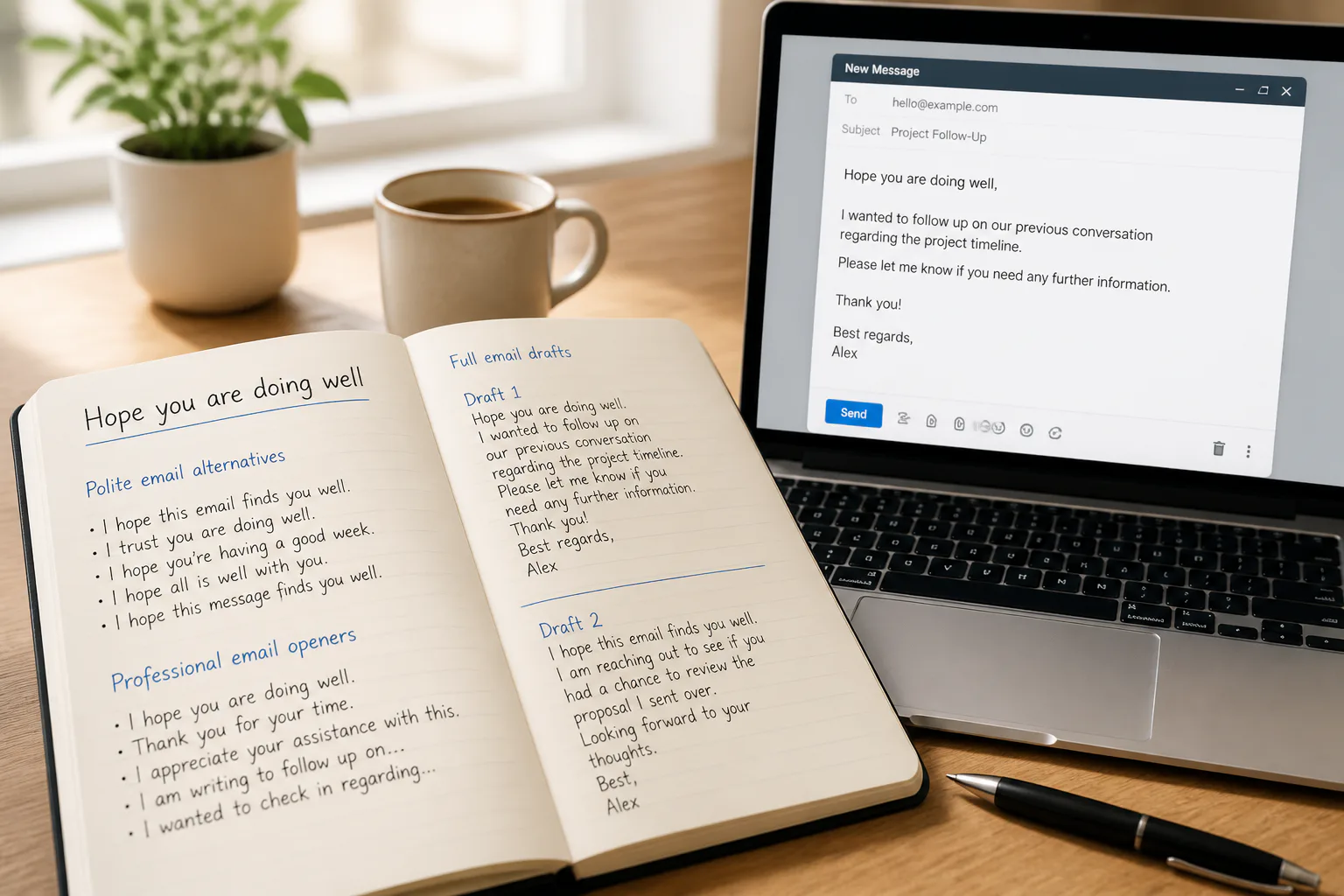
- Email to a coworker: “Hope you are doing well. I wanted to follow up on the meeting notes from yesterday.”
- Email to a client: “Hope you are doing well. I’m reaching out to confirm the project timeline.”
- Message to a friend: “Hope you are doing well. It’s been a while since we talked.”
- Check-in note: “Hope you are doing well and settling in comfortably at your new job.”
What tone it gives
The tone is usually friendly, polite, and neutral. That is why the phrase fits many situations. Still, if you use it with no personal connection to the rest of the message, it can sound automatic rather than sincere.
Polite alternatives
If you want a similar opening with a slightly different feel, several alternatives work well. Some are more formal, while others are better for everyday conversation. If you often send work emails, varying your openings can help you avoid the same phrase every time, much like choosing the right wording in please see attached messages can make writing feel more natural.
- I hope this email finds you well for formal messages
- Hope all is well for short, familiar messages
- I hope you’re having a good week for coworkers or ongoing conversations
- How are you doing? for informal messages when you truly want a response
Etiquette to remember
Use the phrase when it matches the relationship and the situation. It works best when your message is respectful and not overly urgent in tone. If you are writing after bad news, during a conflict, or in a message that is purely transactional and rushed, another opening may be more appropriate.
When and How to Use This Phrase
This phrase works well at the start of emails, direct messages, and short notes when you want to sound courteous. It is especially common in professional communication because it lets you acknowledge the recipient briefly before getting to the purpose of the message. That balance of warmth and efficiency is the main reason it remains popular.
Best situations
Use it when writing to coworkers, clients, business partners, teachers, or acquaintances you want to address politely. It also fits personal messages if you genuinely want to signal care without writing a long introduction. In many cases, it is better when you have at least some ongoing relationship with the person.
How to place it
You can use it as the first sentence after the greeting. For example: “Hi Maria, hope you are doing well. I’m writing to ask about the updated schedule.” If you need a slightly warmer option for a familiar contact, a phrase such as how’s your day going can feel more natural in a casual message.
When to skip it
Do not force it into every message. If you are replying in a fast-moving thread, following up on urgent information, or writing to someone who has just shared difficult news, a more direct or context-specific opening often sounds better.
Cultural Considerations
The phrase is widely understood as polite and friendly, but tone depends on context. In some workplaces, it sounds professional and expected. In others, especially where communication is very direct, it may feel formulaic if it appears in every email.
How tone changes reception
If the rest of your message is warm, thoughtful, and specific, the phrase usually feels sincere. If it is followed immediately by a demand, complaint, or blunt request, it can sound like empty politeness. That is why matching your opening to the rest of the message matters.
Formal and informal use
“Hope you are doing well” works in both formal and informal settings, but its effect changes slightly. In formal communication, it sounds safe and courteous. In informal communication, it can seem a little stiff unless your relationship already includes that style.
Cultural nuance
English speakers in professional settings often use routine greetings as a sign of politeness, even when they do not expect a detailed answer. People from more direct communication cultures may read the phrase as unnecessary or overly standard. Similar choices appear in other set expressions, including how warmly you close with looking forward to working with you depending on the relationship.
Alternatives to ‘Hope You Are Doing Well’
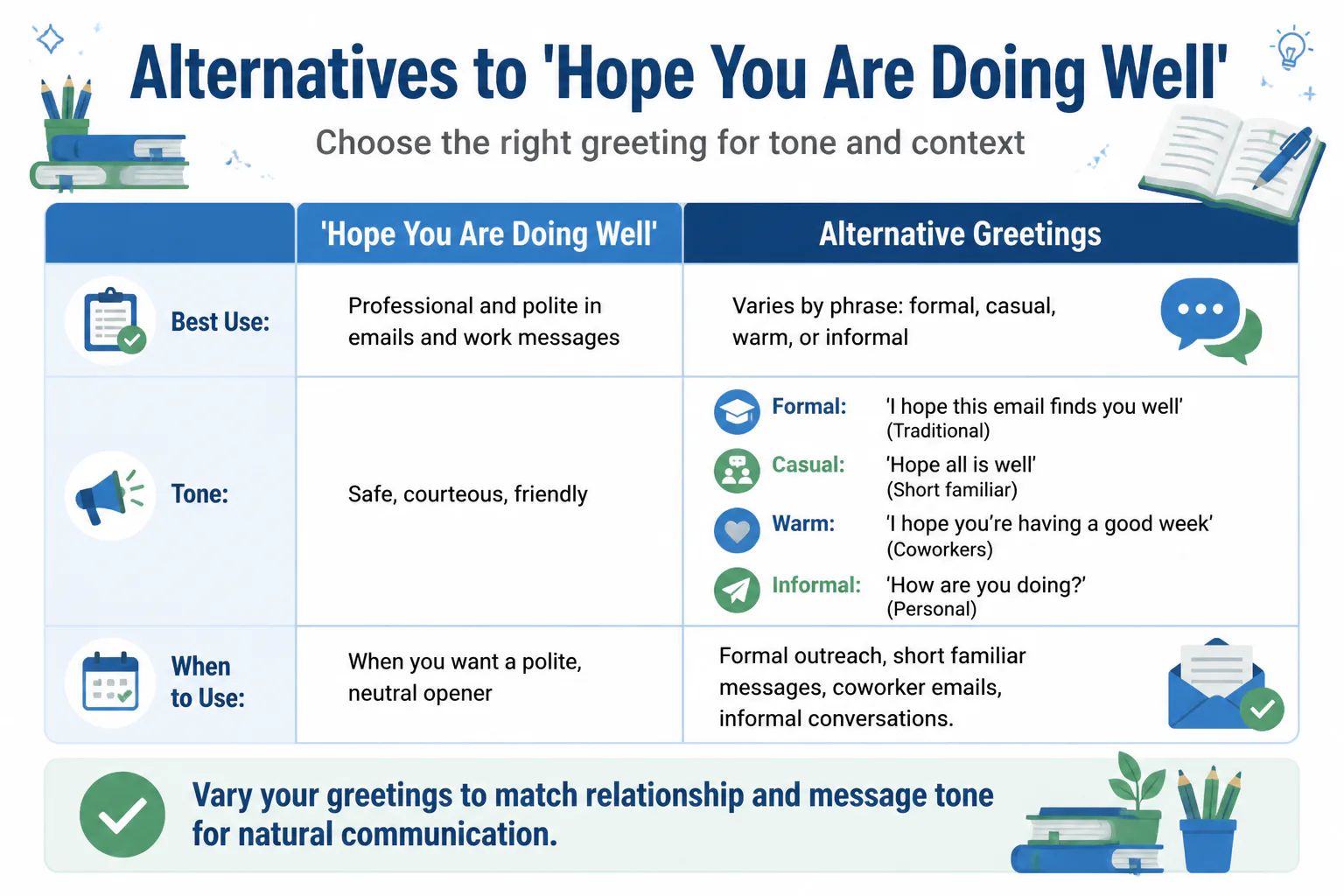
- I hope this email finds you well, more traditional and suitable for formal messages to customers, clients, or business partners.
- Hope all is well, casual and useful for people you know well or contact often.
- I hope you’re having a good week, friendly and specific, especially good for coworkers.
- How are you doing?, informal and common, best when you are open to a real reply.
- It’s a pleasure connecting with you, useful when you are making first contact and want a professional tone.
| Alternative | Best use | Tone |
|---|---|---|
| I hope this email finds you well | Formal outreach | Traditional |
| Hope all is well | Short familiar messages | Casual |
| I hope you’re having a good week | Coworker emails | Warm |
| How are you doing? | Informal conversation | Personal |
Etiquette Tips
- Using it too often: Repeating the same opener in every email can make your writing sound tired or impersonal.
- Sounding insincere: If the rest of the message is cold or demanding, the phrase may feel empty.
- Ignoring context: Avoid it in messages about bad news, complaints, or urgent corrections unless you adapt the tone carefully.
- Choosing the wrong level of formality: For close coworkers or friends, a more natural opening may fit better.
- Asking without interest: If you write “How are you doing?” instead, be ready to respond genuinely rather than treating it as filler.
Better etiquette habits
- Match the phrase to your relationship with the reader.
- Vary your openings so your writing does not feel repetitive.
- Use a more specific greeting when you know the person’s situation.
- Keep the rest of the message consistent with the warm opening.
- Be direct when the situation calls for clarity over routine politeness.
FAQs
Is “hope you are doing well” more appropriate than “how are you doing?”
Yes. It is a professional and widely accepted opening in emails and other work communication because it sounds polite and friendly.
Can “hope you are doing well” sound insincere?
Yes. Because it is very common, it can feel cliché if you use it constantly or if the rest of your message sounds abrupt.
Is “hope you are doing well” better than “how are you doing?” in professional writing?
Not always. “Hope you are doing well” is safer in professional writing, while “How are you doing?” is more personal and informal.
Can I use it in a text message?
Yes, but it may sound a little formal in casual texting. With friends or close coworkers, a shorter and more natural opener often works better.
Conclusion
“Hope you are doing well” remains a useful opening when you want to sound polite and approachable. It works best when it fits the context, the relationship, and the tone of the rest of your message.