Happy Early Birthday: Usage and Etiquette
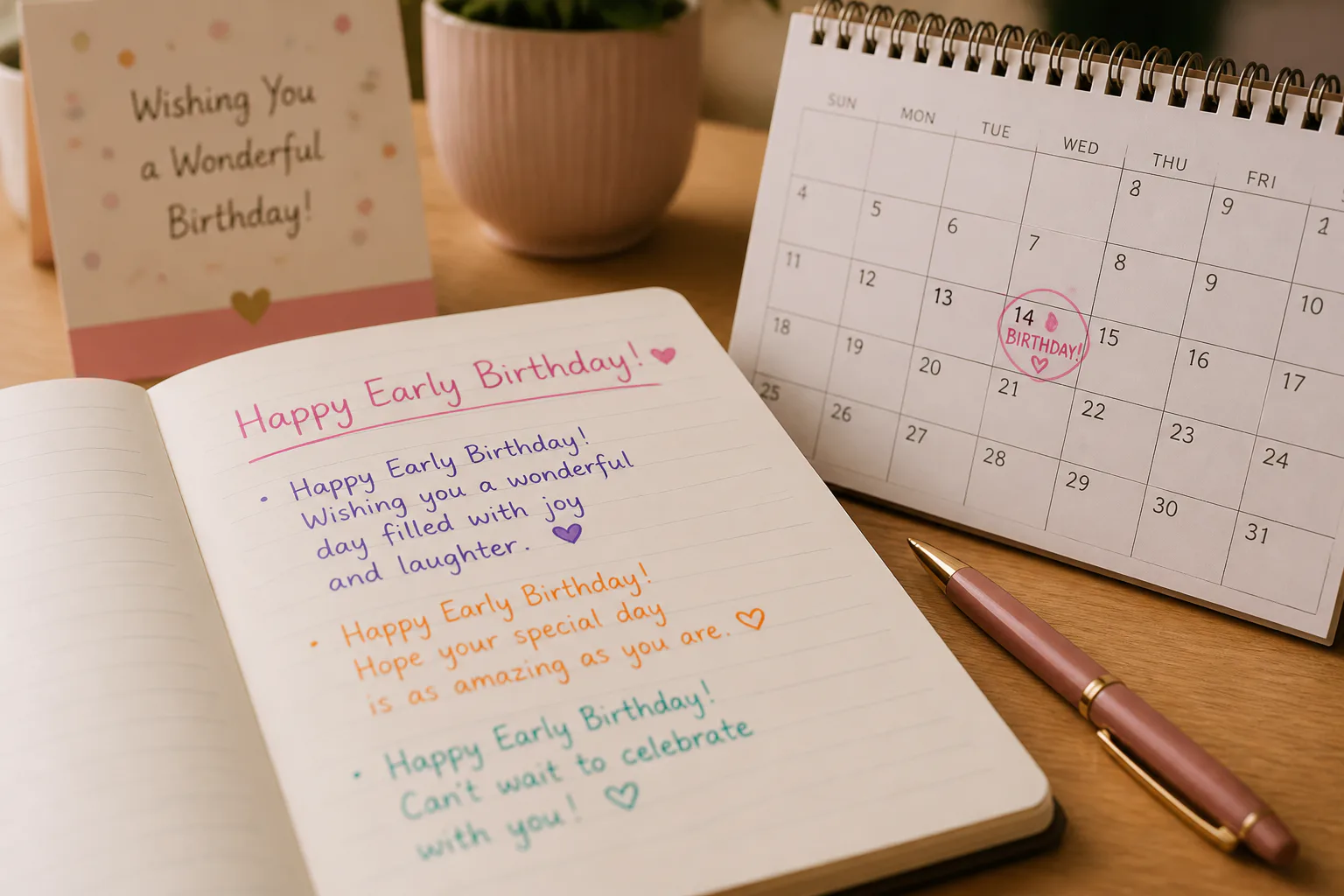
Happy early birthday means you are wishing someone well before their actual birthday arrives. People use it when they know they will not speak to the person on the day itself, when they are celebrating in advance, or when they want to acknowledge the upcoming occasion early in a friendly way.
The phrase is common in texts, cards, social media comments, workplace chats, and casual conversation. It sounds warm and thoughtful, but timing matters. Saying it too early can feel odd, while saying it a day or two before the birthday usually feels natural and polite.
What Does ‘Happy Early Birthday’ Mean?
Literal meaning
The phrase means exactly what it says: “happy birthday,” given before the birthday date. Instead of waiting for the actual day, the speaker offers the birthday wish in advance. It is a simple way to mark the occasion early.
For example, if your friend’s birthday is on Saturday and you are seeing them on Thursday, you might say, “Happy early birthday!” In that case, you are not confused about the date. You are intentionally wishing them well ahead of time.
Social meaning
Socially, the phrase often carries a thoughtful message: “I remembered your birthday, and I wanted to say something now.” It shows attention and care, especially if you expect to be busy, traveling, or offline on the actual day.
It can also reflect the way people celebrate birthdays in real life. Many birthday dinners, office cakes, and family gatherings happen before the actual date, so an early birthday wish fits the moment. If you want a close comparison, the wording is similar to happy birthday in advance, which carries the same basic idea.
When it is appropriate
- It is appropriate to say it when there is a clear reason to do so.
- The most common reason is that you will not see or speak to the person on their birthday.
- It also works when a celebration is happening early, such as a Friday party for a Sunday birthday.
In most social settings, the safest window is a few days before the birthday. One day early sounds very natural. Several days early can still work if there is a practical reason, but saying it weeks ahead often feels premature unless you are talking about an upcoming event.
Etiquette and tone
The tone of the phrase is casual, friendly, and widely accepted. It is fine in everyday English, especially with friends, classmates, coworkers, and relatives. In formal situations, people often make the sentence slightly fuller, such as, “Wishing you a happy early birthday.”
Good etiquette depends less on the phrase itself and more on context. If the birthday person is superstitious or strongly prefers birthday wishes only on the day, it is better to wait. Most people, however, take it as a kind and harmless gesture.
Common mistakes
- Saying it too far in advance without a reason
- Using it as a substitute for contacting the person on the actual day when you easily could
- Assuming everyone likes early wishes in the same way
- Writing a very casual version in a formal note when a polished sentence would fit better
A practical rule is simple: if the early timing makes sense, the phrase makes sense. If there is no obvious reason for saying it early, waiting is usually the better choice.
When and Why to Say ‘Happy Early Birthday’
Best timing
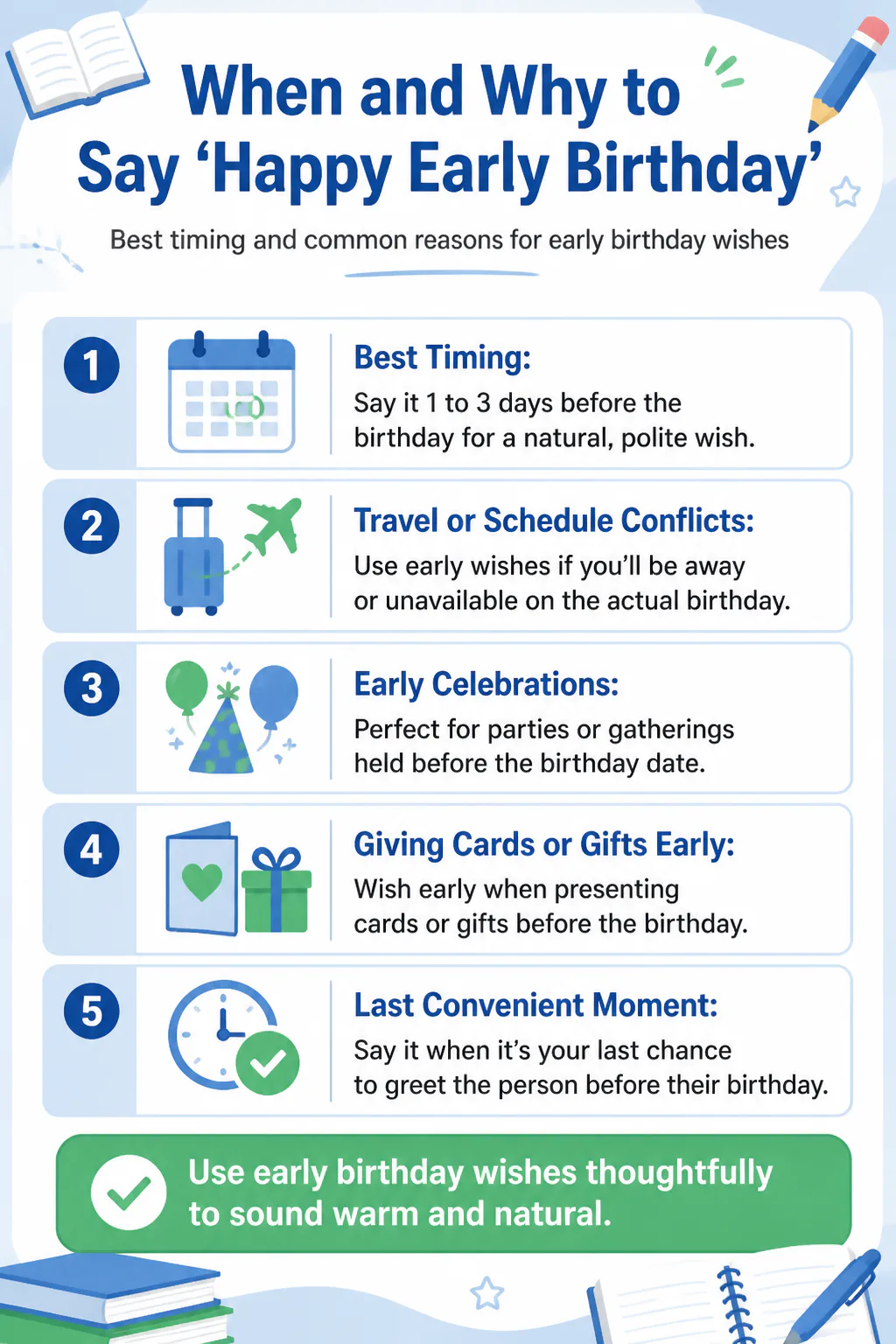
The best time to say it is usually one to three days before the birthday. That range sounds natural in conversation and matches how people often plan social events. Earlier than that can work for travel, schedule conflicts, or advance celebrations.
Common reasons
- You will be away or unavailable on the actual birthday
- You are attending an early celebration
- You want to give a card or gift before the date
- You are speaking to the person at the last convenient moment
In casual speech, people also use related wording such as advance happy birthday, but “happy early birthday” sounds more natural in everyday conversation. The phrase works especially well when you want to sound warm without being overly formal.
Is It Polite to Say ‘Happy Early Birthday’?
General etiquette
Yes, it is polite in most situations. Most people hear it as a friendly early wish, not as a breach of etiquette. The key is to use it naturally and not so early that it feels random.
When to be careful
Some people prefer birthday greetings on the exact day, and a few consider early wishes unlucky. If you know the person feels that way, respect that preference. Good manners always depend on the person as much as the phrase.
Formal and informal settings
With friends, “Happy early birthday!” is perfectly fine. At work or in a more formal message, a fuller line often sounds smoother, such as “Wishing you a happy early birthday and a wonderful weekend.” If you want to vary your wording, you can also browse different ways to say happy birthday that match the tone of the relationship.
| Context | Good choice? | Suggested wording |
|---|---|---|
| Text to a friend | Yes | Happy early birthday! |
| Office chat | Yes | Wishing you a happy early birthday. |
| Card before a trip | Yes | Happy early birthday since I will miss your big day. |
| Two weeks early, no reason | Less ideal | Wait until closer to the date. |
Examples of Using ‘Happy Early Birthday’ in Messages
Casual examples
- Happy early birthday! I hope you have an amazing day on Saturday.
- We will not talk tomorrow, so happy early birthday!
- Happy early birthday, cousin. Enjoy your dinner this weekend.
- Since your party is tonight, happy early birthday!
Work and school examples
- Wishing you a happy early birthday and a relaxing day off tomorrow.
- Happy early birthday, Maria. I hope you enjoy celebrating with your family.
- I wanted to say happy early birthday before the long weekend begins.
- Have a great celebration, and happy early birthday from all of us.
Social media examples
- Happy early birthday to one of my favorite people.
- Posting this now because I do not want to miss it: happy early birthday!
- Happy early birthday! Wishing you lots of joy this weekend.
Alternatives to ‘Happy Early Birthday’
Natural substitutes
- Wishing you a happy birthday in advance.
- Hope you have a wonderful birthday this weekend.
- Enjoy your birthday celebration ahead of time.
- I wanted to wish you a great birthday before the day gets busy.
- Have an amazing birthday when it arrives.
How to choose the best option
- Use “happy early birthday” for casual, direct messages.
- Use “wishing you a happy birthday in advance” for a more polished tone.
- Use a full sentence when writing to a coworker, teacher, or client.
- Use warmer personal details for close friends and family.
FAQs
Is “happy early birthday” grammatically correct?
Yes. It is a natural English phrase used to wish someone a happy birthday before the date arrives. It is especially common in speech, texting, and social media.
How early is too early?
Without a reason, more than a few days early can feel unusual. If you are traveling, giving a gift early, or attending an advance celebration, a longer gap makes sense.
Is it better to say “happy early birthday” or “happy birthday in advance”?
Both are correct. “Happy early birthday” sounds more casual and conversational, while “happy birthday in advance” sounds slightly more formal.
Can I say it in a card?
Yes. It works well in a card you are giving before the birthday, especially if you add a short reason, such as “I wanted to give this to you now in case I miss your special day.”
Conclusion
“Happy early birthday” works best when you have a clear reason to say it before the actual date and want your message to sound thoughtful and natural.