How Was Your Day: Meaning, Usage, and Responses
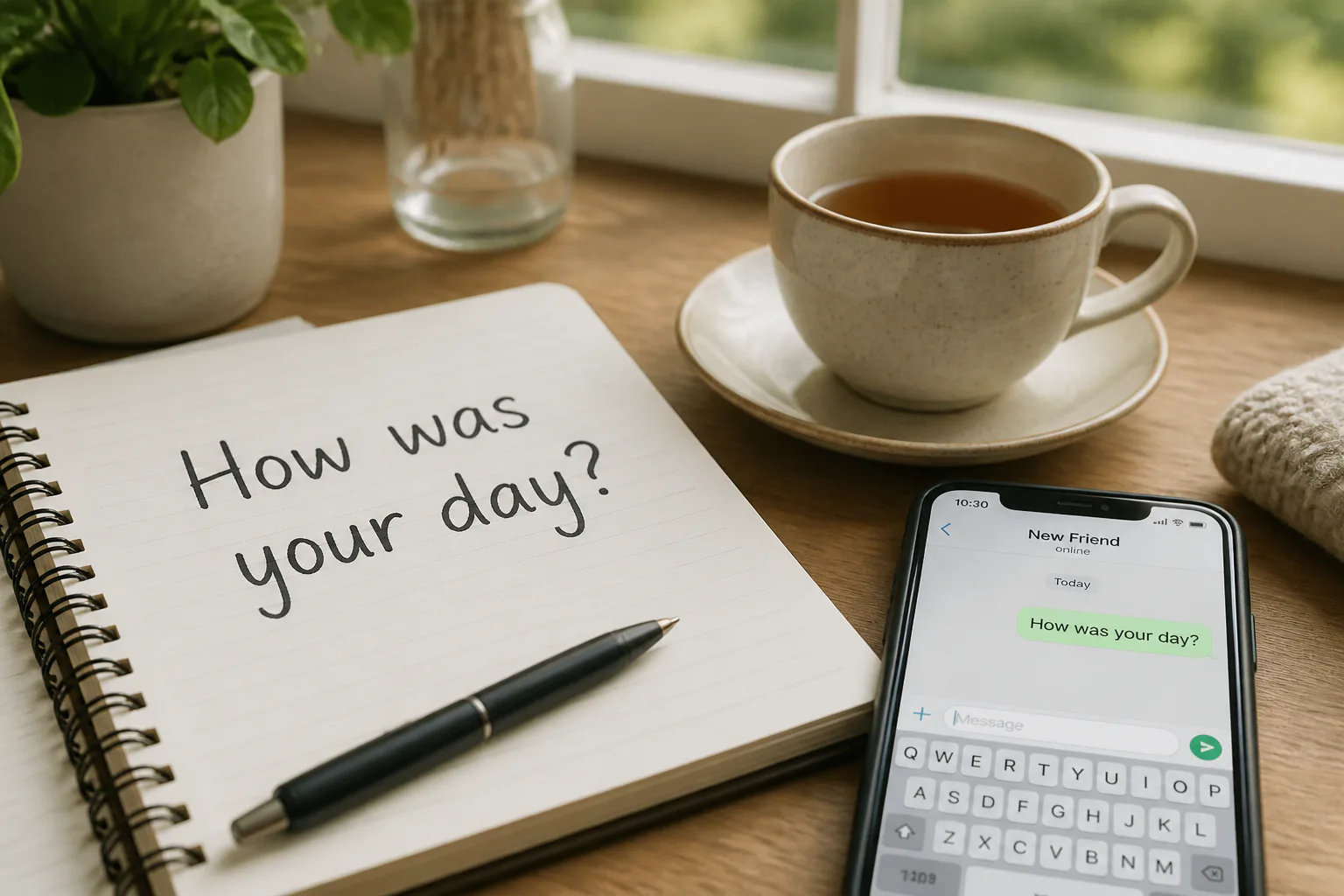
“How was your day” is a common English phrase people use to ask about someone’s experiences, mood, or overall day. In American English, it often does more than ask for facts. It can show interest, care, politeness, or a wish to start a conversation, especially with family, friends, coworkers, or a partner.
Depending on the situation, the speaker may want a short answer like “Good” or a fuller reply about what happened. The phrase works as both a real question and a social check-in. That is why it appears so often in everyday speech, texts, phone calls, and evening conversations at home.
What Does ‘How Was Your Day’ Mean?
Basic meaning
At its most direct level, “how was your day” means “What was your day like?” The speaker is asking for a summary of the other person’s day. That summary can include events, feelings, stress, success, boredom, or anything else that shaped the day.
In real conversation, though, the phrase often carries an implied meaning: I care about how you’re doing. Someone who asks this is not always requesting a detailed timeline. Very often, they are opening the door for connection.
Literal and implied meanings
Literal meaning focuses on the day itself. The speaker wants to know whether the day was good, bad, busy, relaxing, tiring, productive, or unusual. This is the plain surface meaning of the question.
The implied meaning depends on tone and relationship. A spouse might ask it warmly to reconnect after work. A coworker may use it as friendly small talk. A parent might ask because they want to hear what happened at school and also check on a child’s emotions.
- Literal meaning: “Tell me about your day.”
- Social meaning: “I want to check in with you.”
- Emotional meaning: “I care how you feel.”
- Conversational meaning: “Let’s start talking.”
How it functions in conversation
This phrase is common because it is broad, easy, and polite. It lets the other person choose the level of detail. They can answer with one word, one sentence, or a longer story.
It also helps ease people into conversation. Questions like this are part of the same family as greetings such as how’s your day going, which people use when they want to sound relaxed and friendly without being too formal.
In many cases, the question is not meant to be deeply analytical. It is a routine social phrase, but that does not make it meaningless. In close relationships, this simple question can be one of the main ways people show daily attention.
Common examples
Here are a few natural ways the phrase appears in everyday English:
- “Hi, how was your day?”
- “You look tired. How was your day?”
- “Welcome home. How was your day at work?”
- “How was your day today? Anything interesting happen?”
These examples show that the phrase can stand alone or be followed by a more specific question. The extra question often signals real interest and invites a fuller answer.
Typical responses
Most replies are short unless the speaker and listener know each other well or have time to talk. A person may answer with mood, activity, or both. The response often matches the social setting.
| Situation | Common response | Tone |
|---|---|---|
| Casual | “Pretty good, thanks.” | Friendly and brief |
| Busy day | “Long, but productive.” | Honest and concise |
| Bad day | “Not great, honestly.” | Open but controlled |
| Close relationship | “It was rough. Want to hear about it?” | Personal and inviting |
People also answer in ways that reflect local and personal style. Some prefer upbeat brevity, while others are more descriptive. A similar shift appears in related phrases such as how is your day going, which sounds slightly more complete and a bit less casual than the contracted form.
Why this phrase matters socially
In American English, asking about someone’s day is a small but important social ritual. It helps maintain relationships through regular attention. Even a quick exchange can signal warmth, respect, or interest.
That is why the phrase appears in homes, offices, classrooms, and text messages. It is simple language, but it carries social value because it gives the other person a chance to feel noticed.
Why People Say It
Common situations
People often say this at the end of the workday or school day, when someone gets home, or during an evening call or text. It also appears in casual workplace conversation, especially after lunch or at the end of a shift. The timing matters because the day has already happened, so the person can look back and summarize it.
The phrase is especially common between people who speak regularly. Partners, parents, siblings, roommates, and close friends use it to reconnect after time apart. In looser social settings, it can function as a polite opener rather than a deeply personal question.
Why people use it
- To show care and attention
- To start or continue a conversation
- To check on someone’s mood
- To invite sharing without pressure
- To maintain daily social connection
- Sometimes the question is genuine and specific.
- Other times it is partly routine, like saying hello.
- Phrases such as hope you are doing well serve a similar social purpose, though they are more common in messages and emails than in face-to-face evening conversation.
How to Respond to ‘How Was Your Day’
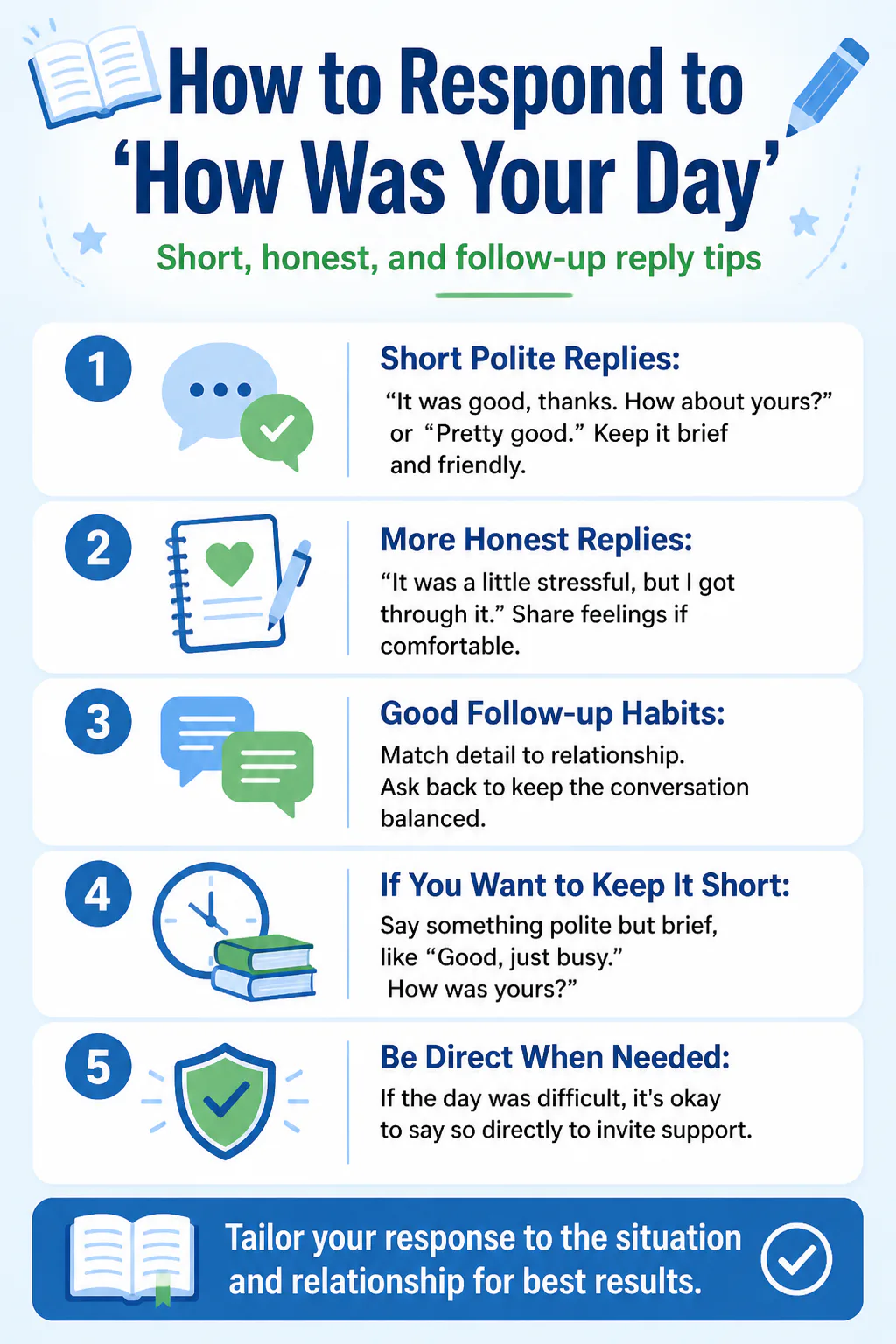
Short polite replies
- “It was good, thanks. How about yours?”
- “Pretty good.”
- “Not bad at all.”
- “Busy, but good.”
More honest replies
- “It was a little stressful, but I got through it.”
- “Honestly, it was rough.”
- “Really nice, actually. I had a great meeting.”
- “Kind of tiring. I need a break.”
Good follow-up habits
- Match your detail to the relationship.
- If you want to keep the conversation going, ask back.
- If the day was difficult, it is fine to say so directly.
- If you do not want to talk much, keep it short but polite.
A strong everyday response is simple: answer briefly, then return the question. That keeps the exchange balanced and friendly. For example, you might say, “Good, just busy. How was yours?”
Cultural Variations
Relationship and closeness
In the United States, the meaning of this phrase changes with the relationship. Between strangers or casual coworkers, it is often light small talk. Between close friends, family members, or romantic partners, it can be a sincere invitation to share feelings and events.
Tone also changes everything. A cheerful voice can make it sound casual, while a softer tone can make it feel caring or serious. If someone asks slowly and makes eye contact, they often want a real answer.
Formality and wording
“How was your day?” sounds natural and standard in casual American English.
Variants like “How’s your day going?” are common earlier in the day, while “How was your day at work?” is more specific. In formal settings, people may ask something narrower, such as “How did the day go?” or “How was your afternoon?”
Americans also differ in how much detail they expect. Some communities and families value brief positivity, while others are comfortable with open emotional sharing. Neither style is wrong; it depends on habit, personality, and context.
What not to assume
It is best not to assume every use of the phrase is deeply personal. Sometimes it is just a polite social bridge. At other times, it is a meaningful check-in from someone who truly wants to listen.
- Do not assume a long answer is required.
- Do not assume the speaker wants only a positive reply.
- Do not assume the phrase means the same thing in every relationship.
FAQs
Is “how was your day” a greeting?
It can function like a greeting, especially in casual conversation. But it usually does more than hello because it invites the other person to share information or feelings.
Is it polite to answer with just “good”?
Yes. A short answer is normal, especially in casual or busy situations. You can always add more detail if you want to continue the conversation.
What is the difference between “how was your day” and “how’s your day going”?
“How was your day” looks back on a completed or nearly completed day. “How’s your day going” asks about the day in progress.
Can this phrase be romantic?
Yes, in the right context. Between partners, it often shows affection, attention, and interest in each other’s daily lives.
Conclusion
“How was your day” works as both a real question and a social check-in in American English. Its meaning depends on timing, tone, and relationship, which is why it remains such a common part of everyday conversation.