This Means a Lot to Me: Meaning and Everyday Use
“This means a lot to me” is a warm, sincere phrase people use to say that something feels deeply important to them emotionally. It often expresses gratitude, appreciation, relief, or personal significance. In everyday conversation, it tells the other person that their words, actions, gift, support, or presence had a real emotional impact.
The phrase is common because it is simple but powerful. It does not just mean “I like this” or “thank you.” It suggests that the moment matters on a personal level and that the speaker feels genuinely moved.
Meaning of “This Means a Lot to Me”
Core meaning
At its core, “this means a lot to me” means “this is very important to me” or “I feel strongly grateful or touched by this.” The word “this” refers to something specific: a kind gesture, a gift, an opportunity, support during a hard time, or even a compliment. The phrase shows that the speaker attaches emotional value to that thing.
It is stronger than a casual thank-you. If someone says, “Thanks, this means a lot to me,” they are saying the act mattered in a personal way, not just in a polite way. That emotional weight is what makes the phrase stand out.
Emotional tone
The tone is usually heartfelt, humble, and sincere. People often use it when they want the other person to understand that their effort was noticed and appreciated. In many cases, it also carries a sense of vulnerability because the speaker is admitting that something affected them deeply.
For that reason, the phrase often appears in emotional moments: after encouragement, during a thank-you message, or when someone feels seen and supported. If you want a fuller look at the means a lot to me pattern, it helps to compare how speakers shift between “this” and “it” depending on what they are referring to.
What the speaker is really saying
Depending on context, the phrase can carry a few slightly different shades of meaning. In each case, the message is more emotional than literal.
- “I truly appreciate this.”
- “Your action had a real effect on me.”
- “This matters more than you may realize.”
- “I feel touched, supported, or valued because of this.”
That is why the phrase works so well in relationships, friendships, workplaces, and family conversations. It is clear, natural, and emotionally direct without sounding dramatic.
How it works in conversation
People usually say the phrase after receiving something meaningful, whether that is physical or emotional. It can follow a gift, help during a difficult time, thoughtful advice, praise, or an opportunity such as a job offer or recommendation. The phrase lets the listener know their action had importance beyond the surface level.
For example, if a friend checks in after a difficult week, saying “This means a lot to me” tells them their support helped. If a manager gives someone a chance they have worked hard for, the phrase signals respect and gratitude.
Natural usage examples
Here are a few simple examples of how people use the phrase naturally:
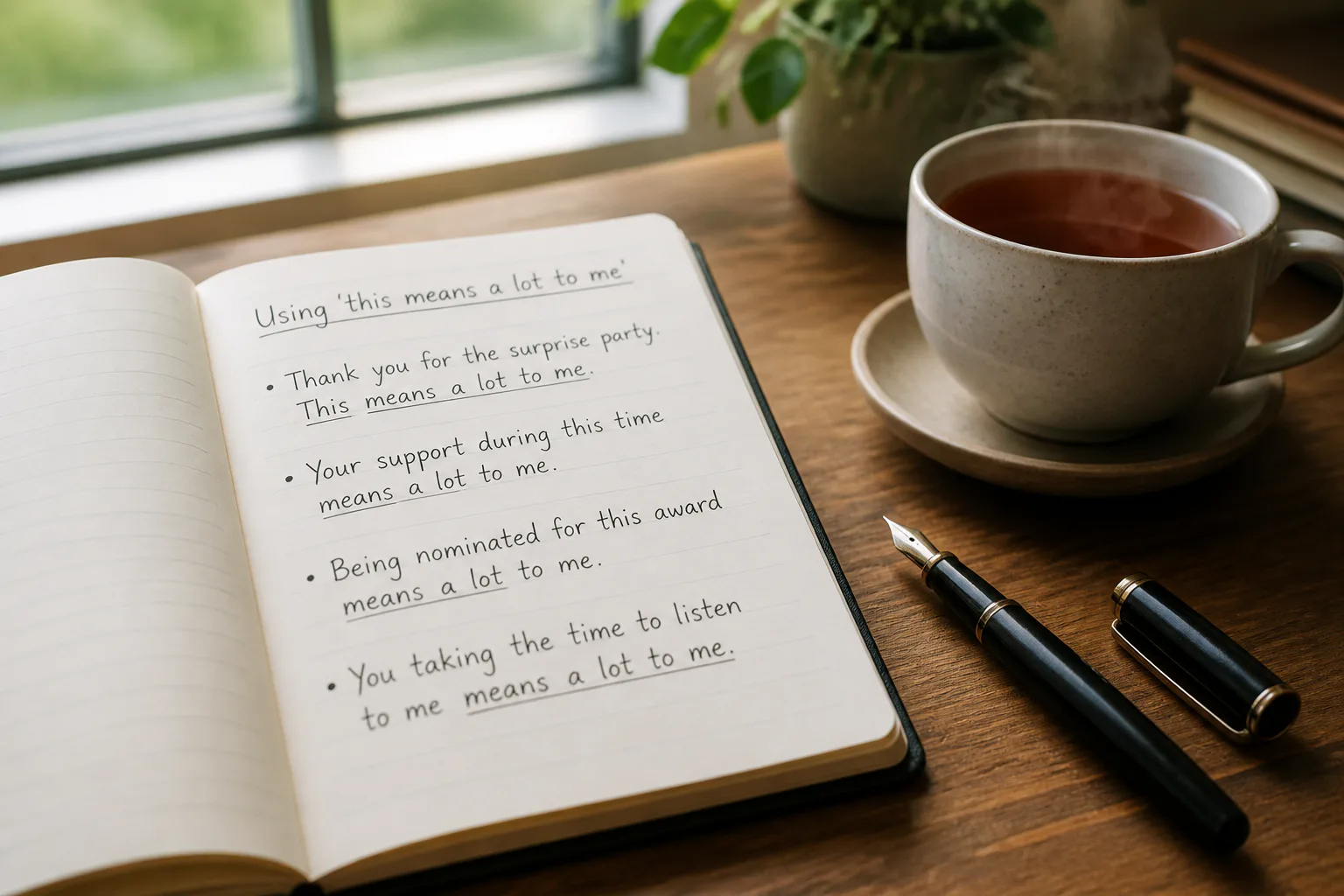
- “Thank you for coming today. This means a lot to me.”
- “Your support during this time means a lot to me.”
- “I know you went out of your way to help, and this means a lot to me.”
- “Hearing that from you means a lot to me.”
These examples all share one feature: the speaker is not just acknowledging an action. They are revealing its emotional value.
Common etiquette points
The phrase works best when the feeling is genuine. Because it is emotionally strong, it can sound flat if used too often in minor situations. You can say it in speech, texts, cards, emails, or public remarks, but it carries the most weight when it matches the moment.
In casual chat, people sometimes shorten gratitude into internet terms such as TYSM meaning in chat, but “this means a lot to me” feels much more personal and emotionally specific. It is better when you want warmth, not just speed.
Common Situations
Where people say it
- After receiving help: “Thanks for staying with me at the hospital. This means a lot to me.”
- After emotional support: “You listening without judging means a lot to me.”
- After a gift or gesture: “You remembered my favorite book. This means a lot to me.”
- In professional settings: “I appreciate the opportunity. This means a lot to me.”
- In personal milestones: “Having you here today means a lot to me.”
Why it fits these moments
In each of these situations, the phrase does more than say thank you. It points to the emotional importance of the act. The speaker is saying that the event connects to trust, care, effort, recognition, or support.
Examples of Usage
Sample sentences
- “I was nervous about sharing this, so your encouragement means a lot to me.”
- “Thank you for writing that recommendation. This means a lot to me.”
- “You did not have to check on me, and it really means a lot to me that you did.”
Short dialogues
Friend: “I brought you some food so you would not have to cook tonight.”
Response: “That is so thoughtful. This means a lot to me.”
Manager: “We would like you to lead the project.”
Response: “Thank you for trusting me. This means a lot to me.”
Family member: “I came because I knew today was important to you.”
Response: “I am really glad you are here. It means a lot to me.”
Why the phrase stands out
In gratitude messages, this phrase often appears beside other warm expressions such as thank you for letting me know, but it adds more emotional depth because it highlights personal impact rather than simple acknowledgment.
Alternative Phrases
Close alternatives
- “I really appreciate this.”
- “This is very important to me.”
- “I am deeply grateful.”
- “I truly value this.”
- “This touched me.”
- “I cannot tell you how much this means to me.”
How they differ
- Use “I really appreciate this” when you want a slightly more neutral tone.
- Use “This is very important to me” when you want to stress significance more than gratitude.
- Use “I am deeply grateful” when the focus is thanks rather than personal meaning.
- Use “This touched me” when the emotion is tender or moving.
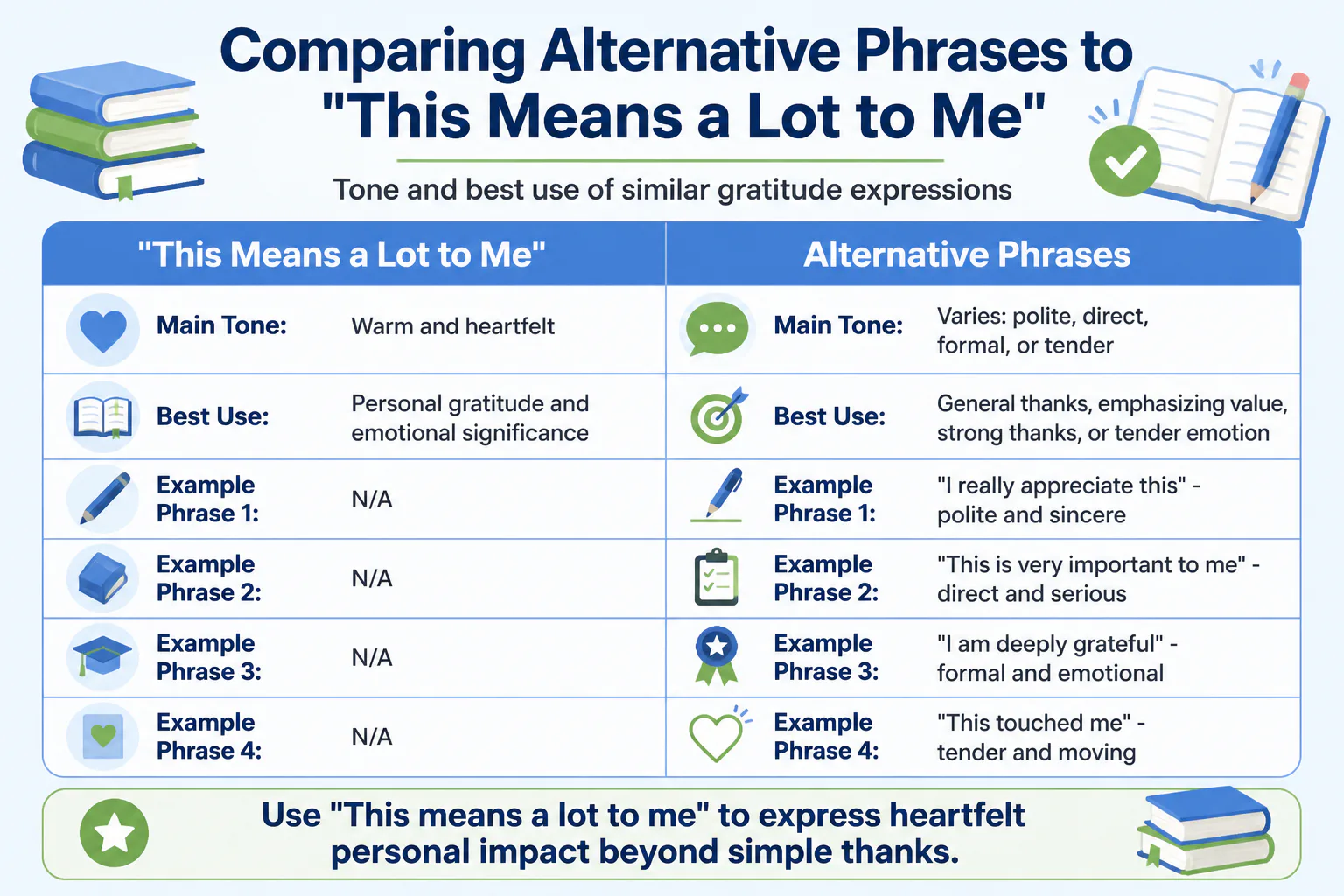
| Phrase | Main tone | Best use |
|---|---|---|
| This means a lot to me | Warm and heartfelt | Personal gratitude and emotional significance |
| I really appreciate this | Polite and sincere | General thanks in personal or work settings |
| This is very important to me | Direct and serious | Emphasizing value or priority |
| I am deeply grateful | Formal and emotional | Strong thanks in meaningful situations |
FAQs
Is “this means a lot to me” romantic?
Not by itself. The phrase can be romantic, but it is also common in friendships, family conversations, and professional situations. The surrounding context determines the tone.
Can I use it at work?
Yes. It works well when someone gives you support, trust, recognition, or an opportunity. In professional settings, it sounds sincere without being overly informal.
Does it always mean gratitude?
No. Gratitude is common, but the phrase can also express emotional importance, relief, validation, or feeling supported. The shared idea is personal significance.
Is it stronger than saying “thank you”?
Yes. “Thank you” shows appreciation, while “this means a lot to me” shows that the gesture had deeper emotional value. Many people use both together for that reason.
Conclusion
“This means a lot to me” works best when you want to show sincere gratitude and personal emotional impact in a clear, natural way.