
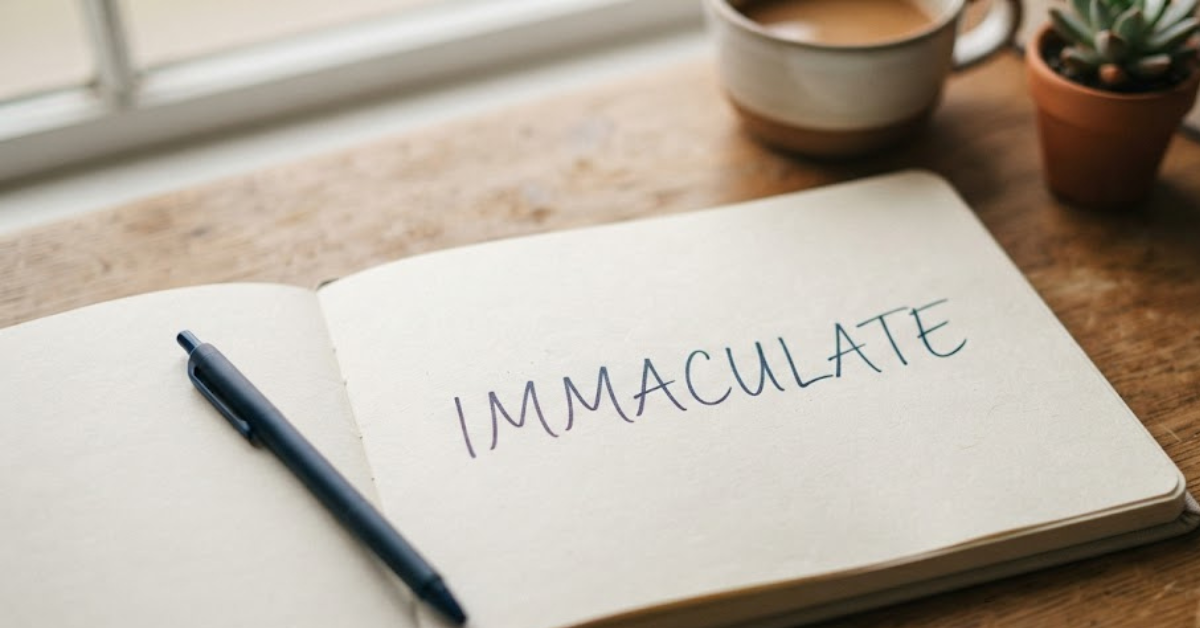
Immaculate or Emaculate? The Correct Spelling Explained
Have you ever typed immaculate or emaculate into a search engine because you weren’t sure which spelling was correct? You’re certainly not alone. The two words sound similar when spoken quickly, making this a surprisingly common spelling mistake.
The correct spelling is immaculate. While emaculate appears in online searches and informal writing, it is not a recognized English word. In this guide, we’ll explain immaculate vs emaculate, explore why the confusion happens, define the meaning of immaculate, and share simple tricks to help you remember the correct spelling every time.
Immaculate or Emaculate: Which Is Correct?
The answer is simple:
Immaculate is the correct spelling.
Emaculate is a misspelling.
The adjective immaculate describes someone or something that is perfectly clean, flawless, tidy, or free from mistakes or imperfections.
Examples:
- The hotel room was immaculate.
- She kept her kitchen immaculate.
- His presentation was immaculate, with no spelling or formatting errors.
Although emaculate is frequently searched online, it does not appear in standard English dictionaries.
What Does Immaculate Mean?
The word immaculate has several closely related meanings depending on the context.
It can describe something that is:
- Perfectly clean
- Spotless
- Free from flaws
- Neat and orderly
- Without mistakes
- Pure or unblemished
Because of these meanings, immaculate is commonly used in both everyday conversation and formal writing.
Examples:
- An immaculate white shirt
- An immaculate garden
- Immaculate handwriting
- An immaculate performance
Emaculate Meaning
Many people search for emaculate meaning, assuming it may be a legitimate word.
In standard English:
Emaculate has no official dictionary definition.
It is simply a misspelling of immaculate.
If your intention is to describe something as perfectly clean, flawless, or exceptionally neat, the correct word is always immaculate.
Immaculate vs Emaculate
When comparing immaculate vs emaculate, only one spelling is correct.
| Word | Correct? | Meaning |
| Immaculate | Yes | Perfectly clean, flawless, or without imperfections |
| Emaculate | No | Misspelling of “immaculate” |
Whether you’re writing an email, essay, resume, or business report, always choose immaculate.
How Do You Spell Immaculate?
If you’ve searched spell immaculate, here’s the correct spelling:
I-M-M-A-C-U-L-A-T-E
Notice the key features:
- Begins with Im-
- Contains two m’s
- Does not begin with E
Correct:
- Immaculate
Incorrect:
- Emaculate
- Immaculite
- Immaculat
Why Do People Misspell Immaculate?
There are several reasons this word is commonly misspelled.
1. Pronunciation
When spoken quickly, the first syllable may sound similar to “em,” leading some people to write emaculate.
2. Unfamiliar Spelling
Words beginning with imm- are less common than many other English prefixes, making them easier to spell incorrectly.
3. Typing Errors
Fast typing and autocorrect mistakes can also contribute to the error.
Common Examples of Immaculate
The word immaculate is versatile and appears in many situations.
Around the Home
- Their house was absolutely immaculate.
- The floors remained immaculate despite the rainy weather.
At Work
- She submitted an immaculate report.
- His office was always immaculate and organized.
Fashion
- He wore an immaculate suit to the interview.
- Her shoes looked immaculate after polishing.
Performance
- The pianist delivered an immaculate performance.
- The team’s execution was nearly immaculate.
Immaculate in Different Contexts
Depending on the situation, immaculate can describe more than cleanliness.
Physical Appearance
- Immaculate clothing
- Immaculate makeup
- Immaculate landscaping
Quality
- Immaculate craftsmanship
- Immaculate attention to detail
- Immaculate design
Behavior
Occasionally, it describes conduct or presentation.
Example:
- She maintained an immaculate professional reputation.
Synonyms for Immaculate
If you want to vary your writing, consider these alternatives:
- Spotless
- Pristine
- Flawless
- Perfect
- Impeccable
- Neat
- Polished
- Clean
- Unblemished
- Faultless
Each carries a slightly different nuance, but all relate to excellence or cleanliness.
Memory Trick to Remember the Correct Spelling
Here’s an easy trick:
Think of the phrase:
Immaculate means “I’m immaculate.”
The word starts with “Im-“, just like “I’m.”
Another helpful reminder:
- Immaculate starts with Im-
- Emaculate starts with Em-, which is never the standard spelling.
Practicing this association makes the spelling much easier to remember.
Common Mistakes to Avoid
Avoid these incorrect spellings:
- Emaculate
- Imaculat
- Immaculite
- Immaculat
Correct spelling:
- Immaculate
Always proofread important documents to catch spelling mistakes before publishing or sending them.
Frequently Asked Questions (FAQs)
Is it immaculate or emaculate?
Immaculate is the correct spelling. Emaculate is a misspelling and is not recognized in standard English.
What does immaculate mean?
Immaculate means perfectly clean, spotless, flawless, or free from imperfections.
What is emaculate meaning?
There is no official dictionary meaning for emaculate because it is not a standard English word. Most people using it actually mean immaculate.
How do you spell immaculate?
The correct spelling is:
I-M-M-A-C-U-L-A-T-E
Is emaculate a real word?
No. Emaculate is generally considered a spelling mistake rather than a valid English word.
Can immaculate describe more than cleanliness?
Yes. Immaculate can also describe flawless work, excellent organization, perfect appearance, or outstanding performance.
Is immaculate a positive word?
Absolutely. It usually carries a very positive meaning, suggesting exceptional quality, cleanliness, or attention to detail.
Conclusion
If you’ve ever wondered whether to write immaculate or emaculate, the answer is clear: immaculate is the correct spelling. It describes something that is perfectly clean, flawless, well-organized, or free from imperfections. Although emaculate is a common misspelling, it has no recognized meaning in standard English.
By remembering that immaculate begins with “Im-“ and contains two m’s, you can avoid this common mistake with confidence. Whether you’re writing a business email, school assignment, blog post, or social media caption, using the correct spelling helps your writing appear polished, accurate, and professional.
If you found this guide helpful, explore our other grammar and spelling articles to learn more about commonly confused English words and strengthen your writing skills.

Related Posts
35 Other Ways to Say “However” (With Examples)

35 Other Ways to Say “You’re Welcome” (With Examples)