
Is “Have a Great Day Ahead” Correct? Meaning and Better Alternatives
Yes, “have a great day ahead” is understandable and polite, but it is not the most natural choice in everyday English. In most spoken English, especially North American English, people usually say have a great day instead. The word ahead often sounds redundant in this farewell expression, although it can feel more forward-looking in written English, morning messages, and cheerful professional closings.
If you want the safest, most idiomatic expression, use have a great day or have a good day. If part of the day has already passed, enjoy the rest of your day is often the most natural alternative.
Quick answer
Have a great day ahead has a clear meaning: it is a well-wish for the upcoming hours of someone’s day. The meaning is friendly, positive, and courteous. The issue is not grammar so much as usage, tone, and register.
In casual conversation, many native speakers find it less idiomatic than have a great day. In written English, especially in morning messages, customer service interaction, or upbeat email closings, it can sound acceptable and warm.
What it means
The phrase means “I hope the rest of your day goes very well.” It works as a farewell, a closing phrase, or sometimes a friendly add-on after a greeting such as good morning.
The word ahead makes the phrase explicitly future-facing. That gives it a slightly more deliberate, encouraging feel, especially in messages sent early in the day.
Why it sounds unusual
The main reason is simple: in idiomatic English, have a great day already implies the day is in front of the listener. Adding ahead repeats an idea that is already built into the phrase, so many speakers hear it as redundant.
That does not make it wrong. It just makes it less natural in everyday spoken English, particularly in American English and Canadian English, where short parting phrases are preferred.
Most natural alternatives
| Phrase | Meaning | Naturalness | Best context | Tone |
|---|---|---|---|---|
| Have a great day | Good wishes for the day | Very natural | Spoken English, email, customer service, casual conversation | Friendly, polite |
| Have a good day | Good wishes for the day | Very natural | Everyday conversations, workplace communication, checkout, meetings | Neutral, polite |
| Enjoy the rest of your day | Good wishes for the remaining part of the day | Very natural | Afternoon, after a meeting, after part of the day has passed | Polite, slightly warmer |
| Have a nice day ahead | Good wishes for the upcoming day | Understandable, less idiomatic | Morning messages, written notes | Warm, slightly formalized |
| Good day | Greeting or salutation, depending on context | Context-dependent | Formal greeting, some regional usage | Formal, old-fashioned in some settings |
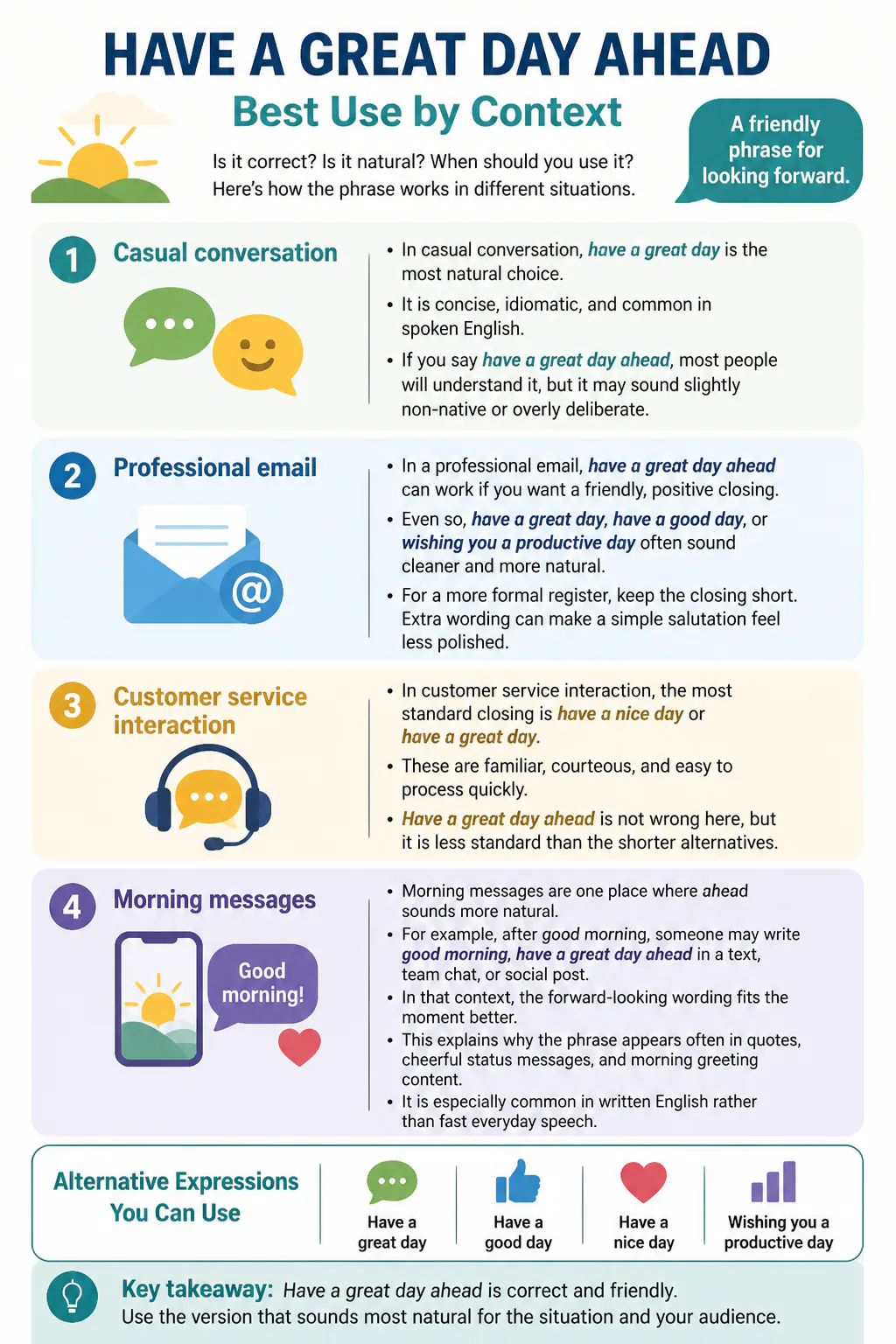
Best use by context
Casual conversation
In casual conversation, have a great day is the most natural choice. It is concise, idiomatic, and common in spoken English. If you say have a great day ahead, most people will understand it, but it may sound slightly non-native or overly deliberate.
Professional email
In a professional email, have a great day ahead can work if you want a friendly, positive closing. Even so, have a great day, have a good day, or wishing you a productive day often sound cleaner and more natural.
For a more formal register, keep the closing short. Extra wording can make a simple salutation feel less polished.
Customer service interaction
In customer service interaction, the most standard closing is have a nice day or have a great day. These are familiar, courteous, and easy to process quickly.
Have a great day ahead is not wrong here, but it is less standard than the shorter alternatives.
Morning messages
Morning messages are one place where ahead sounds more natural. For example, after good morning, someone may write good morning, have a great day ahead in a text, team chat, or social post. In that context, the forward-looking wording fits the moment better.
This explains why the phrase appears often in quotes, cheerful status messages, and morning greeting content. It is especially common in written English rather than fast everyday speech.
Written vs spoken usage
The difference between written English and spoken English matters here. In speech, people usually prefer shorter and more idiomatic parting phrase patterns. That is why have a good day is so common at the end of a conversation, after a meeting, or at checkout.
In writing, people often choose more expressive or expanded good wishes. That makes have a great day ahead sound more acceptable in emails, morning messages, and social posts than it does in casual speech.
Tone and formality
This expression is not especially formal, but it is not fully casual either. It has a slightly composed, message-like tone. That is why it can fit workplace communication, internal chat, and friendly professional notes.
If you want a more relaxed and natural informal tone, choose have a great day. If you want a polished professional closing, use a shorter farewell or tailor the wording to the context.
Better choices by situation
- At the end of a short conversation: Have a good day.
- After lunch or later in the day: Enjoy the rest of your day.
- In a warm morning email: Wishing you a great day ahead.
- In a casual text: Hope you have a great day.
- In a professional closing: Have a great day.
- As a greeting: Good morning.
Examples that sound natural
Casual examples
- Thanks for calling. Have a great day.
- See you tomorrow. Have a good day.
- It was nice talking to you. Enjoy the rest of your day.
Professional examples
- Thank you for your time today. Have a great day.
- Please let me know if you need anything else. Enjoy the rest of your day.
- Good morning, team. Hope you all have a productive day ahead.
Examples to use carefully
- Have a great day ahead.
- Have a nice day ahead.
These are understandable and polite, but they sound less idiomatic in many everyday contexts. They work better in upbeat written messages than in ordinary spoken farewells.
Common confusions
“Good day”
Good day is not the same as have a good day. Good day can function as a greeting or salutation, and in some places it can also be a farewell. In much of North American English, though, it can sound formal, regional, or old-fashioned depending on context.
“Have a nice day ahead”
This has the same usage issue as have a great day ahead. The meaning is clear, but the addition of ahead often feels unnecessary. For natural everyday English, have a nice day is usually better.
“Enjoy the rest of your day”
This is one of the strongest alternatives because it solves a practical timing issue. If it is already afternoon, saying have a good day is still fine, but enjoy the rest of your day sounds especially precise and idiomatic.
Should you use it?
Use have a great day ahead if you want a friendly expression in a morning message, positive email, or supportive note. Avoid it if your goal is to sound fully natural in everyday spoken English.
If you are unsure, choose the simpler version. Shorter idiomatic expressions usually sound smoother across more contexts and registers.
Alternatives
- Have a great day
- Have a good day
- Have a nice day
- Enjoy your day
- Enjoy the rest of your day
- Hope you have a great day
- Wishing you a wonderful day
- Take care
- All the best for today
- Hope the rest of your day goes well
FAQ
Is “have a great day ahead” grammatically correct?
Yes. The grammar is understandable and acceptable. The question is mostly about natural usage, not correctness.
Is it common in American English?
It is less common than have a great day or have a good day. In everyday American English, many speakers prefer the shorter idiomatic expression.
Is it rude or awkward?
No, it is polite and positive. It can sound slightly awkward only because the wording is less common in everyday speech.
Can I use it in an email?
Yes, especially in a friendly or semi-professional email sent in the morning. For a cleaner professional closing, have a great day is usually better.
What is the best reply?
A simple reply works well: Thanks, you too, You too, have a great day, or Thanks, enjoy the rest of your day. Match the other person’s tone and level of formality.
Final recommendation
If your goal is natural, idiomatic English, use have a great day. If part of the day has passed, use enjoy the rest of your day. Save have a great day ahead for written morning messages or upbeat closings where a more forward-looking well-wish feels appropriate.

Related Posts
35 Other Ways to Say “However” (With Examples)
35 Other Ways to Say “You’re Welcome” (With Examples)