
Trash vs Garbage: What’s the Difference?
Most people use the words trash and garbage interchangeably, but are they actually the same thing? The debate over trash vs garbage has been around for years, and while the two terms often overlap in casual conversation, they traditionally have different meanings. Understanding the distinction can help you communicate more clearly, especially when discussing waste disposal, recycling, or environmental topics.
In this guide, we’ll explain what each word means, explore how their usage varies by region, and share practical examples so you’ll always know which term fits the situation.
Trash vs Garbage: The Quick Answer
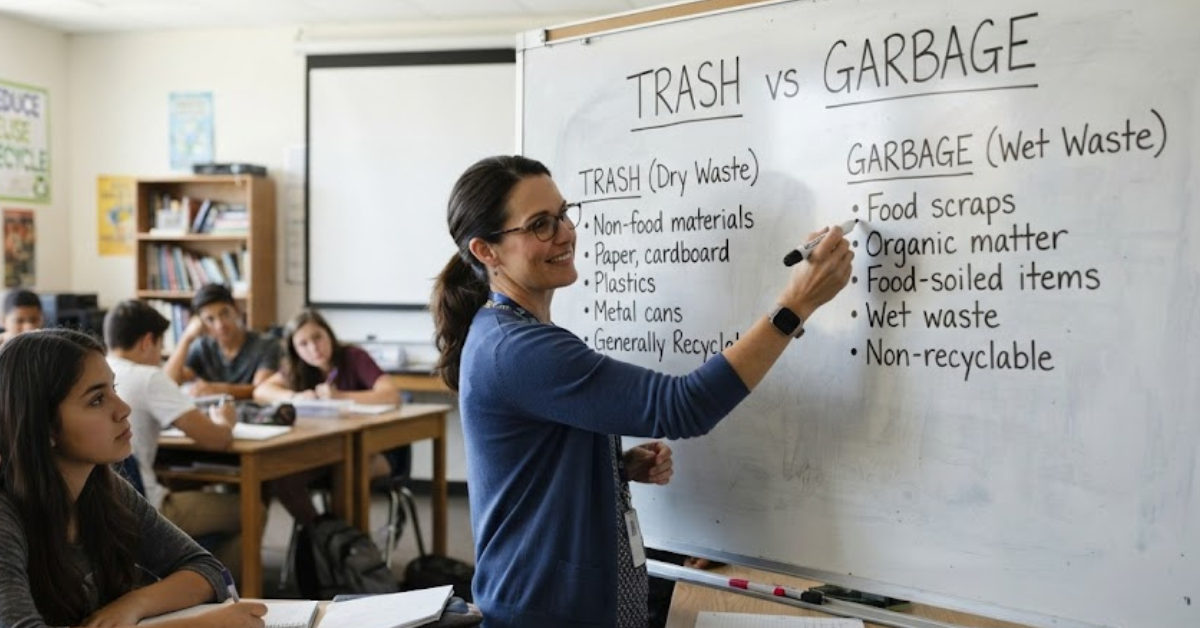
In everyday English, trash and garbage are often used to mean unwanted waste. However, there is a traditional distinction:
- Garbage usually refers to wet, organic, or food-related waste.
- Trash generally refers to dry, non-food waste such as paper, plastic, clothing, or packaging.
Today, many people use both words interchangeably, particularly in the United States, but the original definitions are still common in waste management and environmental discussions.
What Is Trash?
Traditionally, trash refers to dry waste that doesn’t decompose quickly.
Examples include:
- Paper
- Cardboard
- Plastic packaging
- Glass bottles
- Aluminum cans
- Broken household items
- Old clothing
Because much of this material can often be recycled or reused, proper sorting is important before disposal.
Everyday Example
- Please take the trash out before dinner.
In this sentence, the speaker is referring to general household waste rather than food scraps specifically.
What Is Garbage?
Garbage traditionally means organic waste, especially materials produced while preparing or eating food.
Common examples include:
- Fruit peels
- Vegetable scraps
- Leftover meals
- Coffee grounds
- Eggshells
- Spoiled food
Since organic waste decomposes quickly, it requires regular collection to prevent odors and pests.
Everyday Example
- Don’t forget to empty the garbage after cooking.
Here, the focus is on food waste rather than general household rubbish.
Why Do People Use the Words Interchangeably?
Over time, the distinction between the two words has become less important in everyday conversation.
Several reasons explain this shift:
- Municipal waste collection often combines different types of waste.
- Household bins usually contain both food scraps and dry materials.
- Many regions simply use one preferred word for all waste.
- Popular culture and media have blurred the traditional definitions.
As a result, saying either “take out the trash” or “take out the garbage” is perfectly natural in many parts of North America.
Regional Differences in English
Different English-speaking countries prefer different words for household waste.
United States
Both trash and garbage are widely understood, although “trash” is often the more common everyday term.
Canada
Both words are used, with regional preferences depending on the province and community.
United Kingdom
People are more likely to say:
- Rubbish
- Bin
- Waste
Instead of “trash” or “garbage.”
Australia and New Zealand
Common alternatives include:
- Rubbish
- Waste
- Bin
While Americans might “take out the trash,” someone in London would probably “put the rubbish in the bin.”
Trash, Garbage, Rubbish, and Waste
These terms are closely related but not always identical.
| Word | Typical Meaning |
| Trash | Dry household waste |
| Garbage | Food or organic waste |
| Rubbish | General household waste (British English) |
| Waste | Broad term covering all discarded materials |
In professional settings such as environmental science or waste management, waste is often the preferred umbrella term.
Examples in Everyday Life
Here are some situations where each word naturally fits.
Trash
- Empty the office trash bin.
- The recycling shouldn’t be mixed with the trash.
- We threw away the damaged boxes with the trash.
Garbage
- The garbage smells because of leftover food.
- Garbage should be collected regularly during hot weather.
- Composting helps reduce the amount of garbage sent to landfills.
Although either word may be understood, these examples reflect their traditional meanings.
Environmental Importance
Knowing the difference isn’t just about vocabulary—it can also encourage better waste management.
Proper sorting helps:
- Increase recycling rates.
- Reduce landfill waste.
- Improve composting efforts.
- Minimize environmental pollution.
- Recover reusable materials more efficiently.
Many cities now encourage residents to separate recyclable materials, food scraps, and general household waste into different containers.
Common Mistakes to Avoid
People sometimes assume the words have completely different meanings or that one is always incorrect.
Keep these points in mind:
- In casual conversation, either term is usually acceptable.
- In technical or environmental contexts, the traditional distinction may matter.
- Don’t confuse recyclable materials with general waste if local recycling rules require separation.
- Be aware that regional vocabulary differs across English-speaking countries.
Tips for Choosing the Right Word
If you’re unsure which term to use, these simple guidelines can help:
- Use garbage when referring specifically to food or organic waste.
- Use trash for dry household items such as paper or packaging.
- Use waste in formal or technical writing.
- Adapt your vocabulary to your audience’s region when writing internationally.
Frequently Asked Questions
What is the difference between trash and garbage?
Traditionally, trash refers to dry household waste, while garbage refers to food scraps and other organic waste. In everyday conversation, however, the two words are often used interchangeably.
Is trash the same as garbage?
In casual speech, yes. Most people understand both words to mean unwanted household waste. Technically, they describe different types of refuse.
Which word is more common in the United States?
Both are common, although “trash” is often used more frequently in everyday conversation.
What do British people say instead of trash?
In British English, people typically use the words rubbish, waste, or simply refer to putting something in the bin.
Is garbage recyclable?
Most garbage consists of food waste and isn’t recyclable, although it may be compostable. Dry materials found in trash, such as paper, glass, and certain plastics, are often recyclable if properly sorted.
Why is separating waste important?
Separating recyclables, compostable materials, and general household waste reduces landfill use, conserves resources, and helps protect the environment.
Conclusion
Understanding trash vs garbage is easier once you know the traditional definitions. Garbage generally refers to food and organic waste, while trash usually describes dry household items such as paper, plastic, and packaging. Although many people use the terms interchangeably today, recognizing the distinction can improve both your vocabulary and your understanding of waste management.
Whether you’re writing, speaking, or sorting household waste, choosing the appropriate term adds clarity and accuracy. As recycling and sustainability become increasingly important, learning these subtle language differences also supports better environmental awareness and more effective communication.

Related Posts

35 Other Ways to Say “However” (With Examples)

35 Other Ways to Say “You’re Welcome” (With Examples)