
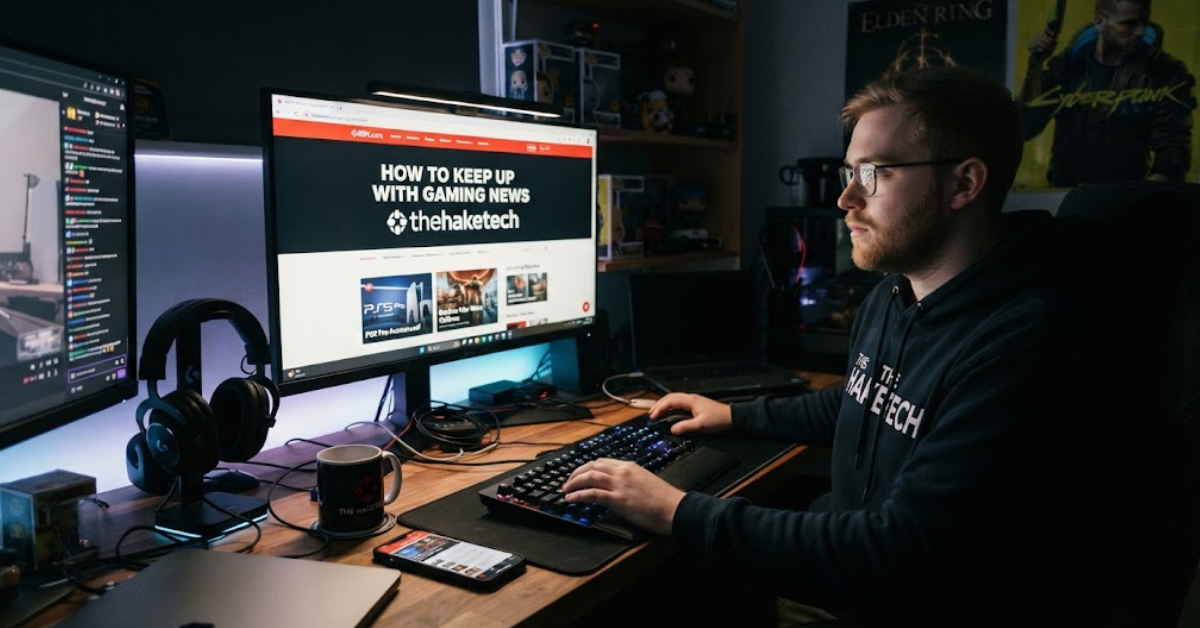
How to Keep Up With Gaming News TheHakeTech
Gaming news moves ridiculously fast. One minute you’re catching up on a new release, and the next you’re staring at a surprise patch, an esports announcement, a hardware reveal, and three rumors about a game that hasn’t even been officially announced.
If you’ve been searching for how to keep up with gaming news TheHakeTech, the real answer isn’t to spend all day refreshing social media. The smarter approach is to build a small, reliable system that brings important news to you while filtering out the noise.
TheHakeTech’s own gaming-related coverage emphasizes updates, patches, releases, hardware, and gaming trends, while its site currently organizes content around gaming and technology topics.
Why Keeping Up With Gaming News Matters
Gaming news isn’t just entertainment. Depending on what you play, a single announcement can affect what you buy, how you play, or whether you should wait before spending money.
For example, an update might:
- Change weapon balance in a competitive game
- Add or remove major features
- Introduce a new season or event
- Fix serious performance problems
- Change system requirements
- Announce a release date
- Reveal new hardware
- Affect an esports tournament
- Introduce a limited-time reward
The challenge is that not every gaming headline deserves your attention.
A good news routine helps you distinguish important information from rumors, recycled stories, speculation, and clickbait.
What Does “How to Keep Up With Gaming News TheHakeTech” Mean?
The phrase how to keep up with gaming news TheHakeTech can be understood as a search for a practical way to follow gaming developments through TheHakeTech and other reliable information sources.
TheHakeTech has published content covering gaming news, updates, gaming hacks, new games, and related technology topics.
But there’s an important point: you shouldn’t rely on any single website for every gaming story.
The strongest approach combines:
- A gaming news site
- Official developer announcements
- Platform news
- Patch notes
- Social media alerts
- Gaming communities
- Esports coverage
- A personal news routine
That combination gives you both speed and context.
Start With a Small Number of Trusted Sources
One of the easiest mistakes gamers make is following too many sources.
You don’t need 30 websites sending notifications every day. In fact, that can make it harder to identify what actually matters.
Start with a few sources that consistently cover the games and platforms you care about.
Your list might include:
- TheHakeTech for gaming and technology coverage
- Official game websites
- Developer blogs
- PlayStation, Xbox, Nintendo, or PC platform announcements
- Esports tournament organizers
- Established gaming publications
- Game-specific community pages
The goal isn’t to read everything. It’s to know where to look when something important happens.
Follow Developers and Publishers for Official Updates
When a story involves a specific game, the developer or publisher should usually be one of your first stops.
Official channels are particularly useful for:
- Patch notes
- Maintenance announcements
- Release dates
- Server issues
- Beta information
- Hotfixes
- DLC announcements
- Security notices
- Roadmaps
This is especially important when social media posts start circulating.
A screenshot or post may claim that a game is receiving a particular feature, but an official announcement gives you a much stronger basis for believing it.
Use TheHakeTech for Broader Gaming Coverage
If your goal is how to keep up with gaming news TheHakeTech, use the site as part of a broader information routine rather than treating it as your only source.
TheHakeTech’s current site includes gaming-focused categories and recent posts covering topics such as gaming news, updates, new games, and gaming-related technology.
Its gaming-update content also focuses on how patches can affect gameplay, performance, hardware, and competitive strategies.
That type of coverage can be useful because raw announcements don’t always explain why a change matters.
A patch note might say that a weapon was adjusted. A good analysis should help you understand whether that change is likely to affect your loadout or playstyle.
Don’t Ignore Patch Notes
Patch notes are some of the most valuable gaming information—and some of the easiest to skip.
If you play live-service, multiplayer, or competitive games, patch notes can tell you exactly what changed.
Pay attention to:
- Character balance
- Weapon damage
- Map changes
- Movement mechanics
- Economy changes
- Matchmaking
- Bug fixes
- Performance improvements
- New content
- Removed content
You don’t necessarily need to read every line.
Instead, look for the sections that directly affect the games and characters you play.
TheHakeTech’s gaming-update coverage similarly emphasizes patches that can influence gameplay, strategy, hardware performance, and the competitive meta.
Create a Simple Gaming News Routine
You don’t need to spend an hour every morning reading gaming websites.
A 10-minute routine is often enough.
Daily: Five to Ten Minutes
Check:
- Major gaming headlines
- Your favorite game’s official channels
- Important patch or server announcements
- Upcoming releases
- Major hardware news
Skip anything that doesn’t affect your interests.
Weekly: 20–30 Minutes
Once a week, spend a little more time on:
- Major industry stories
- Developer interviews
- Game reviews
- Upcoming releases
- Esports developments
- Hardware announcements
- In-depth analysis
This gives you context without turning gaming news into another full-time job.
Use Notifications Carefully
Notifications can be helpful—but too many notifications defeat the purpose.
Choose alerts for genuinely important information, such as:
- A game you play regularly
- Major developer announcements
- Tournament schedules
- Important patch releases
- Hardware launches
- Major sales
Turn off alerts for accounts that constantly post speculation or minor updates.
Remember: more notifications don’t mean more information. They usually mean more distraction.
Follow Gaming Communities, but Verify What You Read
Gaming communities are excellent for discovering stories quickly.
Reddit, Discord communities, forums, and social media can reveal problems or developments before they become widely reported.
But there’s a catch.
Community posts can contain:
- Rumors
- Incorrect translations
- Old information
- Edited screenshots
- Speculation presented as fact
- Misunderstood patch notes
Use communities as an early-warning system, not automatically as your final source.
When something sounds important, trace it back to an official announcement or reliable reporting.
Learn to Separate Gaming News From Rumors
This may be the most important habit of all.
A headline saying:
“New game reportedly launching next month”
is very different from:
“Developer confirms the game launches next month.”
The first is a claim. The second is an official statement.
When reading gaming news, ask:
- Who originally reported this?
- Is there an official source?
- Is the information confirmed?
- Is the article reporting a rumor?
- Is the information current?
- Could the headline be exaggerating the story?
This simple check can prevent you from spreading false information to your friends or community.
Keep Up With Gaming News Without Getting Spoilers
Following gaming news becomes tricky when you’re interested in story-driven games.
A major announcement can accidentally reveal:
- Characters
- Bosses
- Endings
- Locations
- Story twists
- Unreleased gameplay
If you’re playing a new game, consider temporarily muting keywords on social platforms.
You can also avoid:
- Recommended-video feeds
- Unfiltered gaming forums
- Comment sections
- Thumbnail-heavy YouTube searches
You don’t need to disconnect completely and You just need to control what reaches you.
Track the Games You Actually Play
You don’t need to follow every game in the industry.
Create a personal list of perhaps five to ten titles.
For each game, track:
| What to Track | Why It Matters |
| Updates | Helps you understand gameplay changes |
| Patch notes | Shows exactly what changed |
| Developer news | Provides official announcements |
| Events | Prevents you from missing limited-time content |
| Release dates | Helps with planning purchases |
| Community discussion | Highlights emerging problems and trends |
This approach makes gaming news much more relevant.
Don’t Forget Gaming Hardware News
Gaming isn’t only about software.
Hardware developments can affect performance, prices, compatibility, and what games you can run comfortably.
Keep an eye on:
- GPUs
- CPUs
- Gaming laptops
- Consoles
- Monitors
- Controllers
- Storage
- Headsets
- Drivers
- Firmware
TheHakeTech’s gaming coverage also connects gaming updates with hardware and performance considerations, particularly where drivers and peripheral updates can affect gameplay.
If you’re planning a major purchase, however, compare information from multiple established technology sources rather than relying on a single article.
Follow Esports if Competitive Gaming Matters to You
Competitive players have another reason to stay updated.
A single balance patch can completely change the meta.
Following esports coverage can help you understand:
- Popular strategies
- Character or weapon picks
- Team compositions
- Tournament schedules
- Competitive rule changes
- Emerging tactics
You don’t have to watch every tournament.
Following major events and checking results afterward is often enough to stay informed.
Build a Personal Gaming News Dashboard
If you want a more organized approach, create a simple dashboard.
You could divide it into:
Games
Your favorite current games and upcoming releases.
Hardware
Consoles, PC components, accessories, and drivers.
Industry
Major business announcements, studios, acquisitions, and events.
Esports
Tournaments, teams, players, and competitive updates.
Community
Interesting discussions, discoveries, and emerging issues.
This makes it much easier to find the information you actually care about.
A 10-Minute TheHakeTech Gaming News Strategy
If you want something extremely simple, try this routine:
Minutes 1–3: Scan TheHakeTech and your other trusted gaming headlines.
The minutes 4–5: Check official channels for the games you currently play.
Minutes 6–7: Look at important patch notes or maintenance notices.
Minutes 8–9: Check major community or esports developments.
Minute 10: Verify anything that looks surprising before sharing it.
That’s enough to stay reasonably informed without spending your entire day scrolling.
Common Mistakes Gamers Make When Following News
Following Too Many Accounts
More sources create more repetition and conflicting information.
Believing Every Leak
Leaks can be entertaining, but they’re not confirmed news.
Reading Only Headlines
A headline rarely provides the entire story.
Ignoring Dates
Old gaming news can resurface and look like a new announcement.
Treating Social Media as the Final Authority
Social media is useful for speed, but official sources are usually better for confirmation.
Turning News Into a Chore
If following gaming news stops being enjoyable, reduce your sources. You don’t need to know everything.
Frequently Asked Questions
How can I keep up with gaming news TheHakeTech?
Follow TheHakeTech’s gaming coverage alongside official developer announcements, platform updates, patch notes, and trusted gaming communities. TheHakeTech currently publishes gaming and technology-related content, including gaming news and updates.
Is TheHakeTech enough for all gaming news?
It’s better to use TheHakeTech as one part of your information routine. For important claims, particularly release dates, patches, pricing, and technical announcements, cross-check the information with the developer, publisher, platform, or another established source.
How often should I check gaming news?
For most gamers, once a day is plenty. Competitive players or people following live-service games may benefit from checking official update channels more frequently.
What’s the best way to follow game updates?
Follow the game’s official website or social accounts, enable important notifications, and check patch notes when updates are released. This gives you information directly from the source.
How do I avoid fake gaming news?
Check the original source, publication date, wording, and whether the claim has been officially confirmed. Be particularly skeptical of dramatic headlines based entirely on anonymous leaks.
How can I keep up with gaming news without getting overwhelmed?
Choose a small number of trusted sources and set a fixed reading time. A short daily scan is usually more sustainable than constantly checking feeds throughout the day.
Should I follow gaming news on social media?
Yes, but use social media primarily for discovery and quick updates. When a claim is important, verify it through an official source before treating it as confirmed.
Conclusion: Stay Informed Without Living in the Feed
Learning how to keep up with gaming news TheHakeTech isn’t really about consuming more information. It’s about building a better filter.
Use TheHakeTech and other trusted gaming sources for broader coverage, follow developers for official announcements, read important patch notes, use gaming communities for early discoveries, and verify rumors before accepting them as facts. TheHakeTech’s current gaming coverage spans news, updates, games, and gaming technology, making it one potential part of that routine.
Most importantly, keep the routine manageable. Ten focused minutes a day can tell you far more than an hour of mindless scrolling.
The gaming industry will keep moving quickly. You don’t have to chase every headline—you just need a reliable way to recognize the ones worth your attention.