
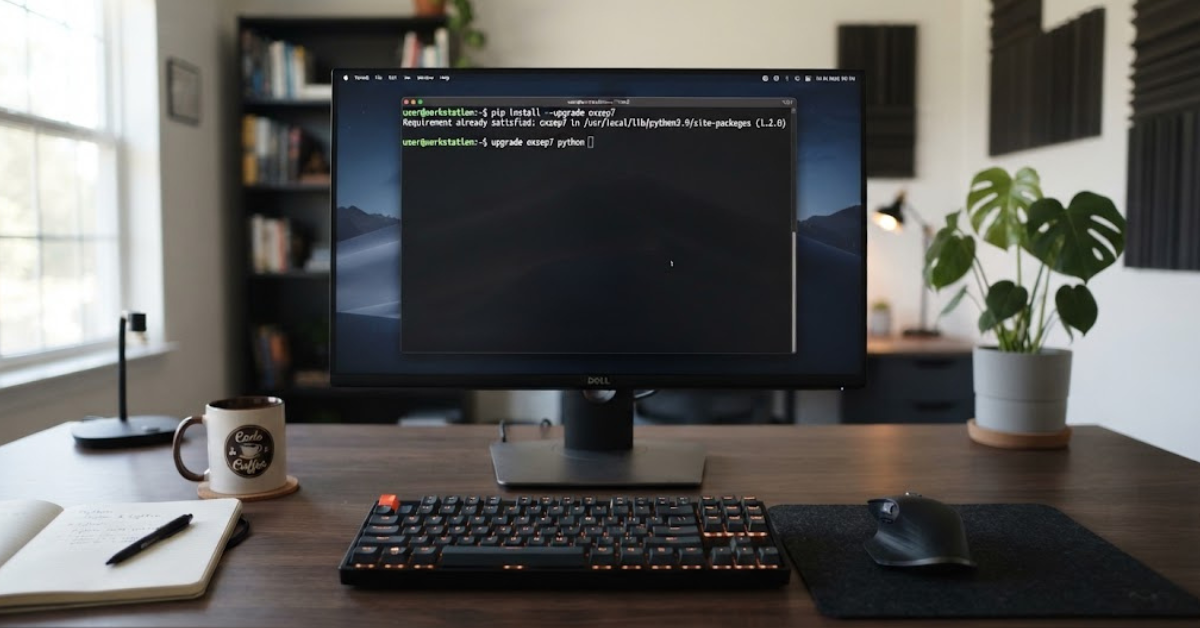
Upgrade Oxzep7 Python: What You Need to Know
Searching for upgrade oxzep7 python sounds like you should be able to run one command and move on. But there is a more important question to answer first: what exactly is Oxzep7?
Current search results are inconsistent. Some websites describe Oxzep7 as a Python library, development platform, or performance-focused tool, while others say there is no verified public Python package by that name. One recent guide specifically notes that Oxzep7 does not appear to have the public documentation, package listing, or established project history normally associated with a recognized Python dependency.
That uncertainty matters. If you are trying to develop Oxzep7 software, troubleshoot a Python error Oxzep7 software, or install a new software Oxzep7 Python package, the safest approach is to verify the source before changing your environment.
What Does “Upgrade Oxzep7 Python” Mean?
The phrase upgrade oxzep7 python appears to describe updating a Python-based application, package, framework, or development environment called Oxzep7.
However, publicly available information does not establish Oxzep7 as a widely recognized Python package. Recent articles disagree about what it supposedly does, with descriptions ranging from an optimized Python library to an internal framework or customized runtime.
This leaves several possibilities:
- Oxzep7 could be an internal or private project.
- It could be a package hosted on a private repository.
- The name could be a typo or misread identifier.
- It could be a project-specific module.
- It could be an unfamiliar or incorrectly described software name.
- Some online descriptions may simply be repeating one another without authoritative documentation.
In other words, don’t assume that “Oxzep7” is automatically a package you should install from the public internet.
Is Oxzep7 a Real Python Package?
There is currently no strong public evidence establishing Oxzep7 as a mainstream Python package with the kind of documentation developers normally expect.
A conventional Python package typically has some combination of:
- A package index listing
- A source repository
- Identifiable maintainers
- Version history
- Documentation
- Installation instructions
- Dependency information
- Release notes
- Issue tracking
Several recent articles discussing Oxzep7 acknowledge this uncertainty. One explicitly recommends verifying the package source before attempting an upgrade rather than treating pip install --upgrade oxzep7 as an established command.
That does not prove that no private or internal project called Oxzep7 exists. A company could have a private package with no public listing at all.
The key is to identify where the name came from.
Why Are So Many Websites Discussing Oxzep7?
Search results now contain multiple pages using phrases such as new software Oxzep7 Python, develop Oxzep7 software, and upgrade Oxzep7 Python. Some of these pages present Oxzep7 as an advanced development or performance tool.
But repetition should not be confused with independent confirmation.
When several websites publish similar articles around an unusual keyword, it can create the impression that the underlying software is well established even when a primary developer, repository, or package listing is difficult to locate.
For developers, the better question is:
Where is the authoritative source for this software?
If you cannot answer that, don’t make an installation or upgrade decision based solely on search results.
How Does Oxzep7 Software Work?
The question how does Oxzep7 software work cannot be answered reliably without knowing which specific software or project the name refers to.
Some websites claim that Oxzep7 is designed for performance-heavy Python applications, including data processing, machine learning, automation, or large-scale computation. Another source describes it more generally as a customized or enhanced Python environment.
Those descriptions are not consistent enough to treat as verified technical specifications.
If Oxzep7 is part of your own project, investigate it directly:
- Search your project’s dependency files.
- Check
requirements.txtorpyproject.toml. - Look at your package-locking or environment configuration.
- Search the source code for
oxzep7. - Identify the repository or package index from which it originated.
- Check the project’s documentation or internal development notes.
This will tell you far more than a generic article about the name.
Before You Upgrade Oxzep7 Python
If you have confirmed that Oxzep7 is a legitimate dependency in your environment, don’t upgrade it immediately in production.
First create a record of your current setup.
1. Check your Python version
Run:
python --versionOn some systems, you may need:
python3 --versionAlso check which pip installation is connected to that interpreter:
python -m pip --versionUsing python -m pip is useful because it makes it clearer which Python installation is being used.
2. Save your current dependencies
Create a snapshot before making changes:
python -m pip freeze > requirements-before-upgrade.txtThis gives you a useful reference if the upgrade introduces dependency problems.
3. Use a virtual environment
For an isolated test environment, create a virtual environment:
python -m venv .venvActivate it on macOS or Linux:
source .venv/bin/activateOn Windows:
.venv\Scripts\activateVirtual environments reduce the chance that an experimental package change will interfere with unrelated Python projects.
How to Upgrade a Verified Python Package
If your investigation confirms that Oxzep7 is a legitimate package and you know its trusted distribution source, a normal Python package upgrade may look like:
python -m pip install --upgrade package-nameDo not substitute oxzep7 simply because a website tells you to.
For example, if an organization’s internal documentation confirms that the package is distributed under the name oxzep7, then the appropriate command could be:
python -m pip install --upgrade oxzep7But the command should follow the verified package documentation—not the other way around.
For private software, the package may instead come from an internal package index, Git repository, artifact server, or company-managed environment.
Should You Run pip install --upgrade oxzep7?
Not blindly.
Several recent pages specifically warn against treating this command as a guaranteed solution because the public identity of Oxzep7 remains unclear.
Before running it, verify:
- The package actually exists in your project’s dependency system.
- You know who maintains it.
- You know where the package comes from.
- The version you want is documented.
- The package is compatible with your Python version.
- Your current environment has been backed up.
- You can roll back if the upgrade fails.
An unfamiliar package command is not something to copy into a production terminal just because it appears in a search result.
How to Develop Oxzep7 Software Safely
If develop Oxzep7 software is part of your project requirements, start by treating Oxzep7 as an unknown dependency until its identity is confirmed.
A sensible development workflow looks like this:
Step 1: Identify the source
Find the repository, package index, internal documentation, or developer responsible for the project.
Step 2: Check the dependency definition
Look for references in:
requirements.txtpyproject.tomlsetup.pyPipfile- Docker files
- CI/CD configuration
- Deployment scripts
Step 3: Create an isolated environment
Do not experiment with an unfamiliar package inside your main Python installation.
Step 4: Install the documented version
Use the package’s legitimate installation instructions.
Step 5: Run your test suite
Check unit tests, integration tests, application startup, database connections, APIs, and any other components that depend on the package.
Step 6: Compare performance
If the reason for upgrading is performance, measure the application before and after the change.
Don’t assume a newer version is automatically faster.
What About a Python Error Oxzep7 Software?
If you encountered a Python error Oxzep7 software, the first step is to capture the complete error rather than searching only for the word “Oxzep7.”
A useful error report should include:
- Full traceback
- Python version
- Operating system
- Package versions
- Command that caused the error
- Relevant source-code section
- Environment information
For example, if you see:
ModuleNotFoundError: No module named 'oxzep7'that tells you something very different from an error where oxzep7 appears only inside a variable, file path, or application-generated message.
The surrounding traceback is often the most valuable clue.
Common Python Problems After an Upgrade
Even with a legitimate package, upgrades can create ordinary dependency problems.
Dependency conflicts
A new package version may require a newer or older version of another library.
Use:
python -m pip checkto identify dependency inconsistencies.
Wrong Python environment
You may upgrade a package in one virtual environment while running your application from another.
Check:
python --version
python -m pip --version
and confirm that both point to the environment you actually intend to use.
Import errors
An upgrade may change module locations, remove deprecated functionality, or alter an API.
Read the package’s release notes before changing your code.
Configuration changes
Some applications rely on environment variables, configuration files, or external services that may behave differently after an upgrade.
Test those integrations separately.
What If Oxzep7 Is a Private Company Package?
This is one of the most plausible explanations for an unfamiliar package name.
Private Python packages are commonly used inside organizations. They may never appear on the public Python Package Index because they contain proprietary code or are intended only for internal applications.
If Oxzep7 belongs to a private project, ask your development or DevOps team for:
- Official package name
- Repository location
- Supported Python versions
- Installation instructions
- Current stable version
- Changelog
- Dependency requirements
- Authentication instructions
- Rollback procedure
In this situation, generic internet instructions are less useful than your organization’s own documentation.
How to Verify an Oxzep7 Installation
After a legitimate upgrade, verify the environment before declaring success.
You can check installed packages with:
python -m pip listFor a specific package:
python -m pip show package-nameThen run your application’s test suite.
A basic verification process should include:
- Import the package.
- Run a representative function.
- Run unit tests.
- Run integration tests.
- Check logs for new warnings.
- Compare application performance.
- Confirm deployment behavior.
Don’t judge an upgrade solely by whether the installation command completed without an error.
Common Mistakes When Searching for Upgrade Oxzep7 Python
Mistake 1: Trusting the first search result
An article can rank highly without being official documentation.
Mistake 2: Installing an unknown package
A package name that looks plausible is not automatically trustworthy.
Mistake 3: Upgrading production first
Always test significant dependency changes in an isolated environment first.
Mistake 4: Ignoring the traceback
If a Python error occurs, the full traceback usually provides more information than the package name alone.
Mistake 5: Assuming newer means better
A newer version can introduce breaking changes. Compatibility matters as much as version number.
Frequently Asked Questions
What is upgrade Oxzep7 Python?
Upgrade Oxzep7 Python appears to refer to updating a Python-related component called Oxzep7. However, current public information does not establish Oxzep7 as a widely recognized Python package, so its source should be verified before attempting an upgrade.
Is Oxzep7 a real Python package?
There is no strong public evidence that Oxzep7 is a mainstream Python package with a clearly documented public distribution. It could still be a private or internal package, so developers should check their project’s dependency files and official documentation.
Can I run pip install --upgrade oxzep7?
You should not run the command blindly. First verify that Oxzep7 is a legitimate dependency, identify its maintainer and distribution source, and follow the project’s official installation instructions.
How does Oxzep7 software work?
There is no reliable, universally documented technical specification for Oxzep7. Some third-party websites describe it as a Python performance or development tool, but those claims are inconsistent and should not be treated as confirmed architecture or functionality.
What should I do if I get a Python error involving Oxzep7?
Save the complete traceback, check your Python version, identify the environment in use, and inspect your project’s dependency files. Avoid installing a random package as a first response.
Could Oxzep7 be an internal Python package?
Yes. A private company package, internal module, or proprietary development component could have a name that does not appear on public package indexes. If the name came from a workplace project, check internal documentation first.
How can I safely upgrade a Python dependency?
Create a virtual environment, save the current dependency versions, review release notes, upgrade the verified package, run tests, and keep a rollback path. This approach is safer than modifying the production environment directly.
Conclusion: What You Should Know About Oxzep7 Python
The phrase upgrade oxzep7 python looks like a straightforward technical query, but the unusual name makes verification especially important.
Current online sources provide conflicting descriptions of Oxzep7, and there is not enough authoritative public documentation to confidently identify it as a standard Python package.
If Oxzep7 is part of your project, determine where it came from before upgrading it. Check your dependency files, repository, package index, and developer documentation. If it is a legitimate private package, follow the instructions supplied by its maintainer.
If you are simply trying to update Python or a normal Python dependency, use the established Python tooling and work inside a virtual environment.
Most importantly, don’t let an unfamiliar software name turn into an unverified installation command. Verify first, upgrade second, and test thoroughly afterward.