
Grammar
Master English grammar with easy-to-understand lessons, rules, examples, and tips. Learn correct sentence structure, punctuation, tenses, parts of speech, and common grammar mistakes to improve your writing and communication.

Teat or Teet: Which Spelling Is Correct?
English is full of words that sound similar but aren’t always spelled the way we expect. One question that often comes up is teat or teet. Is “teet” a real word, or is “teat” the correct spelling? If you’ve searched for teet or teat, you’re not alone. In this guide, we’ll explain the difference between […]

Is “Have a Great Day Ahead” Correct? Meaning and Better Alternatives
Yes, “have a great day ahead” is understandable and polite, but it is not the most natural choice in everyday English. In most spoken English, especially North American English, people usually say have a great day instead. The word ahead often sounds redundant in this farewell expression, although it can feel more forward-looking in written […]

S Meaning: What Does ‘S Mean in English?
If you’ve ever come across ‘s in a sentence or online conversation and wondered what it means, you’re not alone. Many people search for s meaning, /s meaning, what’s s, or what id s because the small letter s can represent several different things depending on the context. The truth is that ‘s doesn’t have […]

Tieing or Tying: Which Spelling Is Correct?
If you’ve ever paused while writing and wondered whether it’s tieing or tying, you’re not alone. This is one of the most commonly searched spelling questions because the verb tie doesn’t follow the pattern many English learners expect. Searches like tying or tieing, spell tieing, and how do you spell tieing are incredibly common. The […]

Nil or Nill: Which Spelling Is Correct?
Have you ever wondered whether it’s nil or nill? You’re not alone. Because the words sound nearly identical, many people accidentally add an extra “l” and search for phrases like nil or nill which is correct, nil vs nill, or nill meaning. The simple answer is this: nil is the correct and standard English spelling. […]

Unkept vs Unkempt: What’s the Difference and Which Word Is Correct?
English is full of words that look similar but carry different meanings—or, in some cases, different levels of acceptance. One pair that often confuses writers is unkept vs unkempt. If you’ve ever wondered whether to describe messy hair as unkept or unkempt, you’re not alone. The short answer is that unkempt is the standard and […]

Is “Well Noted with Thanks” Correct? Meaning, Tone, and Better Alternatives
“Well noted with thanks” is understandable and polite, but it is not the most natural standard phrase in English. In professional email communication, “noted with thanks” is grammatically correct and widely used to show acknowledgment, confirm receipt, and express appreciation. “Well noted” on its own is also common, but it can sound formulaic or stiff […]

Formally vs Formerly: What’s the Difference?
Few word pairs cause as much confusion as formally vs formerly. They look almost identical, sound somewhat similar, and are often mistaken for one another in emails, articles, resumes, and everyday writing. Yet despite their similar appearance, these two adverbs have completely different meanings. If you’ve ever paused before writing formerly or formally, you’re not […]
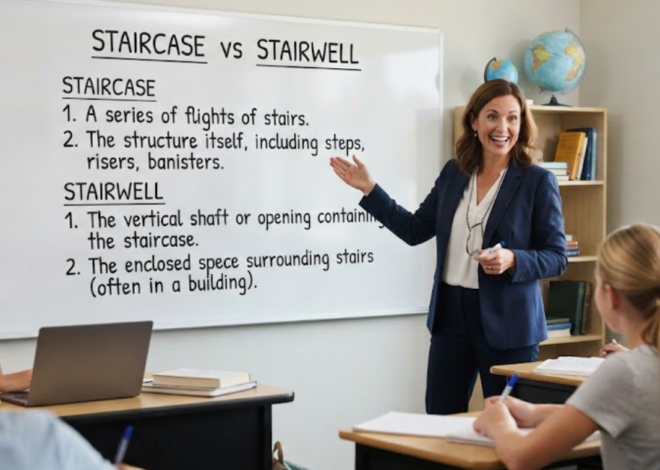
Stairwell vs Staircase: What’s the Difference?
If you’ve ever described a building’s stairs, you may have wondered whether you should say stairwell or staircase. The two terms are often used interchangeably in everyday conversation, but they don’t actually mean the same thing. Knowing the difference can make your writing more accurate, whether you’re talking about architecture, real estate, construction, or simply […]

Adjustor or Adjuster: Which Spelling Is Correct?
If you’ve ever filed an insurance claim or worked with legal or mechanical documents, you’ve probably seen both adjustor and adjuster. At first glance, they appear to be interchangeable, which leaves many people wondering which spelling is actually correct. The short answer is that both adjustor and adjuster are legitimate English words, but adjuster is […]