Thanks for Letting Me Know: Meaning, Tone, and Polite Use
“Thanks for letting me know” is a polite way to say that you appreciate someone giving you information. People use it to acknowledge updates, corrections, reminders, or changes in plans. It works well in both professional and everyday conversations because it sounds courteous without being overly formal.
If you have ever wondered whether this phrase fits an email, a text, or a meeting, the short answer is yes. The key is matching the tone to the situation so you sound natural, respectful, and clear.
What Does ‘Thanks for Letting Me Know’ Mean?
Basic meaning
The phrase means “I appreciate you informing me”. You say it after someone tells you something useful, important, or necessary. That could be a schedule change, a mistake, a piece of news, or a simple update.
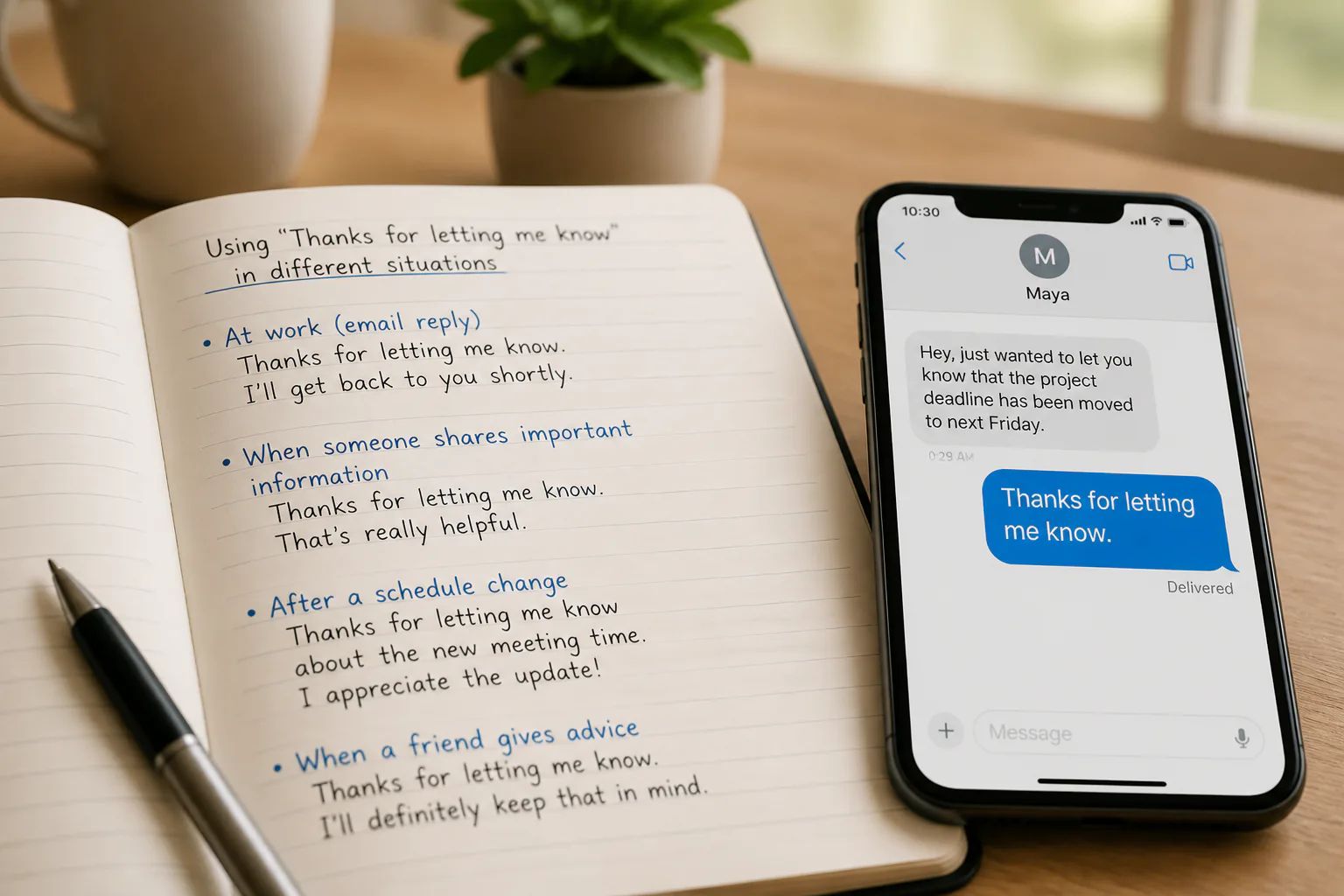
For example, if a coworker says, “The meeting has been moved to 3 p.m.,” you can reply, “Thanks for letting me know.” If a friend texts, “I’m running 15 minutes late,” the same phrase still works. In both cases, you are acknowledging the information and showing gratitude.
Why it sounds polite
This expression is polite because it does two things at once: it recognizes the other person’s effort and it shows that you received the message. That is why it often sounds professional in business emails, meetings, and workplace chats.
It is also flexible. You can use it in spoken English, casual messages, social media replies, and even some academic settings when responding to peer feedback or shared information.
Tone and formality
One reason this phrase is so common is that it sits comfortably between formal and informal English. It is not stiff like highly ceremonial language, but it is more polished than a quick “ok” or “got it.” If you want a similar workplace expression, well noted can sound more formal, though it is not always as warm.
In a professional setting, “Thanks for letting me know” sounds respectful and steady. In a casual setting, it still works, but saying it too often can start to feel repetitive. With close friends, shorter replies such as “Got it, thanks” or “Good to know!” often sound more natural.
How the phrase is built
Grammatically, the phrase combines “thank you” with “for letting me know.” You do not need to remember the grammar term to use it well. The important point is simple: you are thanking someone for giving you information.
That structure also makes the phrase easy to expand. You can say, “Thanks for letting me know about the deadline,” or “Thank you for letting me know that the file was missing.” Adding the detail makes your response sound more specific and thoughtful.
Clear examples
- “Thanks for letting me know the class starts earlier today.”
- “Thank you for letting me know about the change in schedule.”
- “Thanks for letting me know you arrived safely.”
- “Thank you for letting me know there was an error in the report.”
Useful alternatives
You do not have to use the same phrase every time. Depending on the setting, you can also say:
- “I appreciate the update.”
- “Thanks for the info.”
- “Got it, thanks.”
- “Much appreciated.”
- “Good to know!”
Changing your wording helps you avoid sounding robotic. If you want more variety in similar expressions, using a good let me know synonym can also help you build more natural replies.
When and How to Use This Phrase
Best situations
Use this phrase when someone shares information that matters to you. It fits updates, reminders, corrections, delays, feedback, and changes of plan. In work settings, it is especially useful because it sounds appreciative without becoming too personal.
You can also adjust it to the moment. “Thanks for letting me know” works well in emails and meetings, while “Good to know!” fits casual conversation better. In a more formal message, “I appreciate you letting me know about the project update” sounds polished and specific.
Matching the setting
Think about your relationship with the other person. With a manager, teacher, or client, a fuller reply usually sounds better. With a friend or sibling, a shorter version often feels more natural.
Professional writing also relies on tone choices in nearby phrases. For example, the same attention you give to “thanks for letting me know” matters when choosing phrases like please be advised, which can sound more formal and less conversational.
Conversation Examples
Workplace examples
- “Thanks for letting me know about the time change. I’ll be there at 3.”
- “Thank you for letting me know the client approved the draft.”
- “Thanks for letting me know there’s an issue with the spreadsheet.”
- “I appreciate you letting me know about the meeting update.”
Casual examples
- “Thanks for letting me know you’re on your way.”
- “Got it, thanks for letting me know.”
- “Good to know, thanks for telling me.”
- “Thanks for letting me know the restaurant is closed.”
Academic or peer examples
- “Thank you for letting me know about the feedback on my paper.”
- “I appreciate you letting me know that the reading list has changed.”
- “Thanks for letting me know which section needs revision.”
Polite Options
Professional options
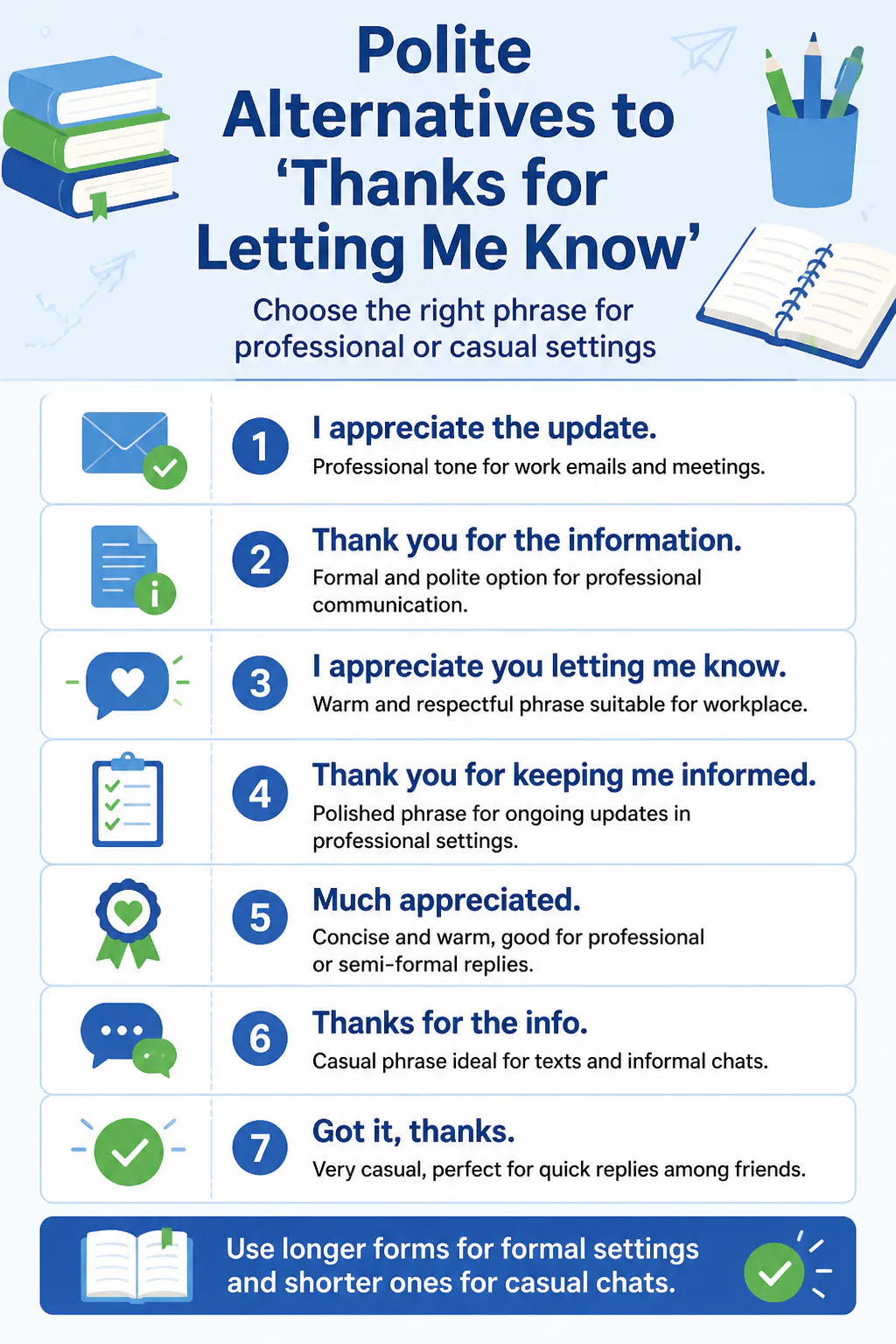
- “I appreciate the update.”
- “Thank you for the information.”
- “I appreciate you letting me know.”
- “Thank you for keeping me informed.”
- “Much appreciated.”
Casual options
- “Thanks for the info.”
- “Got it, thanks.”
- “Good to know!”
- “Thanks for telling me.”
- “Okay, thanks for the heads-up.”
How to choose the right one
- Use longer forms for work, school, or formal communication.
- Use shorter forms with friends or in quick chats.
- Add details when the information is important.
- Vary your wording if you use the phrase often.
| Phrase | Tone | Best use |
|---|---|---|
| Thanks for letting me know | Neutral and polite | Most situations |
| I appreciate the update | Professional | Work emails and meetings |
| Thanks for the info | Casual | Texts and informal chats |
| Got it, thanks | Very casual | Quick replies |
| Much appreciated | Warm and concise | Professional or semi-formal replies |
Common Mistakes to Avoid
Sounding repetitive
The biggest mistake is overusing the same phrase in every conversation. If you say it constantly, especially in informal chats, it can sound stiff or automatic. Switching to a natural variation keeps your communication smoother and more human.
Using the wrong level of formality
A very polished version can feel distant in a casual text, while a very short reply can feel too loose in a professional email. Match the phrase to the situation. “Good to know!” suits a friend, but “I appreciate the update” may suit a manager or colleague better.
Being too vague
When the information is important, adding a few words can improve your reply. Compare “Thanks for letting me know” with “Thanks for letting me know about the deadline change.” The second version shows clearer attention and makes your response more useful.
FAQs
Is “thanks for letting me know” polite?
Yes. It is a polite and professional expression that shows appreciation when someone gives you information.
Can I use this phrase in formal emails?
Yes. It works well in formal and semi-formal emails, especially when someone shares an update, correction, or reminder.
Is it okay in casual conversation?
Yes, but it can sound a little formal if you use it too often with close friends. In casual chats, shorter alternatives like “Got it, thanks” or “Good to know!” often sound more natural.
What is a professional alternative?
“I appreciate the update” is one of the best professional alternatives. It is clear, polite, and widely used in workplace communication.
Conclusion
“Thanks for letting me know” works well when you want to acknowledge information politely and clearly. Adjust the tone to the situation, and use alternatives when a shorter, warmer, or more formal reply fits better.