Have a Great Day: Meaning and Everyday Use
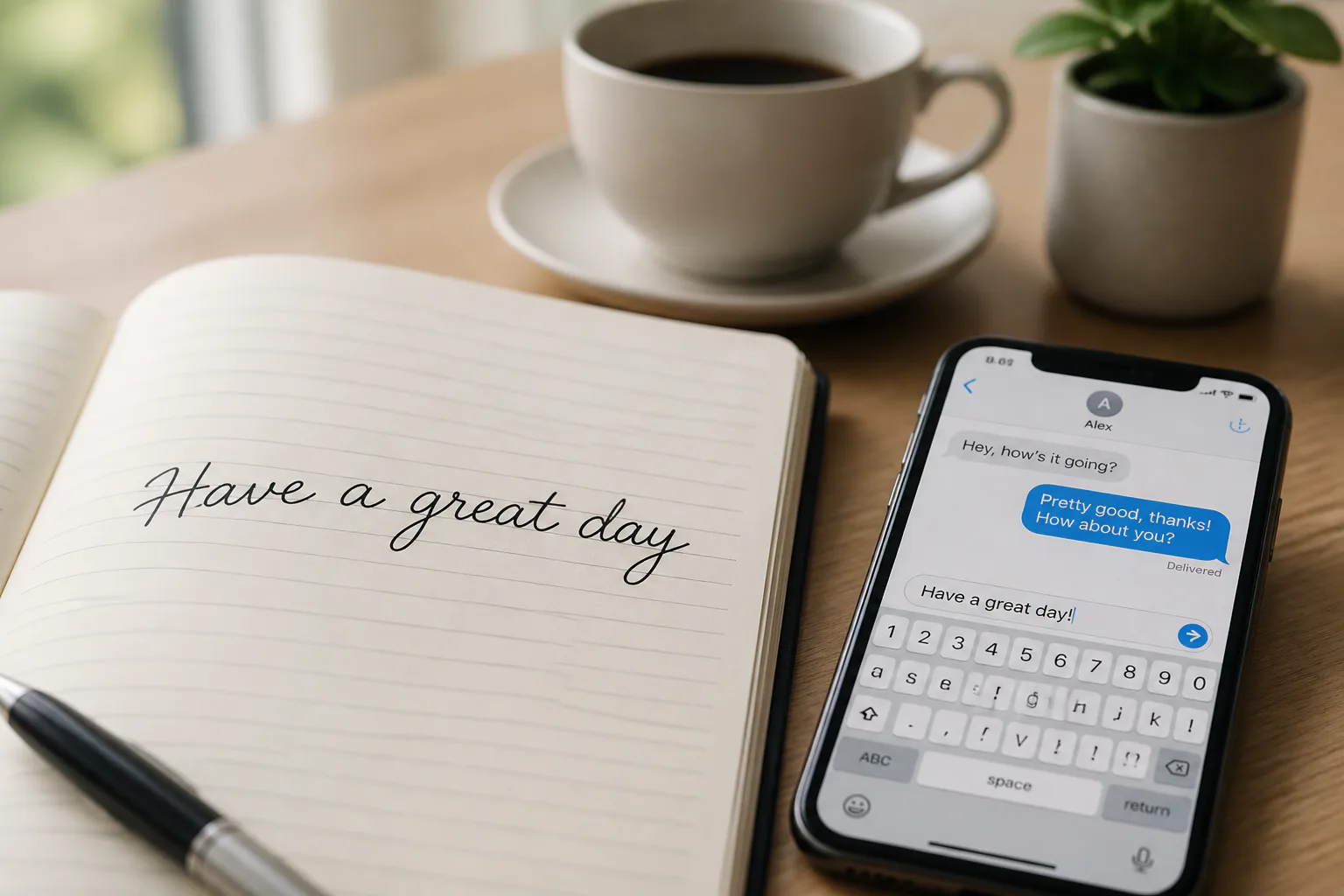
Have a great day is a polite way to wish someone well for the rest of the day. In American English, it usually works as a friendly farewell at the end of a conversation, a phone call, or a short everyday interaction. People use it in both casual and more formal settings because it sounds warm, simple, and courteous.
Although the phrase is easy to understand literally, it also carries an implied meaning: “I hope the rest of your day goes well.” That is why it often appears in customer service, workplace conversations, and everyday social exchanges. It is not a deep emotional statement; it is a normal, positive parting phrase.
What Does ‘Have a Great Day’ Mean?
Literal and implied meaning
The phrase means exactly what it sounds like: you are wishing someone a very good day. More specifically, you are expressing good wishes for the time after the conversation ends. In most situations, it functions as an idiomatic farewell rather than a serious prediction about the person’s day.
Its implied meaning is often just as important as the literal one. When someone says it, they are showing friendliness, politeness, and social goodwill. In American English, that small gesture helps close an interaction smoothly.
How people usually use it
Most often, people say this phrase at the end of a brief exchange. A cashier may say it as a customer leaves. A coworker may use it after a meeting. Someone ending a phone call may say it right before goodbye.
It is closely related to other common farewells. For example, people often use good rest of your day when part of the day has already passed and they want to sound a little more specific.
Common examples
- “Thanks for calling. Have a great day.”
- “It was nice seeing you. Have a great day.”
- “Your order is ready. Have a great day.”
- “See you tomorrow. Have a great day at work.”
In each example, the phrase comes at the end because it helps end the conversation in a pleasant way. It is more natural as a closing remark than as an opening greeting.
Same as “have a good day”?
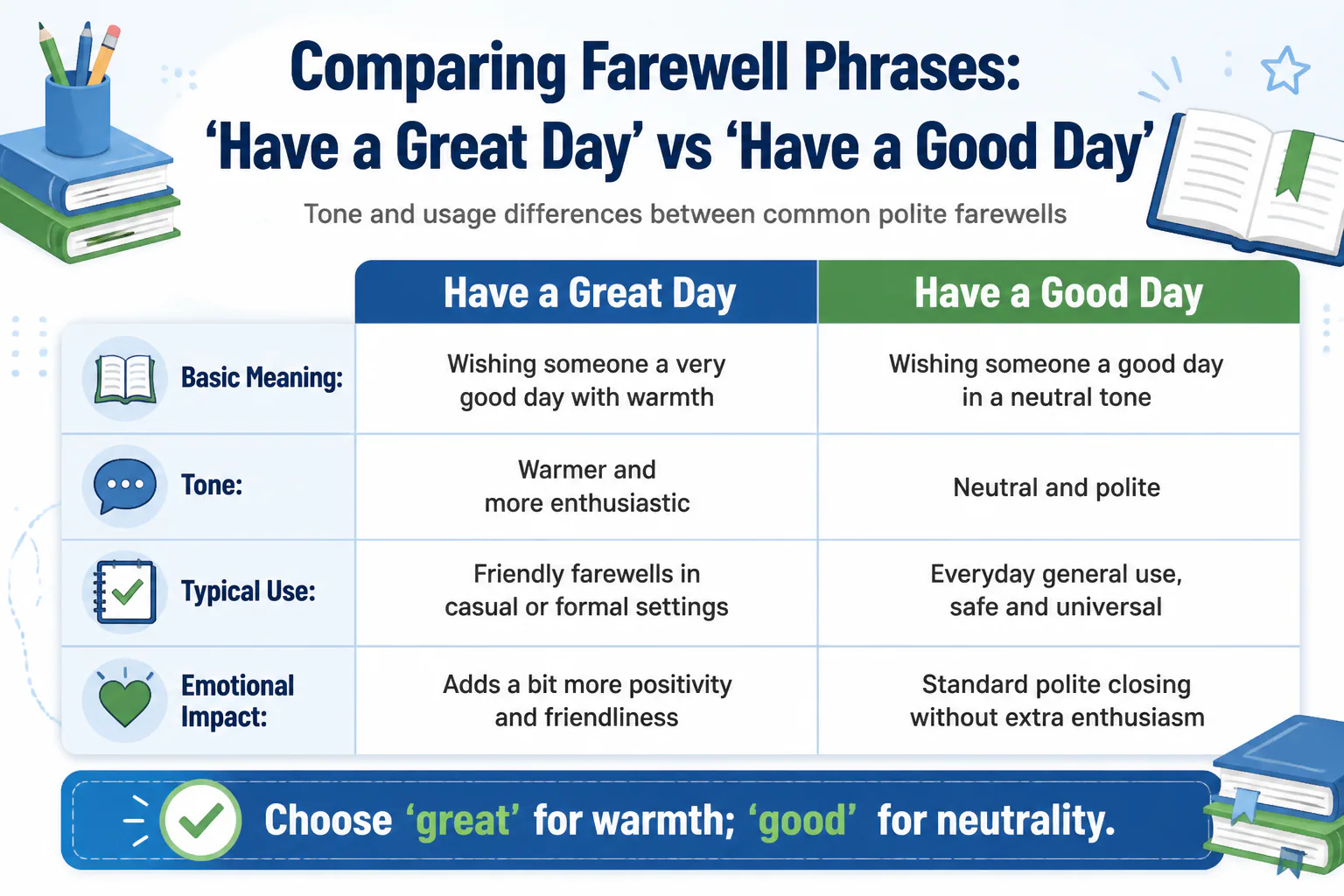
Yes. Have a great day, have a good day, and have a nice day are very similar. The difference is tone, not basic meaning. “Great” sounds a little more enthusiastic than “good,” while “nice” sounds standard and neutral.
The phrase also belongs to a larger group of expressions used to wish people well. That includes day-specific wishes such as great weekend messages, which work in the same polite and friendly way.
Can it be used more broadly?
Sometimes, yes. A person might say, “I decided to have a good day,” which shifts the meaning slightly. In that case, it no longer works as a farewell. Instead, it means choosing a positive attitude or mindset.
That use exists, but it is less common than the farewell meaning. When most people hear the phrase in conversation, they understand it as a polite closing.
Using ‘Have a Great Day’
Best situations
This phrase fits many everyday situations because it is flexible and easy to understand. You can use it with strangers, coworkers, service workers, customers, classmates, or neighbors. It works especially well after short interactions where you want to sound kind without sounding overly personal.
- At the end of a phone call
- After paying in a store or restaurant
- When leaving an office or reception desk
- At the end of a brief work chat
- In polite emails or messages
Natural placement
Put the phrase near the end of your sentence or as the final sentence itself. Common patterns include “Thanks, have a great day” and “I’ll talk to you later. Have a great day.” If you say it too early in a conversation, it can sound like you are trying to end the exchange.
Sometimes people pair it with another polite close. For example: “Take care and have a great day.” In conversation about daily greetings, it also pairs naturally with questions like how is your day going, especially when you want a warm but ordinary tone.
Tone
What tone it gives
- The tone is friendly, positive, and respectful.
- It is polite without being formal or stiff.
- That balance is one reason the phrase is so common in American English.
It also sounds safe in many settings. You can say it to a boss, a client, a stranger, or a friend without much risk of sounding inappropriate. The phrase communicates goodwill, but it does not demand a strong emotional response.
Formal or informal?
It works in both. In informal settings, it sounds natural and cheerful. In formal settings, it remains acceptable because it is courteous and not slangy.
| Phrase | Tone | Typical use |
|---|---|---|
| Have a good day | Neutral and polite | Everyday general use |
| Have a great day | Warmer and more upbeat | Friendly farewells |
| Have a nice day | Standard and courteous | Customer service, routine closings |
Cultural nuance
In American English, brief positive farewells are common and expected in many public interactions. Saying nothing at all can sound abrupt in some situations, especially in service settings. That is why this phrase often appears after small exchanges that do not require a longer goodbye.
Similar expressions exist in other languages too, including the Spanish phrase “que tenga un buen dia.” That shows the idea itself is widely understood: a short farewell that wishes the other person well.
Alternatives to ‘Have a Great Day’
Common alternatives
- Have a good day – the closest and most neutral option
- Have a nice day – polite and very common
- Enjoy your day – a little more personal and upbeat
- Take care – warm and slightly more personal
- Have a wonderful day – more enthusiastic
- See you later – casual, when you expect to meet again
- All the best – polite, often used in writing
- Have a good one – informal and conversational
How to choose
- Use “have a good day” when you want the safest, most universal choice.
- Use “have a great day” when you want to sound a bit warmer.
- Use “take care” when you want a slightly more personal tone.
- Use “have a wonderful day” when you want extra enthusiasm.
Common Tips
What to avoid
- One common mistake is using the phrase at the wrong point in a conversation. Because it is a farewell, saying it too early can make the other person feel dismissed.
- Another mistake is using an overly cheerful tone in a serious or sad situation, where a simpler closing might sound more appropriate.
It is also helpful to match the phrase to the setting. In most everyday moments, it sounds natural. But in emotionally heavy situations, a quieter close such as “take care” may fit better.
Useful tips
- Say it at the end of the interaction, not the beginning.
- Match your tone to the situation.
- Use it with both strangers and familiar people.
- Choose “good,” “great,” or “nice” based on how enthusiastic you want to sound.
FAQs
Is “have a great day” polite?
Yes. It is a polite, friendly, and widely accepted expression in American English. People use it to end conversations on a positive note.
Can I say “have a great day” at work?
Yes. It works well in workplace conversations, emails, customer interactions, and phone calls. It sounds professional while still being warm.
Is “have a great day” formal?
It is not highly formal, but it is appropriate in formal situations. It sits comfortably between casual and professional speech.
What is the difference between “have a good day” and “have a great day”?
The meaning is almost the same. “Great” simply adds a bit more enthusiasm, while “good” sounds slightly more neutral.
Conclusion
“Have a great day” is a simple, polite farewell that works best as a warm closing in everyday American English.