Keep up the Great Work: Meaning and How to Use IT Correctly
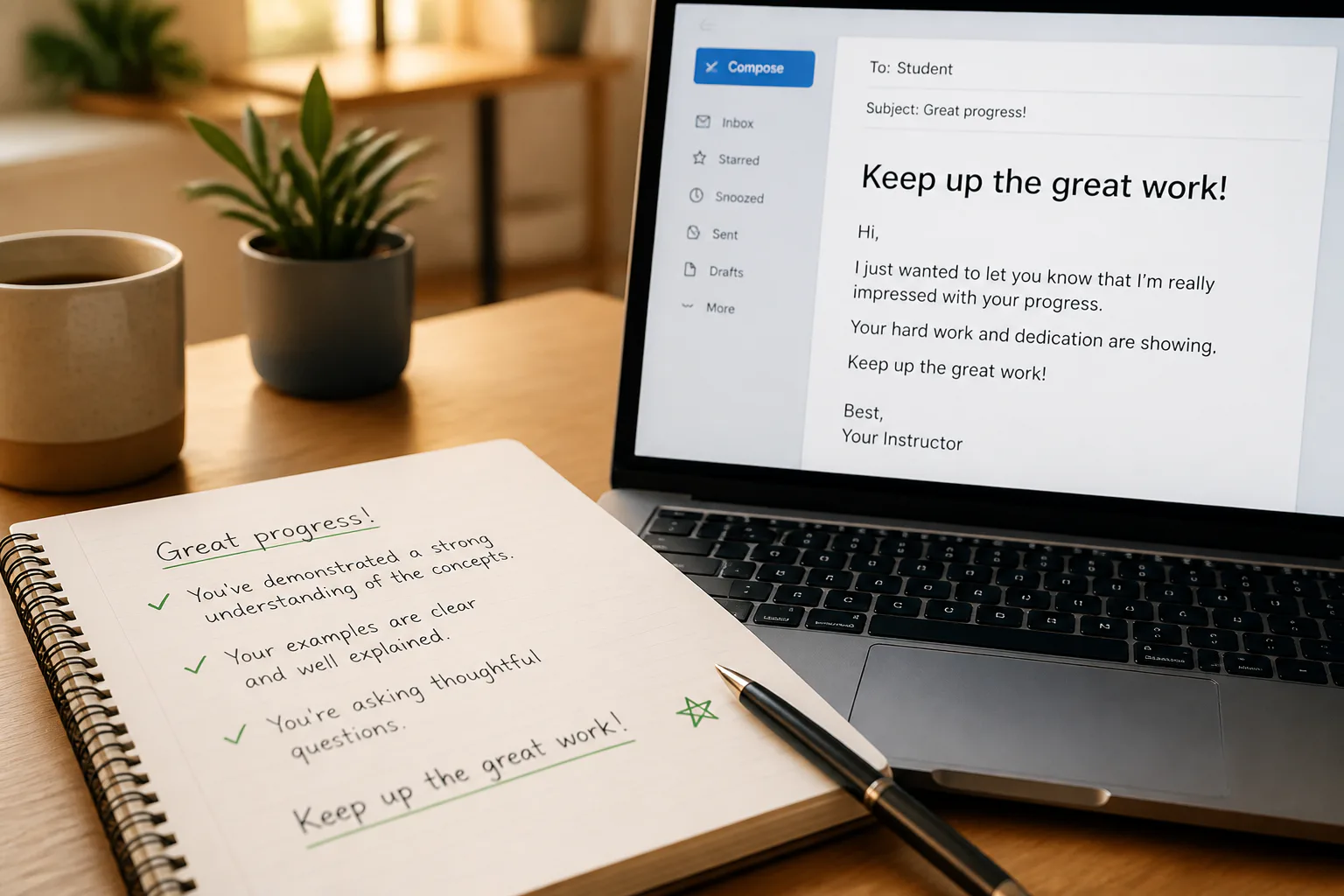
“Keep up the great work” means continue doing well. It is a common American English phrase used to praise someone for what they have already done and encourage them to maintain that same high standard. You can use it in speech, emails, messages, school feedback, and workplace communication when you want to sound positive, supportive, and sincere.
What Does ‘Keep Up the Great Work’ Mean?
The phrase “keep up the great work” tells someone that their current effort or performance is good and should continue. It combines two ideas at once: recognition for past or present success, and encouragement for future effort. In other words, you are not only saying, “You did well,” but also, “Please continue like this.”
Its tone is usually warm, approving, and motivating. In American English, people often use it with coworkers, students, employees, volunteers, children, or friends when they want to show appreciation without sounding overly emotional. It is straightforward and natural, which is one reason it appears so often in everyday communication.
The phrase works best when the person has already shown effort, progress, or strong results. If someone completed a task carefully, improved a skill, or handled a responsibility well, this expression fits. That is why it often appears in performance feedback, teacher comments, team chats, and casual encouragement.
Core meaning
At its core, the phrase means: you are doing a very good job, and I hope you continue. The word “keep up” is important because it points to ongoing effort, not just one finished action. “Great work” adds strong praise, so the full phrase sounds more enthusiastic than a simple “good job.”
What it implies
When you say it, you imply that the person has met or exceeded expectations. You also suggest that their work has value and that you noticed it. That makes the phrase especially useful in situations where encouragement can boost confidence or motivation.
- It praises current performance.
- It encourages future consistency.
- It shows approval in a polite, clear way.
- It often helps build morale.
Natural usage contexts
You can use this phrase in both professional and personal settings. In a workplace, it may follow a successful project update or a well-written report. In school, a teacher might write it on an assignment. At home, a parent might say it to a child who has been practicing regularly.
Encouraging language matters because tone can shape how feedback is received. For example, phrases like keep up the good work and “keep up the great work” are close in meaning, but “great” usually sounds a little stronger and more enthusiastic.
Examples of correct use
Here are a few natural examples:
- “Your presentation was clear and well organized. Keep up the great work.”
- “You have improved a lot this semester. Keep up the great work.”
- “Thanks for being so reliable lately. Keep up the great work.”
- “The customer loved your help today. Keep up the great work.”
When it can sound less natural
The phrase can feel too broad if you use it without any real reason or detail. If possible, pair it with a specific comment so it sounds sincere. Instead of saying only “Keep up the great work,” say what the person did well first.
For instance, “You handled that client question calmly and clearly. Keep up the great work” sounds more genuine than a stand-alone sentence with no context. Specific praise almost always feels more meaningful.
When and How to Use This Phrase
Best times to say it
- After someone completes a task successfully.
- When a person has shown steady improvement.
- During performance feedback or evaluation.
- When you want to encourage consistency, not just celebrate one moment.
- In messages, emails, classroom comments, or spoken conversation.
How to make it sound sincere
- Mention the specific action first.
- Match the tone to the relationship.
- Use it when the praise is deserved.
- Avoid repeating it too often to the same person.
In professional writing, a short sentence before the phrase makes it stronger. If you often write polite workplace messages, learning nearby expressions such as looking forward to working with you can also help you sound more natural across different situations.
Tone Considerations
Tone
- It is positive.
- It is supportive.
- It is moderately enthusiastic.
- It is friendly enough for casual conversation but still appropriate in many professional settings.
- Because it is direct and familiar, it usually sounds natural in American English.
Etiquette
Use it when you genuinely want to recognize effort or results. Empty praise can sound mechanical, especially in leadership or teaching roles. If the situation is formal, you can still use the phrase, but it often works best when attached to a specific achievement or written in a full sentence.
It is also wise to consider hierarchy and context. A manager, teacher, coach, or parent can say it easily, but peers and friends can use it too when they want to cheer someone on. In very serious or delicate situations, a more tailored comment may be better than a stock phrase.
Examples in Everyday Communication
Workplace examples
- “You handled the meeting professionally and kept everyone on track. Keep up the great work.”
- “Your reports have been accurate and easy to follow lately. Keep up the great work.”
- “Thanks for stepping in to help the team this week. Keep up the great work.”
- “You are building strong relationships with clients. Keep up the great work.”
School and learning examples
- “Your writing has become much clearer. Keep up the great work.”
- “You participated more in class today. Keep up the great work.”
- “This is your best math quiz so far. Keep up the great work.”
Casual examples
- “You have been really consistent at the gym. Keep up the great work.”
- “Your garden looks amazing this season. Keep up the great work.”
- “You are doing a great job staying organized. Keep up the great work.”
In casual speech, the phrase often sits alongside other upbeat expressions. If you want to broaden your everyday encouragement vocabulary, a phrase like happy to help works well in friendly, supportive exchanges too.
How to Respond to It
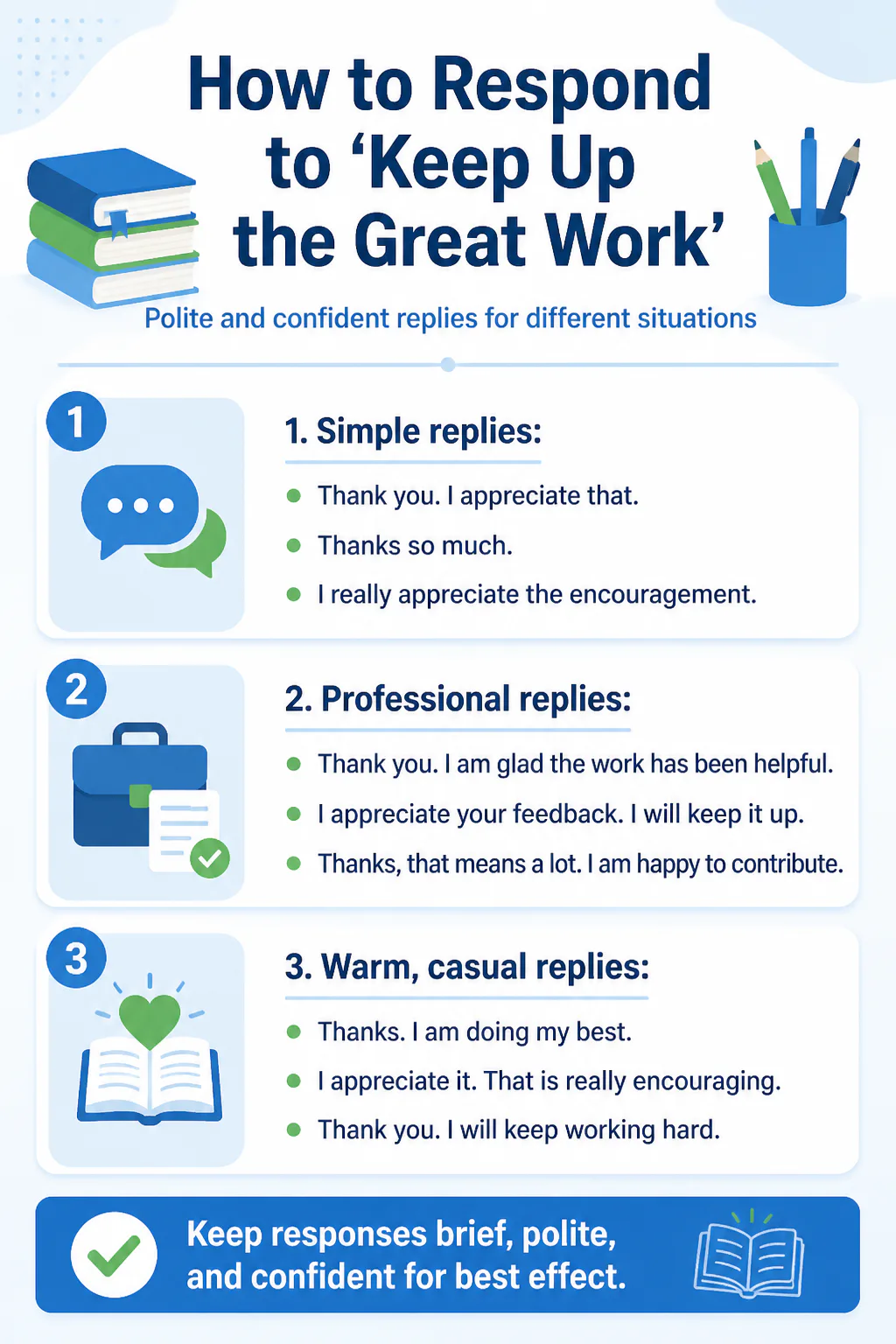
Simple replies
- “Thank you. I appreciate that.”
- “Thanks so much.”
- “I really appreciate the encouragement.”
Professional replies
- “Thank you. I am glad the work has been helpful.”
- “I appreciate your feedback. I will keep it up.”
- “Thanks, that means a lot. I am happy to contribute.”
Warm, casual replies
- “Thanks. I am doing my best.”
- “I appreciate it. That is really encouraging.”
- “Thank you. I will keep working hard.”
The best response is usually brief, polite, and confident. You do not need to downplay your effort or overexplain. A simple thank-you plus a short acknowledgment is enough.
FAQs
Is “keep up the great work” professional?
Yes. It is professional in many workplaces, especially in supportive feedback, emails, performance comments, and team communication. It sounds best when paired with a specific reason for the praise.
Is it different from “keep up the good work”?
Yes, but only slightly. Both phrases mean continue performing well. “Great work” sounds a bit stronger and more enthusiastic than “good work.”
Can I use it in an email?
Yes. It fits naturally in emails to coworkers, students, employees, or service providers when you want to encourage continued strong performance.
Can it sound too generic?
Yes. If you use it without any detail, it can feel routine. Adding a specific comment about what the person did well makes it sound more sincere and effective.
Conclusion
“Keep up the great work” is a useful way to praise current effort and encourage continued success in both professional and everyday communication.