That Means a Lot to Me: Meaning and When to Say IT
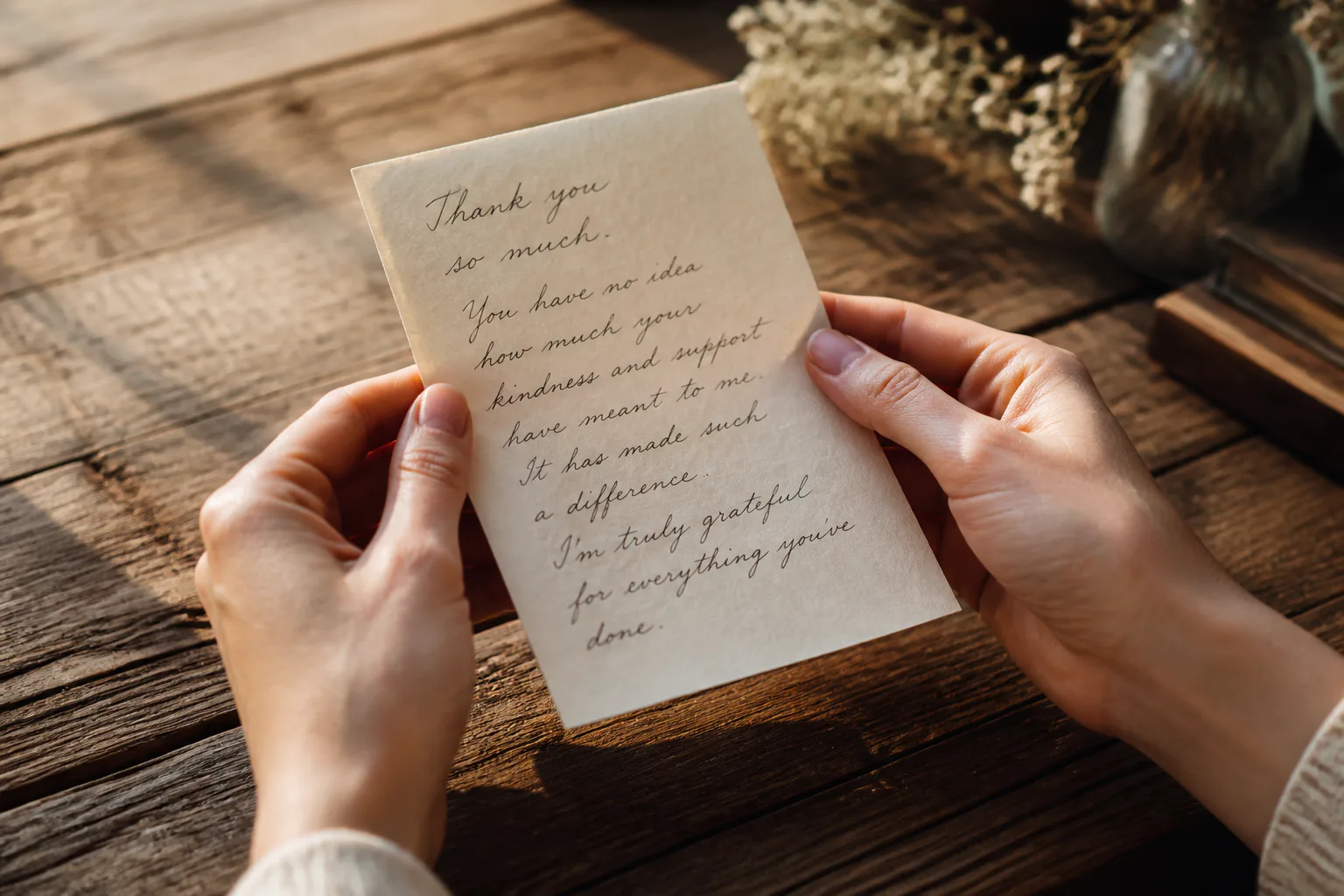
“That means a lot to me” means that something feels deeply important, valuable, or emotionally significant to the speaker. People say it to show sincere gratitude, appreciation, or emotional impact after a kind gesture, supportive comment, meaningful event, or loving act. In everyday communication, it goes beyond a simple thank you because it tells the other person that what they did truly mattered.
It is a warm, personal phrase that helps express feelings that plain words sometimes do not fully capture. Because it carries emotional weight, it is best used when you genuinely want to show that someone’s words or actions touched you in a meaningful way.
Meaning of the Phrase
Core meaning
At its core, this phrase means something is very important to you. It tells the listener that their action, words, or presence has real value in your life. The word “mean” here relates to significance or importance, not just definition.
When someone says, “That means a lot to me,” they are not only describing importance. They are also sharing an emotional response. The phrase often suggests that the moment felt touching, comforting, encouraging, or reassuring.
Literal and emotional sense
Literally, the phrase points to value or importance. Emotionally, it signals that the speaker feels moved by what happened. That is why it sounds stronger and more personal than a casual “thanks.”
This expression is also idiomatic, which means the full sense of it comes from how people use it, not just from reading each word separately. For English learners, that matters because the phrase is understood as a whole expression of appreciation and emotional significance.
What it usually responds to
People often use the phrase after receiving something they see as thoughtful or meaningful. That could be encouragement during a hard time, recognition for their efforts, a heartfelt compliment, or someone simply showing up when it mattered most. A close variation, it means a lot to me, carries the same emotional force with a slightly different structure.
- A friend checks in when you are struggling.
- A family member remembers something important to you.
- A teacher or boss praises your hard work sincerely.
- A partner does something thoughtful without being asked.
In each case, the phrase tells the other person that their gesture was not small or forgettable. It had a deep effect on you, and you want them to know that clearly.
When and How to Use This Phrase
Best situations
Use this phrase when you want to acknowledge kindness, support, effort, or love, especially in emotional situations. It fits best when someone has done something that feels precious, helpful, or deeply considerate. Because it expresses appreciation, it works well in both personal and professional conversations when the feeling is sincere.
You can say it after someone offers comfort, encouragement, praise, help, or understanding. It is especially natural when a simple “thank you” feels too small for what you want to express. If you want a close wording shift, this means a lot to me sounds just as heartfelt and often points more directly to a specific gesture or moment.
Tone and delivery
The phrase works best when said honestly and simply. A calm tone often makes it sound more genuine than dramatic wording. In writing, it fits well in texts, messages, notes, emails, and cards when you want to sound warm but clear.
- Use it for sincere appreciation.
- Use it when the moment has emotional weight.
- Use it after support, kindness, or recognition.
- Avoid using it casually for every minor favor, or it can lose impact.
Examples in Everyday Conversation
Personal examples
- Friend: “I just wanted to check on you after your interview.”
You: “Thank you. That means a lot to me.” - Partner: “I know this week has been hard, so I brought you dinner.”
You: “That means a lot to me. I really needed that today.” - Parent: “I’m proud of how hard you’ve been working.”
You: “That means a lot to me coming from you.”
Work and school examples
- Manager: “You handled that project very well.”
You: “Thank you, that means a lot to me.” - Teacher: “Your improvement this semester has been impressive.”
You: “That means a lot to me. I’ve been trying hard.” - Colleague: “Your extra effort was clear.”
You: “I appreciate that. It means a lot to me that you noticed.”
Text message examples
- “Thanks for being there yesterday. That means a lot to me.”
- “Your message really helped. That means a lot to me.”
- “I’m so grateful you remembered. That means a lot to me.”
These examples show that the phrase is flexible. It can stand alone, or you can add a short reason after it to make your meaning even more personal.
Emotional Impact
Why it feels powerful
This phrase is powerful because it tells someone their action had a real emotional effect. It does more than acknowledge the act itself. It confirms that the speaker felt seen, supported, valued, or cared for.
That kind of response strengthens relationships because people want to know that their kindness mattered. Saying it can deepen trust, encourage future kindness, and create a stronger sense of connection between two people.
Why it matters in relationships
In close relationships, the phrase helps people feel appreciated on a deeper level. In professional or formal settings, it can still sound respectful while adding warmth. Expressions such as thanks for your concern also show appreciation, but “that means a lot to me” feels more personal because it highlights emotional significance, not just politeness.
It also adds emotional depth to communication. Some feelings are hard to explain directly, and this phrase helps bridge that gap in a simple, natural way.
Alternative Expressions
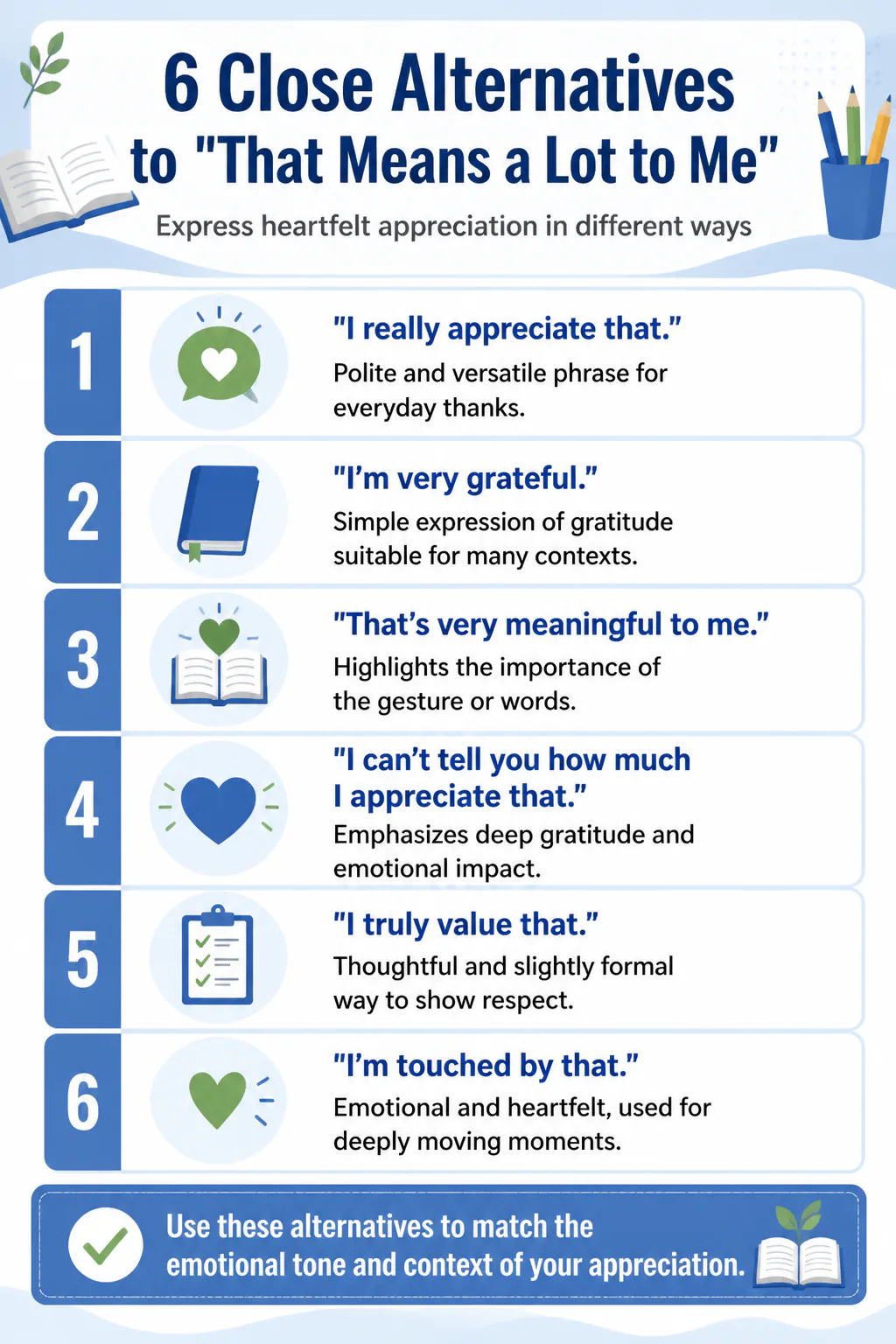
Close alternatives
- “I really appreciate that.”
- “I’m very grateful.”
- “That’s very meaningful to me.”
- “I can’t tell you how much I appreciate that.”
- “I truly value that.”
- “I’m touched by that.”
How they differ
| Expression | Tone | Best use |
|---|---|---|
| That means a lot to me | Warm and personal | Emotional gratitude |
| I really appreciate that | Polite and versatile | Everyday thanks |
| I’m touched by that | Emotional and heartfelt | Deeply moving moments |
| I truly value that | Thoughtful and slightly formal | Respectful appreciation |
If you want variety, choose the phrase that matches the moment. For a strongly emotional response, “that means a lot to me” remains one of the clearest and most natural choices.
FAQs
Is “that means a lot to me” the same as thank you?
No. It includes thanks, but it also shows that the gesture had deeper personal or emotional importance.
Can I use this phrase in professional settings?
Yes. It works well when someone offers meaningful support, recognition, or encouragement, as long as the tone is sincere.
Does the phrase sound too emotional?
Not if the situation calls for it. It sounds natural when someone has done something thoughtful or significant.
Is it difficult for English learners to understand?
It can be, because it is an idiomatic expression. The full meaning comes from common usage, where it expresses heartfelt appreciation and significance.
Conclusion
“That means a lot to me” is a simple but powerful way to express sincere appreciation and show that someone’s words or actions had real emotional significance.