Awaiting Your Response: Meaning, Tone, and Proper Use
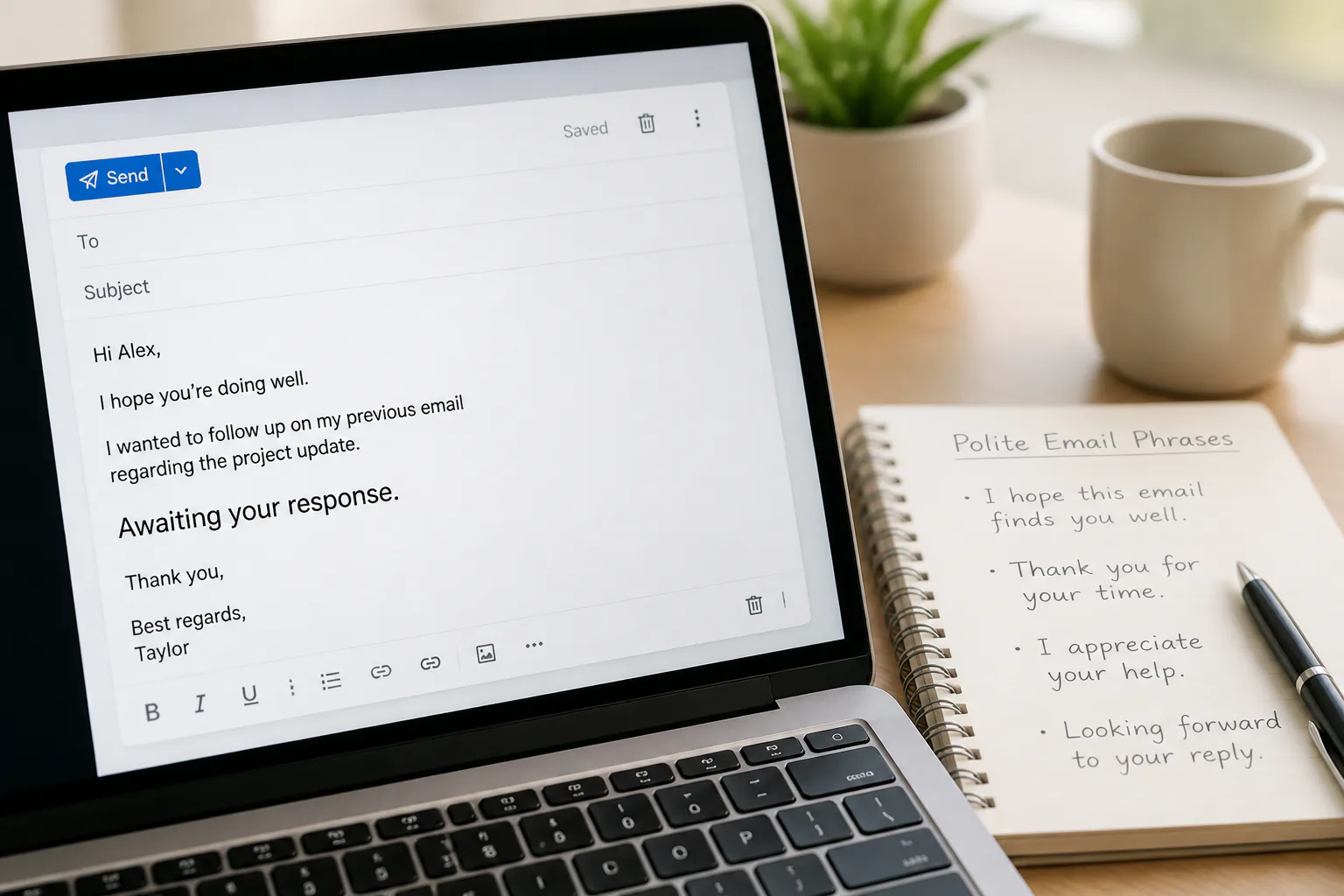
Awaiting your response means that the writer is waiting for a reply from the other person. It is a polite, professional phrase often used in emails, messages, and letters to show that a response is expected without sounding openly demanding. In practice, it works as both a closing line and a gentle reminder that the conversation still needs the recipient’s attention.
The phrase is common in work communication, but people also use it in personal messages when they need an answer, clarification, or confirmation. Because it sounds formal, it can create the right tone in business settings, though repeated use can make it feel stiff or pushy. Knowing when to use it, and when to choose a softer alternative, helps your message sound clear and respectful.
What Does ‘Awaiting Your Response’ Mean?
Literal and contextual meaning
At its core, “awaiting your response” means I am waiting for your reply. The word “awaiting” means “waiting for” or “expecting,” and it has been part of English since the 13th century. In modern communication, the phrase does more than state a fact. It signals that the writer expects the other person to answer and that some next step depends on that reply.
That is why the phrase often appears at the end of a message. It wraps up the note while pointing the recipient toward a pending action. Instead of sounding abrupt, it frames the expectation in a courteous way, especially in professional correspondence.
How people use it
Writers use this phrase when they want to follow up, request a decision, or ask for clarification. It is especially common after questions, proposals, invitations, and requests for approval. In many cases, it acts as a polite nudge rather than a direct command.
For example, someone might write, “I have attached the revised draft and am awaiting your response,” or “We would appreciate your confirmation by Friday and are awaiting your response.” If you are choosing between this phrase and a softer close, a warmer line like looking forward to working with you can sound more relational than formal.
What tone it carries
The phrase usually sounds formal, patient, and professional. It suggests that the writer is being respectful while also making it clear that a reply is needed. That balance is why it fits business emails, project updates, client communication, and review-related messages.
Still, the wording can become too forceful if the message already sounds tense or if the phrase appears too often. In those cases, the recipient may read it less as patience and more as pressure. Tone depends not just on the phrase itself, but on the full message around it.
Examples in real communication
- “I shared the meeting notes yesterday and am awaiting your response on the final timeline.”
- “We sent the contract for review and are awaiting your response.”
- “I invited everyone to dinner next week and am awaiting your response.”
- “Please review the updated figures. Awaiting your response.”
These examples show that the phrase works in both professional and casual settings, but the first three sound more natural in formal communication. In a personal message, many people would choose a friendlier line instead.
When to choose another phrase
You do not need to use “awaiting your response” every time you expect a reply. Sometimes a less formal closing sounds better, especially with colleagues you know well or in everyday conversation. A phrase such as “looking forward to your reply” or “hoping to hear from you soon” often feels more natural while keeping the same basic meaning.
It also helps to match the wording to the situation. If you need simple confirmation, one clear request may work better than a formal closing. For instance, direct lines like please acknowledge receipt can fit messages where confirmation matters more than extended discussion.
Usage
Professional messages
This phrase appears most often in workplace communication. It suits project updates, client emails, work reviews, invitations, and requests that need approval or clarification. In these settings, the wording helps keep the message courteous while making the next expected action clear.
Casual correspondence
People also use it in personal messages, but less often. In casual conversation, it can sound a little stiff unless the topic is serious or time-sensitive. A more relaxed alternative usually fits better when writing to friends or family.
The same idea applies to other fixed expressions in email. Small wording choices, such as whether you write please see attached or use a softer phrase, can make a message feel either formal or easygoing.
Formality
Why it sounds formal
“Awaiting your response” belongs to the more polished side of written English. It avoids slang, contractions, and conversational phrasing, so it naturally fits business communication better than quick chats or text messages. That formality can be useful when you want to sound composed and respectful.
When formality helps
Formal wording works well when stakes are higher or roles are clearly defined. If you are writing to a client, manager, or reviewer, the phrase can show professionalism and patience. It tells the reader that a reply is needed without sounding as blunt as “Reply soon” or “Get back to me.”
When it feels too strong
The phrase can feel pushy if the recipient already knows a response is needed or if you repeat it in follow-up messages. In those cases, the wording may sound like pressure rather than courtesy. A softer close often works better when the relationship is collaborative or informal.
| Phrase | Tone | Best use |
|---|---|---|
| Awaiting your response | Formal and professional | Business emails, follow-ups, client communication |
| Looking forward to your reply | Polite and warmer | Professional but friendly messages |
| Hoping to hear from you soon | Gentle and conversational | Casual or semi-formal communication |
| Kindly reply at your convenience | Respectful and softer | Requests without urgency |
| Eager to hear from you | Enthusiastic | Friendly or upbeat messages |
Best Practices
Use it thoughtfully
- Use the phrase when a reply is genuinely needed.
- Keep it for messages that involve decisions, updates, confirmation, or feedback.
- Avoid repeating it in every email, especially in the same thread.
- Match the level of formality to your relationship with the recipient.
Avoid sounding demanding
- Do not pair it with harsh wording or obvious frustration.
- If the request is urgent, state the deadline clearly instead of relying on pressure.
- Choose softer language when writing to peers, friends, or long-term contacts.
- Let the rest of the email carry a respectful tone so the phrase does not feel sharp.
Handle follow-ups politely
- Reference the earlier message briefly before asking again.
- Use language such as “just following up” or “when you have a moment” to reduce pressure.
- Restate what you need in one clear sentence.
- If a response is optional, do not use wording that implies obligation.
Alternatives to ‘Awaiting Your Response’
Formal alternatives
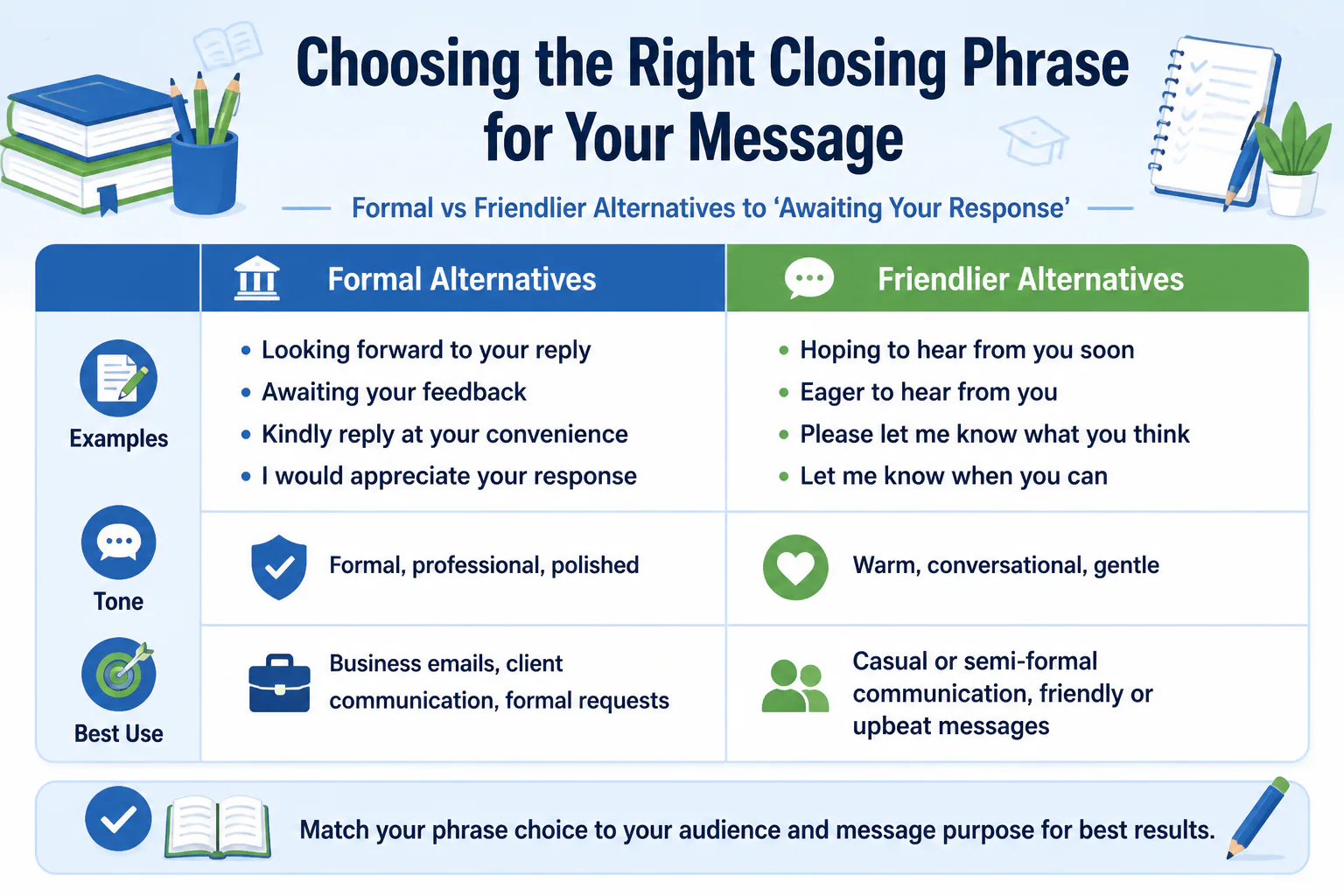
- Looking forward to your reply
- Awaiting your feedback
- Kindly reply at your convenience
- I would appreciate your response
Friendlier alternatives
- Hoping to hear from you soon
- Eager to hear from you
- Please let me know what you think
- Let me know when you can
How to choose the right one
The best alternative depends on your audience and purpose. If you need professionalism, stay with a formal option. If you want warmth or ease, choose a phrase that sounds more conversational and less final.
FAQs
Is “awaiting your response” polite?
Yes. It is generally polite and professional because it expresses expectation without being openly demanding. The problem comes from overuse or from placing it in a message that already sounds impatient.
Is “awaiting your response” too formal?
In many casual situations, yes. It fits professional emails better than texts or friendly notes, where a simpler phrase usually sounds more natural.
Can I use “awaiting your response” in an email?
Yes, especially in business emails involving project updates, client communication, invitations, feedback, or review requests. It works best when a reply is actually needed to move things forward.
What is a softer way to say it?
“Looking forward to your reply,” “hoping to hear from you soon,” and “kindly reply at your convenience” are softer choices. They keep the request clear while sounding warmer or less formal.
Conclusion
“Awaiting your response” is useful when you want to sound clear and professional, but it works best when the tone fits the relationship and situation.