Fascisterne: Meaning, History and the Rise of Fascist Movements
The term fascisterne means “the fascists” and is a Danish word used to describe people who support, belong to, or are connected with fascism. The word itself does not refer to one specific organisation or group. Instead, its meaning depends on the historical or political context in which it is used.
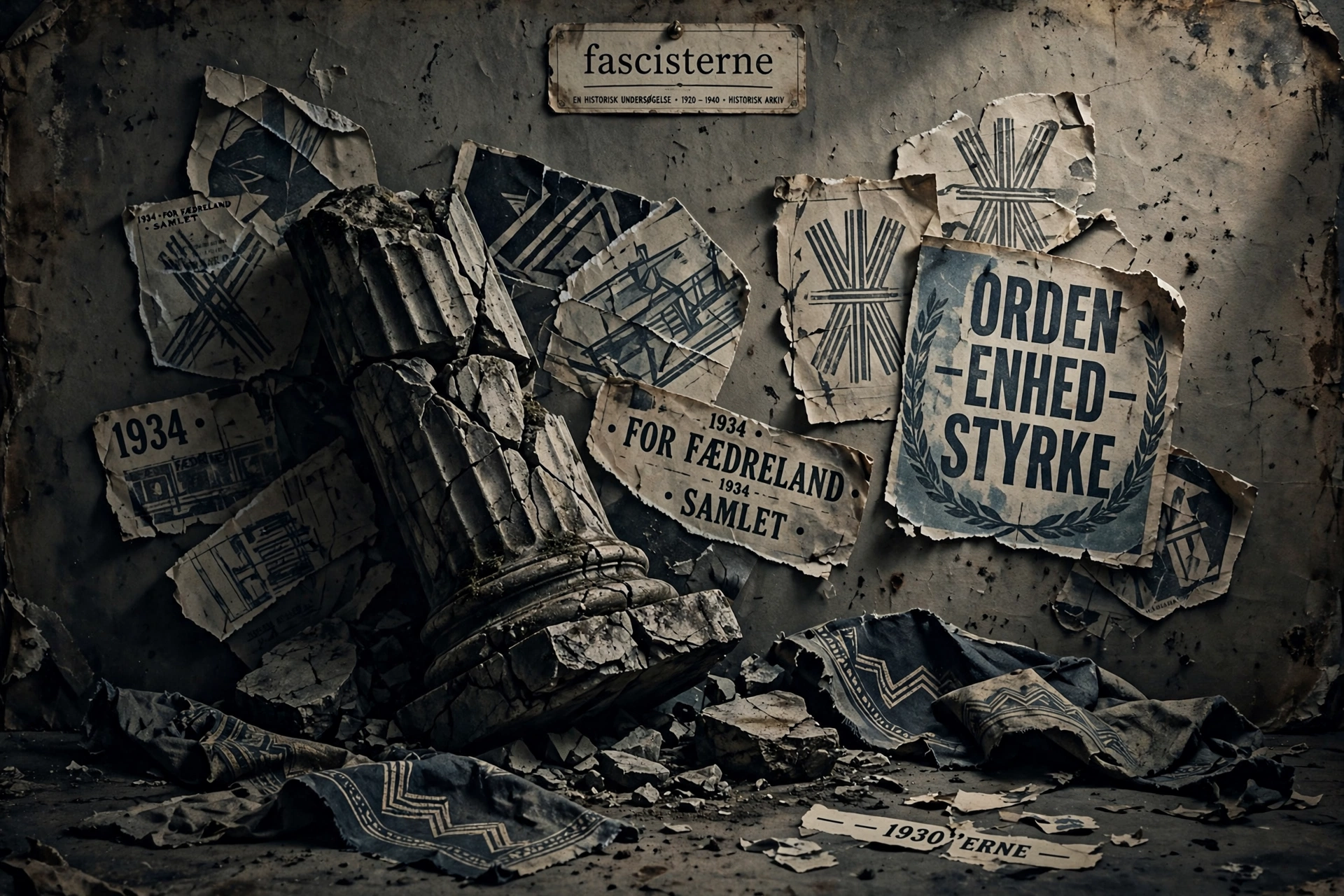
The topic of fascisterne is closely connected with the history of fascism, one of the most influential political movements of the 20th century. Fascism developed in Europe after World War I and became associated with authoritarian governments, extreme nationalism, powerful leaders, political control, and the rejection of democratic systems.
What Does fascisterne Mean?
The Danish word fascisterne is the definite plural form of “fascist.” In English, it translates directly to “the fascists.” The word refers to a group of people rather than the ideology itself.
The difference between related terms is important. Fascisme means fascism, which describes the political ideology and movement. A fascist is a person associated with that ideology, while fascisterne refers to a specific group of fascists being discussed in a particular situation.
For example, when historians mention fascisterne in relation to World War II, they may be referring to fascist supporters or movements active during that period. When the term appears in Danish historical discussions, it often relates to European fascist movements, including those connected with Italy, Germany, and Denmark.
The Origin of Fascism
Fascism originated in Europe during the early 20th century, especially after the First World War. The movement developed during a period of political uncertainty, economic difficulties, and social tensions across many European countries.
The word fascism comes from the Italian word “fascio,” meaning a bundle or group. The term was connected with the ancient Roman symbol known as fasces, which represented authority and power. This symbolism was adopted by Benito Mussolini when he created the first modern fascist movement in Italy.
Fascism presented itself as a movement focused on national strength, unity, and rebuilding society. However, fascist governments became known for limiting political freedoms, controlling information, and concentrating power in the hands of a single leader.
Benito Mussolini and Italian Fascism
The first major fascist movement was created in Italy by Benito Mussolini. In 1919, Mussolini founded the Fasci Italiani di Combattimento, which later developed into the National Fascist Party.
Italy after World War I faced serious challenges, including political instability, economic problems, and fears of communist revolution. Fascists used these conditions to gain support by promising national renewal, stronger leadership, and greater social order.
In 1922, Mussolini’s supporters carried out the March on Rome, a political action that helped him gain power. Following this event, Mussolini became prime minister and gradually transformed Italy into an authoritarian state.
Under Mussolini’s rule, opposition parties were removed, censorship increased, and political power became concentrated around the Fascist Party. Mussolini promoted himself as a powerful national leader, known by the title “Il Duce.”
Main Characteristics Associated With Fascisterne
Fascist movements shared several common characteristics that defined their political approach. One major feature was extreme nationalism, where the interests of the nation were placed above individual concerns.
Fascists often believed that society needed strong leadership and strict organisation. They supported the idea that a powerful leader could represent the true interests of the nation and guide the country toward strength and unity.
Another important feature was opposition to democratic systems. Fascist governments often restricted political competition, removed opposition parties, and controlled public discussion.
Fascist movements also promoted militarism and discipline. Military values were often presented as symbols of national power, and some fascist governments used expansion and conflict as part of their political goals.
Propaganda played a major role in fascist states. Governments used newspapers, radio, education, and public events to influence citizens and promote their political ideas.
Fascism and Political Control
Fascist governments attempted to control many aspects of public life. Instead of allowing different political opinions and competing parties, they aimed to create a unified society under one political system.
Political opponents were often targeted through censorship, intimidation, and violence. In Italy, Mussolini’s supporters known as the Blackshirts, or Squadristi, used violence against political opponents before fascists fully secured control.
The use of propaganda and restrictions on freedom of expression allowed fascist leaders to strengthen their authority. The state was presented as the highest authority, while individual freedoms became limited.
Fascisterne During World War II
During World War II, fascist and fascist-aligned movements existed in several European countries. The most important examples were Mussolini’s Italy and Nazi Germany under Adolf Hitler.
Italy became an ally of Germany during the war. Mussolini’s government supported Nazi Germany, although Italian fascism and German Nazism were not exactly the same.
Germany’s Nazi Party developed from some fascist ideas but added a stronger focus on racial ideology and antisemitism. The Nazi regime became responsible for the Holocaust and other crimes during World War II.
Beyond Italy and Germany, different fascist or authoritarian nationalist groups existed in countries such as France, Spain, Hungary, Romania, Norway, and Denmark. Their influence and political power varied from country to country.
Fascisterne in Denmark
The term fascisterne is especially relevant in Danish historical discussions about the 1930s and the Second World War. Denmark had fascist and Nazi-oriented movements during this period.
The most significant Danish movement was the Danmarks National-Socialistiske Arbejderparti, commonly known as DNSAP. The party was founded in 1930 and became Denmark’s main Nazi organisation.
Frits Clausen was the leader of DNSAP from 1933. The movement was influenced by German Nazism rather than only Italian fascism.
During Germany’s occupation of Denmark from 1940 to 1945, DNSAP remained a minority movement and did not achieve the level of political control that Nazi Germany established in Germany.
Difference Between Fascists and Nazis
Fascism and Nazism are closely connected but are not identical. Fascism generally refers to authoritarian nationalist movements that developed in countries such as Italy under Mussolini.
Nazism refers specifically to the ideology and government of Adolf Hitler’s Germany. While Nazism included several fascist characteristics, it placed a much stronger emphasis on racial theories, antisemitism, and ideas of racial hierarchy.
Understanding this difference is important because the terms are sometimes used interchangeably, but historically they describe related yet distinct movements.
The Decline of Fascist Governments
The power of fascist governments declined during the final years of World War II. In Italy, Mussolini was removed from power in 1943 after years of fascist rule.
Later, Germany installed Mussolini as the leader of the Italian Social Republic in northern Italy. In 1945, Mussolini was captured and executed by Italian partisans.
After the defeat of the Axis powers, many fascist organisations were banned, and several leaders were investigated or prosecuted. Many countries returned to democratic systems after the war.
Modern Use of the Word fascisterne
Today, fascisterne is mainly used in historical discussions, political analysis, and journalism. It may refer to historical fascist groups, supporters of fascist movements, or people connected with authoritarian nationalist ideologies.
The word is sometimes used in modern political debates as an accusation against opponents. However, historians usually emphasize that the term should be used carefully because fascism has a specific historical meaning connected with particular movements and governments.
The historical study of fascisterne helps people understand how political movements can develop during periods of crisis and how authoritarian systems can affect societies.
Frequently Asked Questions About fascisterne
What does fascisterne mean?
Fascisterne is a Danish word that means “the fascists.” It refers to a group of people connected with fascism rather than the ideology itself.
What is fascism?
Fascism is a political ideology that developed in Europe during the early 20th century. It is associated with extreme nationalism, authoritarian leadership, opposition to democracy, propaganda, and political control.
Who created the first fascist movement?
The first major fascist movement was created by Benito Mussolini in Italy after World War I. He founded the Fasci Italiani di Combattimento in 1919.
Are fascists and Nazis the same?
No. Fascism and Nazism share some characteristics, but Nazism developed additional racial theories and antisemitic ideas that became central to Nazi Germany.
Who were the fascists in Italy?
The fascists in Italy were supporters of Benito Mussolini and his National Fascist Party. They controlled Italy under Mussolini’s leadership from the 1920s until the fall of his government during World War II.
What was DNSAP?
DNSAP was Denmark’s main Nazi political organisation. It was founded in 1930 and led by Frits Clausen from 1933.
Why is the word fascisterne still used today?
The word is still used because fascism remains an important subject in history and political discussions. It is commonly used when discussing historical movements, World War II, and authoritarian politics.
Did fascists exist only in Italy?
No. Although fascism began in Italy, fascist or fascist-related movements existed in several European countries during the 20th century.
Conclusion
Fascisterne is a Danish term that refers to “the fascists,” a group associated with the political ideology of fascism. Understanding the meaning of the word requires looking at the history of fascism, from Mussolini’s rise in Italy to the wider role of fascist movements in Europe.
The history of fascisterne shows how political movements built around extreme nationalism, strong leadership, and control of society developed during periods of uncertainty. Studying these movements provides important historical knowledge about the events and ideas that shaped modern Europe.