Have a Safe Trip: Meaning and Proper Use
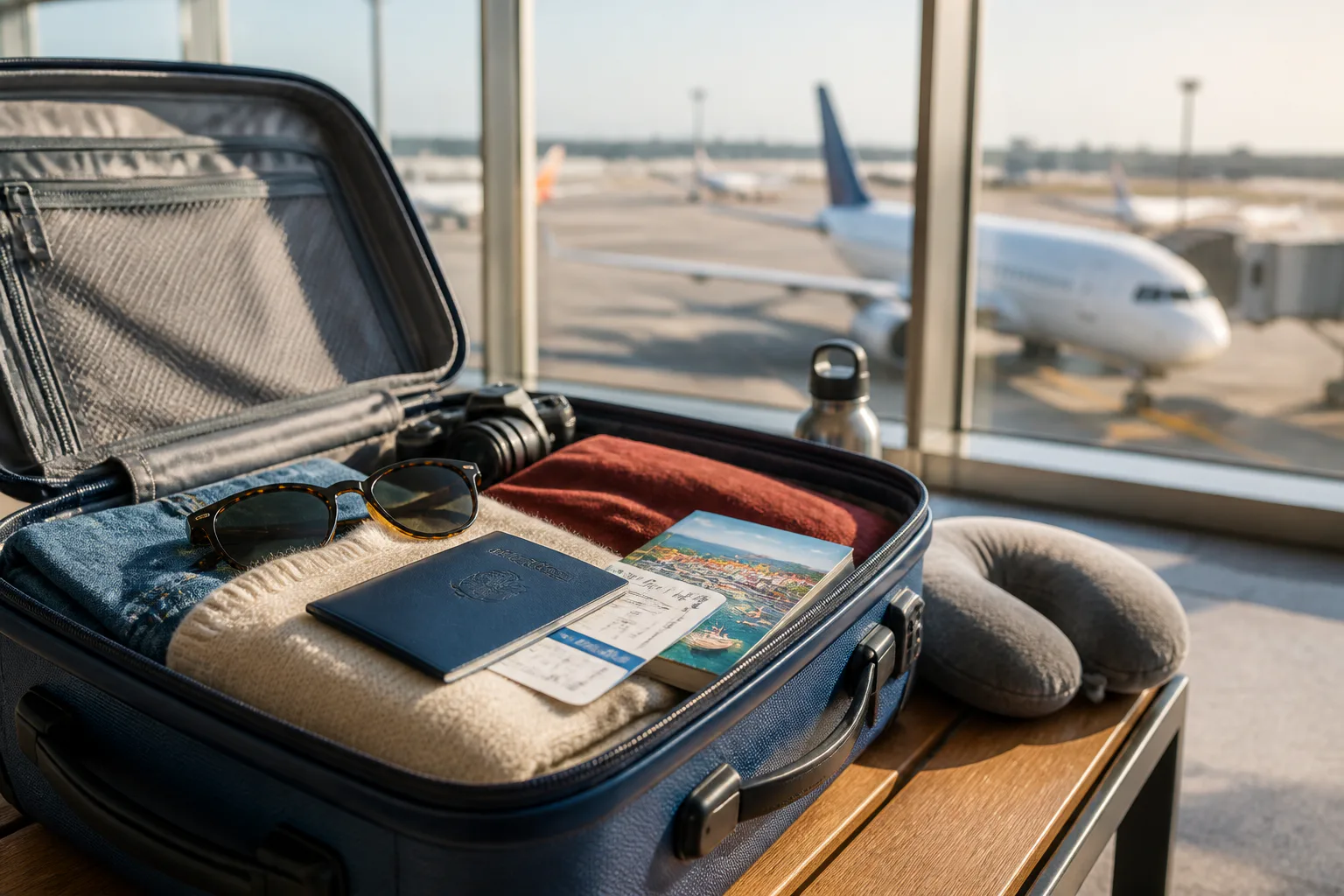
“Have a safe trip” means I hope your travel goes well and you arrive safely. People say it to show care, politeness, and good wishes before someone leaves. It is a common everyday expression in spoken English, texts, emails, and cards.
- The phrase is simple, but its tone matters.
- It is warm without being overly personal, which makes it useful in both casual and polite situations.
- You can say it to a friend going on vacation, a coworker leaving for a work trip, or a family member heading home after a visit.
What Does ‘Have a Safe Trip’ Mean?
Basic meaning
At its most direct level, “have a safe trip” is a wish for someone to travel without harm or trouble. The speaker is expressing concern for the traveler’s well-being. In plain language, it means: I hope you get there safely.
The phrase also carries an emotional meaning. It shows kindness, attention, and a sense of closure before departure. Even when the trip is short, saying it can make a goodbye sound more thoughtful.
Literal and implied meaning
Literally, the phrase refers to the physical act of traveling from one place to another. The word “safe” points to protection from danger, and “trip” refers to the journey itself. Together, the phrase focuses on the traveler’s safe arrival.
Implied meaning is often just as important. In conversation, people use it to say, “I care about you,” “Take care,” or “I hope everything goes smoothly.” That is why the phrase feels natural even when no one is discussing actual risk.
Tone and level of formality
“Have a safe trip” is neutral and polite. It works in casual speech, but it is also appropriate in semi-formal situations. You can say it to friends, relatives, classmates, coworkers, clients, or neighbors without sounding strange.
In very close relationships, some people choose warmer versions such as “Travel safe” or “Text me when you arrive.” In more formal writing, the same basic idea can be softened into “Wishing you a safe trip” or “I hope you have a safe journey.” If you want a close comparison, safe journey often sounds slightly more formal or literary than “safe trip.”
Common usage examples
Here are a few natural ways to use the phrase in everyday English:
- “You’re leaving tonight? Have a safe trip.”
- “Thanks for visiting us. Have a safe trip home.”
- “Have a safe trip, and let me know when you get there.”
- “We hope you have a safe trip back to Chicago.”
- “It was great seeing you. Have a safe trip tomorrow.”
You can place it at the beginning or end of a sentence. You can also add details, such as the destination or time: “Have a safe trip to Boston” or “Have a safe trip back tonight.”
Common mistakes to avoid
The phrase itself is straightforward, but some learners use it in the wrong moment. It is best used before or during departure, not after the person has already arrived. Once they arrive, a more natural response is “Glad you made it safely.”
Another mistake is overusing it in very formal business writing where a simple closing would do. In a routine work email, it can sound personal if the trip is not central to the message. Still, if someone has mentioned upcoming travel, the phrase is usually welcome.
Alternatives with similar meaning
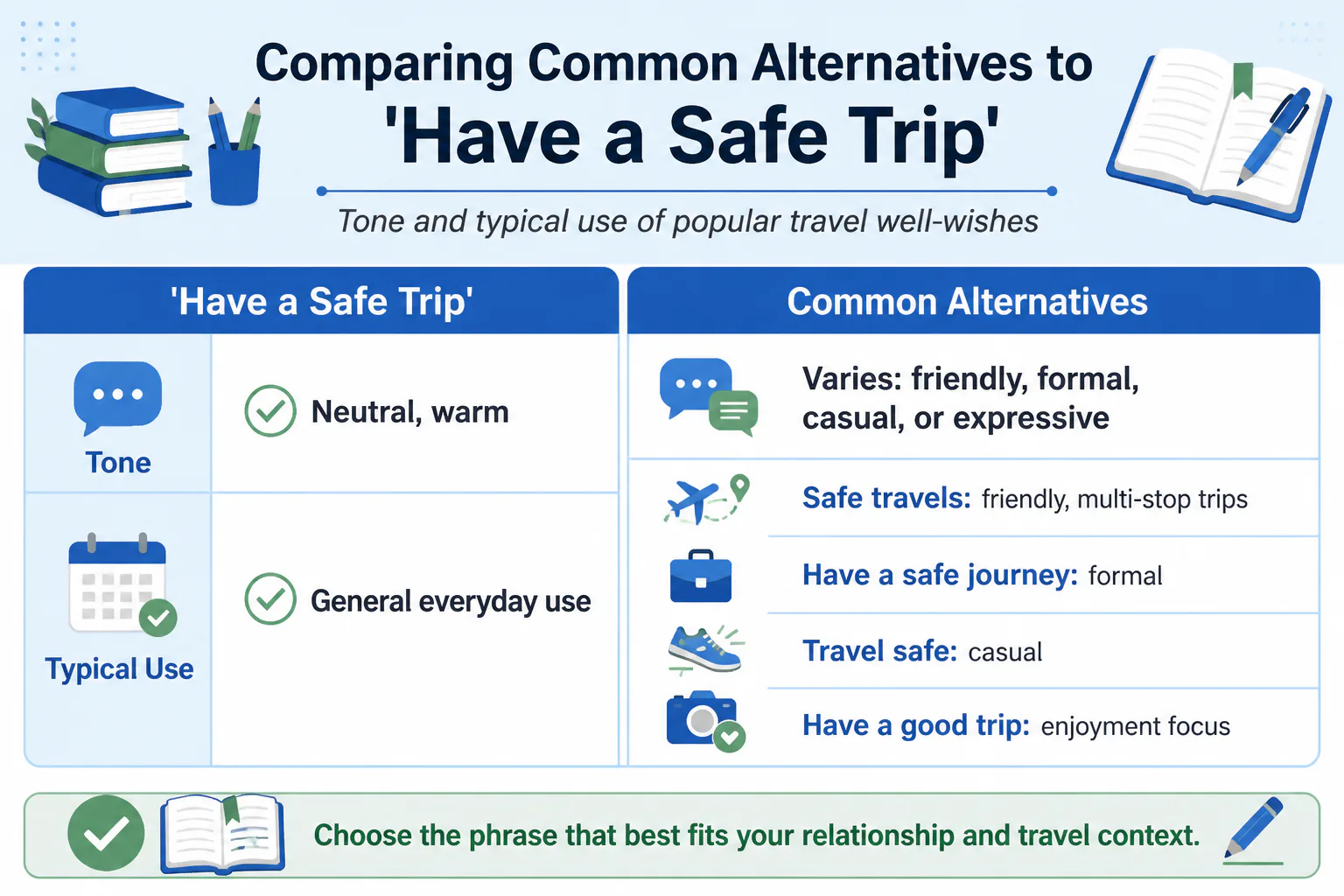
English has several close alternatives, and each one has a slightly different feel. Some people prefer safe travels because it sounds a little broader and more expressive, especially for longer or multi-stop travel. Others use “travel safely,” “take care on the way,” or “have a good trip” depending on the relationship and context.
| Phrase | Tone | Typical use |
|---|---|---|
| Have a safe trip | Neutral, warm | General everyday use |
| Have a safe journey | Slightly formal | Cards, messages, polite speech |
| Safe travels | Friendly, expressive | Trips with multiple stops or longer distance |
| Travel safe | Casual | Friends, texts, quick goodbyes |
| Have a good trip | Friendly, broad | Focus on enjoyment as well as safety |
Using ‘Have a Safe Trip’
Best moments to say it
Use the phrase when someone is about to leave, has just said goodbye, or has told you about upcoming travel. It fits naturally in person, over the phone, by text, or in an email. It is most common when the departure is happening soon.
You can use it in many settings:
- before a vacation or holiday
- before a business trip
- when someone is driving home
- after a visit from family or friends
- in a goodbye message before a flight or train ride
How to make it sound natural
To sound natural, match the phrase to the relationship. With friends, you can keep it short: “Have a safe trip.” With someone closer, add a follow-up like “Message me when you arrive.” In workplace communication, “Have a safe trip back” is polite and professional without sounding stiff.
Sometimes another farewell works better if the focus is enjoyment rather than safety. For example, if you are choosing between travel wishes and a more general parting phrase, a simple expression like have a great weekend may fit better when no travel is involved.
Common Alternatives to ‘Have a Safe Trip’
Everyday alternatives
- Safe travels – friendly and common, especially in messages.
- Have a safe journey – slightly more formal or traditional.
- Travel safe – casual and brief.
- Take care on the way – warm and conversational.
- Have a good trip – focuses on the overall experience, not just safety.
- Wishing you a safe trip – good for cards, emails, or formal notes.
- Hope you get there safely – direct and personal.
Which alternative to choose
- Use “have a safe trip” for a balanced, all-purpose choice.
- Use “safe travels” for a warmer or slightly more stylish tone.
- Use “have a safe journey” in formal notes or respectful messages.
- Use “travel safe” in texts or quick spoken goodbyes.
- Use “have a good trip” when you want to emphasize enjoyment too.
Cultural Etiquette
Politeness in different settings
In many English-speaking settings, wishing someone well before travel is a normal sign of courtesy. It is especially common after a visit, at the end of a phone call, or in a farewell text. Even a short phrase can make the interaction feel complete and considerate.
The right tone depends on context. In professional situations, keep it simple and sincere. In personal situations, you can add warmth with extra words, such as “Have a safe trip home” or “Have a safe trip, and enjoy your time there.”
What makes it sound thoughtful
The phrase works best when it matches the moment. If someone mentioned a long drive, late-night arrival, or busy itinerary, the wish feels especially natural. If travel was never discussed, using it can feel random or overly scripted.
A good rule is to be brief and genuine. You do not need dramatic wording. A plain, kind farewell often sounds better than a highly elaborate one, much like other everyday expressions such as “hope you are doing well” that depend on tone more than complexity.
FAQs
Is “have a safe trip” correct English?
Yes. It is a correct and very common English expression. Native speakers use it often before someone begins traveling.
Is “have a safe trip” formal or informal?
It is neutral. It works in both casual and semi-formal situations, which is one reason it is so widely used.
Can I say “have a safe trip” in a text message?
Yes. It sounds natural in texts, chats, and emails. In texting, people also shorten it to alternatives like “travel safe” or “safe travels.”
What is the difference between “safe trip” and “safe travels”?
“Have a safe trip” usually refers to one specific journey. “Safe travels” sounds a bit broader and can suit longer travel, multiple stops, or a more expressive tone.
Conclusion
“Have a safe trip” is a natural, polite way to wish someone well before they leave, and it works in everyday, professional, and family situations alike.