Hope You Are Doing Well Messages: Meaning, Uses, and Better Wording
Hope you are doing well messages are polite opening lines used to show care, set a friendly tone, and ease into an email or text. In most cases, the phrase means, “I’m greeting you warmly and acknowledging your well-being before I get to my main point.” It is common in professional communication, but people also use it in casual messages when they want to sound thoughtful and respectful.
That said, this greeting can feel routine if it appears with no personal touch. The best version is brief, natural, and connected to the reason you are writing. If you are learning how to sound more polished in English correspondence, LiveXP’s English Tutoring can help you practice greetings, tone, and message structure through a Free Trial Lesson.
What Does ‘Hope You Are Doing Well’ Mean?
Core meaning
The phrase “hope you are doing well” is a common greeting in emails and written communication. It expresses interest in the other person’s well-being and works as a polite opener before the main message. In simple terms, it tells the reader, “I’m starting this conversation in a kind and positive way.”
Its tone is friendly, safe, and broadly appropriate. That is why it appears so often in work emails, school messages, customer communication, and general follow-ups. It helps maintain a pleasant direction in the conversation without inviting a long personal reply.
Why people use it
People use this phrase because it softens the start of a message. Instead of jumping straight into a request, update, or reminder, the writer begins with a small sign of courtesy. This makes the message sound warmer and less abrupt.
It also works in both formal and informal settings. In business emails, it shows professionalism and basic goodwill. In personal messages, it can sound caring, especially if you have not spoken to someone recently.
How it sounds in real life
The exact effect depends on context. Used well, it sounds polite and calm. Used too often, it can feel like a cliché or come across as insincere, especially when the rest of the message is cold, rushed, or highly transactional.
For that reason, many writers swap it out now and then. A phrase such as i hope you are doing well still works, but it sounds better when you tailor it to the relationship and situation.
Examples by tone
- Professional: “I hope you are doing well. I’m following up on our meeting from last week.”
- Polite but warmer: “I hope you are doing well and having a productive week.”
- Casual: “Hope you’re doing well! Just wanted to check in.”
- Direct: “I hope you are doing well. I’m writing to confirm tomorrow’s schedule.”
Small writing tips
Use this phrase when you want a neutral, respectful opener. Keep it short, move to your purpose early, and match the tone to the reader. If the relationship is formal, use full wording. If the relationship is casual, a shorter version often sounds more natural.
It is also useful to know that “Hope you’re doing well” as a standalone sentence is grammatically incomplete in a strict sense, but it is widely accepted in informal writing. In everyday emails and texts, most readers treat it as normal and natural.
Common Contexts for Using This Message
Where it fits best
- Work emails: a safe opener for colleagues, clients, customers, or business partners.
- Follow-up messages: useful before a reminder, update, or request.
- School communication: suitable when writing to a teacher, tutor, or classmate.
- Reconnecting: helpful when you have not spoken to someone for a while.
- Casual check-ins: fine in texts or messages to friends when you want a polite opening.
When to be careful
This message is less effective when it feels automatic. If you send it in every email, readers may skim past it. In fast-moving conversations, a shorter opening or direct opening can sound more natural.
Some phrases create slightly different effects. For example, looking forward to working with you fits better after an introduction or at the start of a new professional relationship than a general wellness greeting does.
Writing Effective Messages
Follow these steps
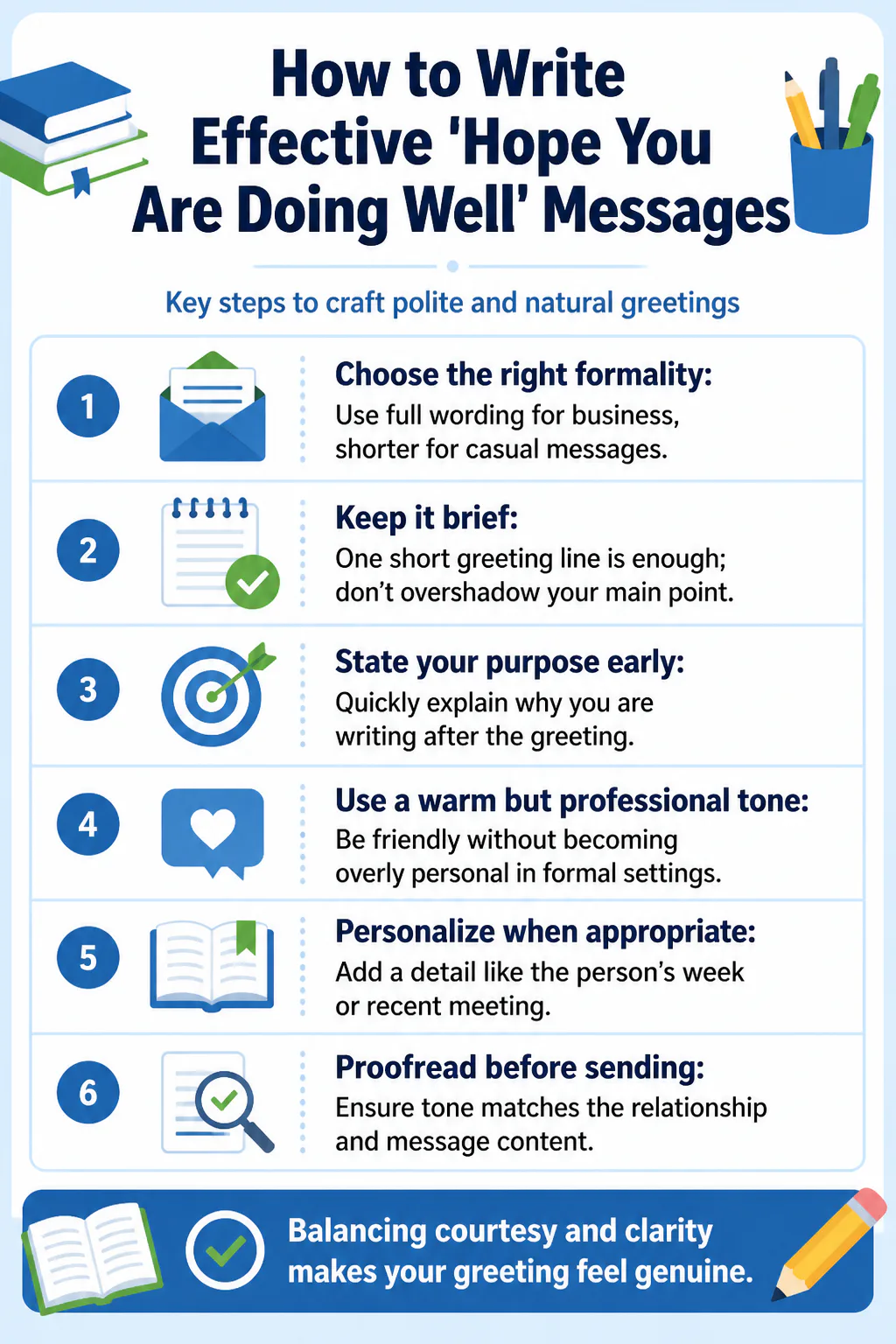
- Choose the right level of formality. Use a fuller version for business communication and a shorter version for casual messages.
- Keep it brief. One short greeting line is enough. Do not let the opener overshadow your main purpose.
- State your purpose early. After the greeting, quickly explain why you are writing.
- Use a warm but professional tone. Sound friendly without becoming overly personal in formal settings.
- Personalize it when appropriate. Add a detail such as the person’s week, recent meeting, or shared context.
- Proofread before sending. Make sure the tone matches the relationship and the rest of the message.
What strong wording looks like
A good message balances courtesy and clarity. It does not stop at the greeting; it moves naturally into the reason for contact. That is what makes the phrase feel genuine instead of formulaic.
If you want more variety, LiveXP’s English Tutoring can help you practice email openings and choose phrases that fit formal and informal situations more naturally.
What to avoid
- Using the same opener in every message
- Writing a greeting that sounds warm, then following it with a blunt demand
- Being too personal in formal business communication
- Leaving the message vague instead of getting to the point
Examples of ‘Hope You Are Doing Well’ Messages
Sample messages
- Professional: “I hope you are doing well. I’m reaching out to share the updated timeline for the project.”
- Formal: “I hope this email finds you well. I’m writing to confirm the details of our upcoming meeting.”
- Casual: “Hope you’re doing well! Just wanted to see how things are going.”
- Follow-up: “I hope you are doing well. I wanted to follow up on my previous message regarding the report.”
- Reconnecting: “I hope you are doing well. It has been a while, and I wanted to check in.”
- Customer-facing: “I hope this email finds you well. I’m contacting you about your recent request.”
How to make them sound natural
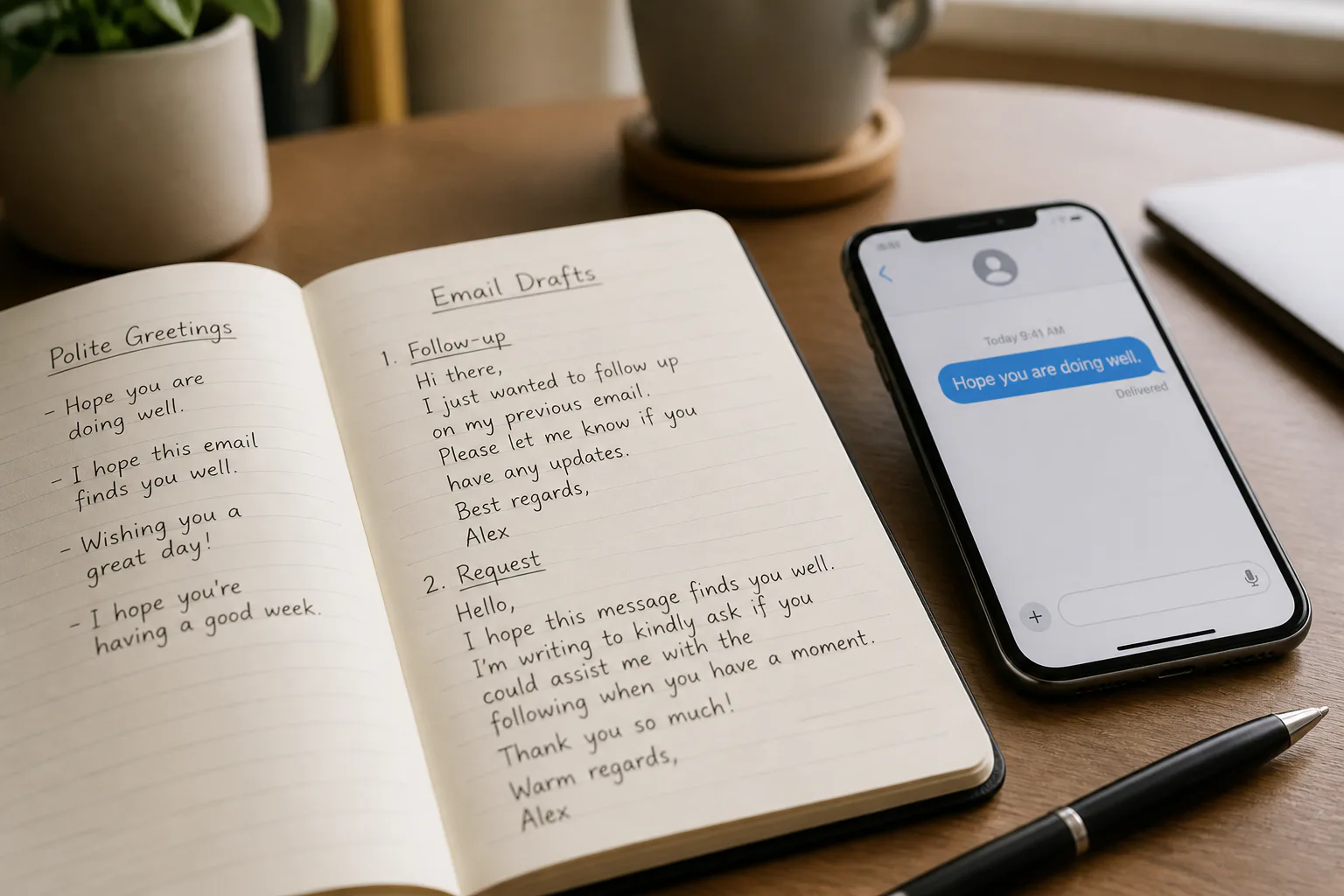
The most effective examples connect the greeting to a real purpose. You can also make the line feel less mechanical by adding a small detail, such as “I hope you’re having a good week” or “I hope your week is going smoothly.”
That same idea applies to other everyday expressions. A phrase like how is your day going sounds more sincere when it appears in a real context instead of as an empty habit.
Alternatives to ‘Hope You Are Doing Well’
Good options by situation
- I hope this email finds you well, more traditional and better for formal messages to customers or business partners.
- Hope all is well, casual and short, though it can sound rushed.
- I hope you’re having a good week, warm and slightly more personal.
- How are you doing?, informal and common, but it can sound automatic without context.
How to choose the best one
| Phrase | Best use | Tone |
|---|---|---|
| I hope this email finds you well | Formal emails | Traditional and polite |
| Hope all is well | Quick casual messages | Friendly but brief |
| I hope you’re having a good week | Work and friendly check-ins | Warm and natural |
| How are you doing? | Informal conversations | Direct and conversational |
When alternatives work better
If your message has a very clear purpose, an alternative can sound fresher than repeating “hope you are doing well” every time. The best choice depends on your relationship with the reader, the formality of the setting, and whether you want the opening to feel traditional, casual, or more personal.
FAQs
Is “hope you are doing well” formal?
Yes. It works in formal and informal communication, though it is especially common in professional emails.
Can “hope you are doing well” sound insincere?
Yes. Because it is used so often, it can feel routine or cliché if it is not connected to a clear purpose or a natural tone.
Is “hope you’re doing well” grammatically correct?
In everyday use, yes. As a standalone sentence, it is technically incomplete, but it is widely accepted in informal writing and common email style.
What is the best alternative in a business email?
“I hope this email finds you well” is a strong choice for formal business communication, especially with customers or business partners.
Conclusion
Hope you are doing well messages work because they combine courtesy with a calm, friendly tone. They are most effective when they are brief, sincere, and followed quickly by your purpose. If you want to improve how your greetings sound in English, LiveXP’s English Tutoring can help you build more natural and confident communication habits.