
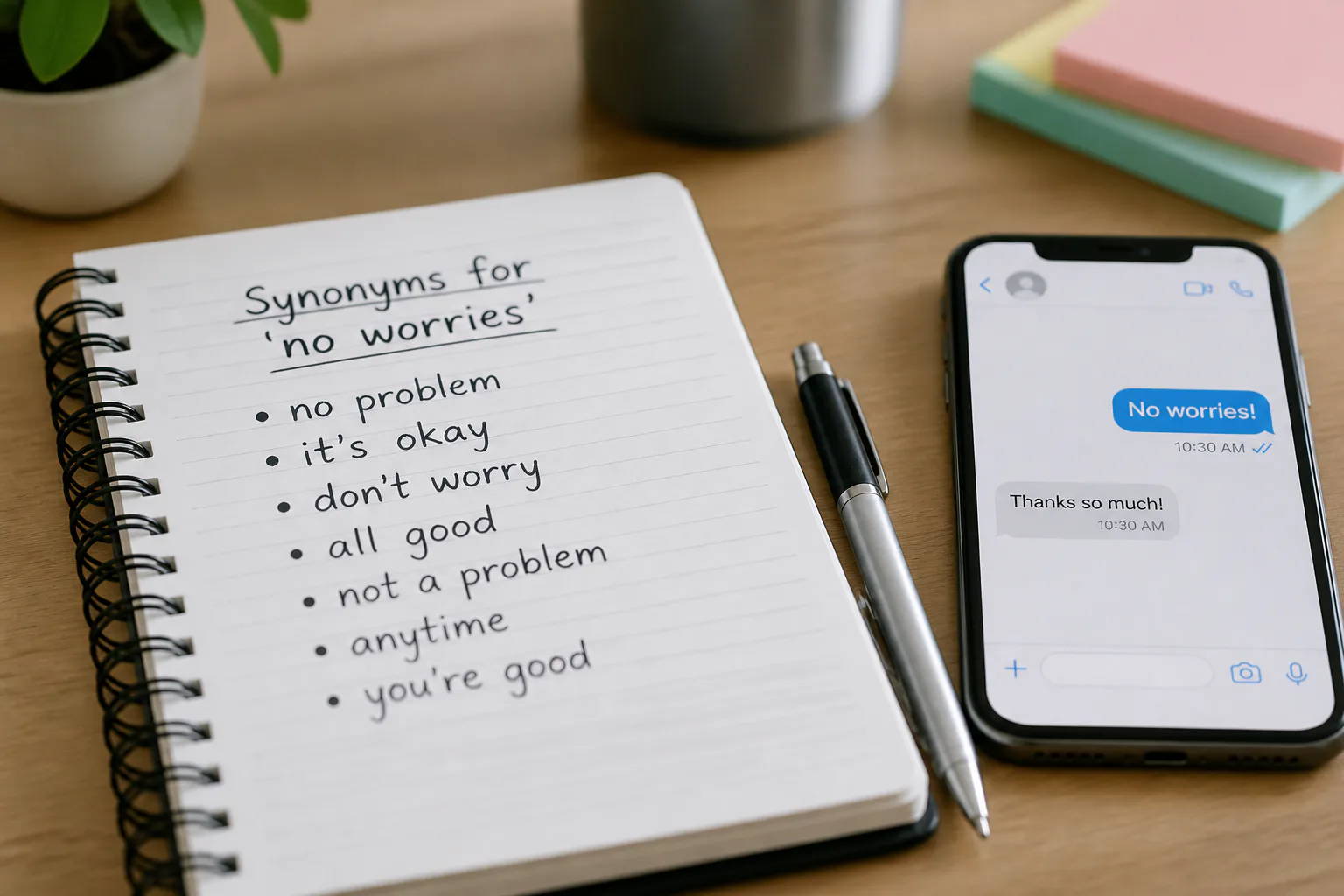
No Worries Synonym: Meaning and Best Alternatives
No worries means “you’re welcome,” “it’s not a problem,” or “don’t be concerned.” If you searched for a no worries synonym, the short answer is that the best replacement depends on tone: casual options include “no problem” and “forget it,” while warmer or more polite choices include “my pleasure,” “not at all,” and “you’re welcome.”
This phrase is especially common in everyday speech because it sounds relaxed and reassuring. It can answer thanks, ease an apology, or tell someone there is nothing to stress about. The sections below explain what it means, which alternatives fit best, and how to choose the right expression for the moment.
What Does ‘No Worries’ Mean?
Core meaning
“No worries” is an informal interjection that usually means “you’re welcome” or “it’s no problem”. People use it to reassure someone after being thanked, after a small mistake, or when agreeing to help. In plain English, it tells the other person that nothing is wrong and they do not need to feel bad or concerned.
For example, if someone says, “Sorry I’m late,” you might reply, “No worries.” If someone says, “Thanks for your help,” you can also answer, “No worries.” In both cases, the phrase lowers tension and keeps the exchange friendly.
What it can imply
Besides meaning “you’re welcome,” the phrase can also suggest that there are no concerns or that the situation is under control. It often carries a calm, easygoing tone. That is why it works well in casual conversation, text messages, and relaxed emails.
You may also hear it used in sentences such as “No worries, I’ll celebrate more than anyone else” or “Anyway, no worries, Arthur.” These examples show how flexible it is: sometimes it responds directly to someone, and sometimes it softens the mood within a longer sentence.
Where the phrase comes from
“No worries” is strongly associated with Australian English. The Oxford English Dictionary traces its first recorded use to a 1965 edition of Sydney’s Oz magazine, and the phrase later became more common in British English as well.
That background helps explain its relaxed, conversational feel. Even though it is widely understood today, many speakers still hear it as more casual than “you’re welcome” or “not at all.” If you enjoy comparing everyday expressions, the same kind of tone shift appears in phrases like TYSM meaning, where informality changes how the message feels.
Best synonyms with examples
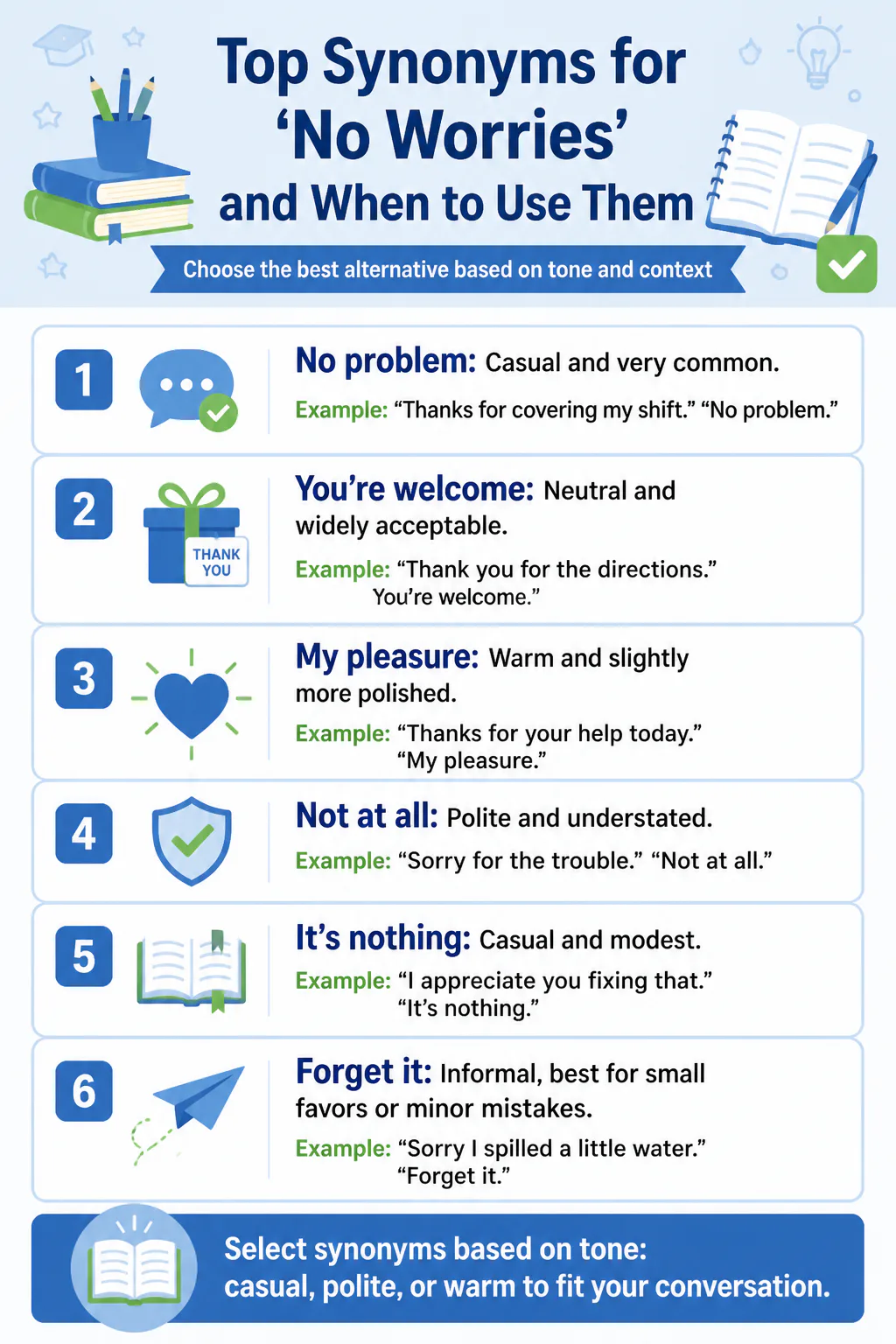
If you want a quick no worries synonym list, these are the most useful choices:
- No problem – casual and very common. Example: “Thanks for covering my shift.” “No problem.”
- You’re welcome – neutral and widely acceptable. Example: “Thank you for the directions.” “You’re welcome.”
- My pleasure – warm and slightly more polished. Example: “Thanks for your help today.” “My pleasure.”
- Not at all – polite and understated. Example: “Sorry for the trouble.” “Not at all.”
- It’s nothing – casual and modest. Example: “I appreciate you fixing that.” “It’s nothing.”
- Forget it – informal, best for small favors or minor mistakes. Example: “Sorry I spilled a little water.” “Forget it.”
These options are close in meaning, but they do not all sound the same. Some are easygoing, some are more professional, and some can sound warmer or more dismissive depending on the situation.
Common Synonyms for ‘No Worries’
Direct replacements
- No problem – the closest casual substitute.
- You’re welcome – the clearest all-purpose reply to thanks.
- My pleasure – a friendly, service-minded alternative.
- Not at all – polite and calm, often used after thanks or apologies.
- It’s nothing – downplays the favor or issue.
- Forget it – works when you want to dismiss a minor inconvenience.
Usage notes
“No problem” and “no worries” are close in tone, but “no worries” often sounds a bit softer. “You’re welcome” is the safest option when you want to sound clear and courteous. “My pleasure” adds warmth, while “forget it” can sound too blunt in formal settings.
Writers often look for nearby expressions in the same way they search for a let me know synonym when tone matters. A good replacement is not just about meaning; it is also about how the line sounds to the other person.
Contextual Alternatives
Casual situations
- No problem – good with friends, coworkers, and everyday requests.
- Sure thing – useful when agreeing to do something.
- It’s all good – very relaxed, best in informal speech.
- Forget it – fine for very small issues, but avoid it if someone is upset.
Polite situations
- You’re welcome – simple, respectful, and universal.
- Not at all – especially good after thanks or apologies.
- My pleasure – warm without sounding stiff.
- It’s no trouble at all – reassuring and considerate.
Professional situations
| Expression | Tone | Best use |
|---|---|---|
| You’re welcome | Neutral | Client emails, workplace replies |
| My pleasure | Warm | Customer service, thoughtful help |
| Not at all | Polite | Formal thanks or apologies |
| It’s no trouble at all | Reassuring | When someone worries they inconvenienced you |
| No problem | Casual | Internal teams or relaxed offices |
In professional writing, “no worries” can still work, but only if the setting is informal. If the message needs more polish, choose “you’re welcome,” “my pleasure,” or “it’s no trouble at all” instead. Tone matters just as much in social expressions, including phrases used to show gratitude like thank you for letting me know.
When to Use ‘No Worries’
Match the setting
Use “no worries” in relaxed conversations, text messages, friendly chats, and informal emails. It works best when you want to sound approachable and calm. It is especially useful after small apologies, quick favors, or casual thanks.
Match the relationship
With friends, family, and close coworkers, “no worries” often sounds natural. With customers, managers, teachers, or people you do not know well, a more neutral phrase may fit better. In those cases, “you’re welcome” or “not at all” usually sounds safer.
Avoid the wrong tone
Some alternatives can change the mood in ways you may not intend. “Forget it” can sound dismissive, while “it’s nothing” can sound too modest if someone is expressing sincere appreciation. If you are unsure, “you’re welcome” remains the clearest and most dependable choice.
FAQs
Is “no worries” the same as “you’re welcome”?
Often, yes. “No worries” can function as a friendly way to say “you’re welcome,” though it sounds more casual and relaxed.
Is “no worries” informal?
Yes. It is widely used in casual speech and writing, and it can feel too relaxed for formal communication unless the setting is already friendly.
Can “no worries” mean “don’t worry”?
Yes. It can reassure someone that there is no problem, no concern, or no reason to feel stressed about a situation.
What is the most professional synonym?
“You’re welcome” is the safest professional option. “My pleasure,” “not at all,” and “it’s no trouble at all” also work well depending on the tone you want.
Conclusion
A good no worries synonym depends on context, not just dictionary meaning. Use “no worries” and “no problem” for casual exchanges, choose “you’re welcome” for neutral situations, and turn to “my pleasure” or “not at all” when you want a more polished tone.

Related Posts

30 Other Ways to Say “Thank You” (With Examples)
ONG Meaning in Text: What Does ONG Stand For?