How Did You Sleep: Meaning and Everyday Usage
“How did you sleep” means “What was your sleep like last night?” It is a friendly, caring question people use to ask about the quality of someone’s sleep. In most cases, it sounds warm and natural in spoken English, especially between family members, friends, or partners. It is best used in casual conversation rather than formal or professional settings.
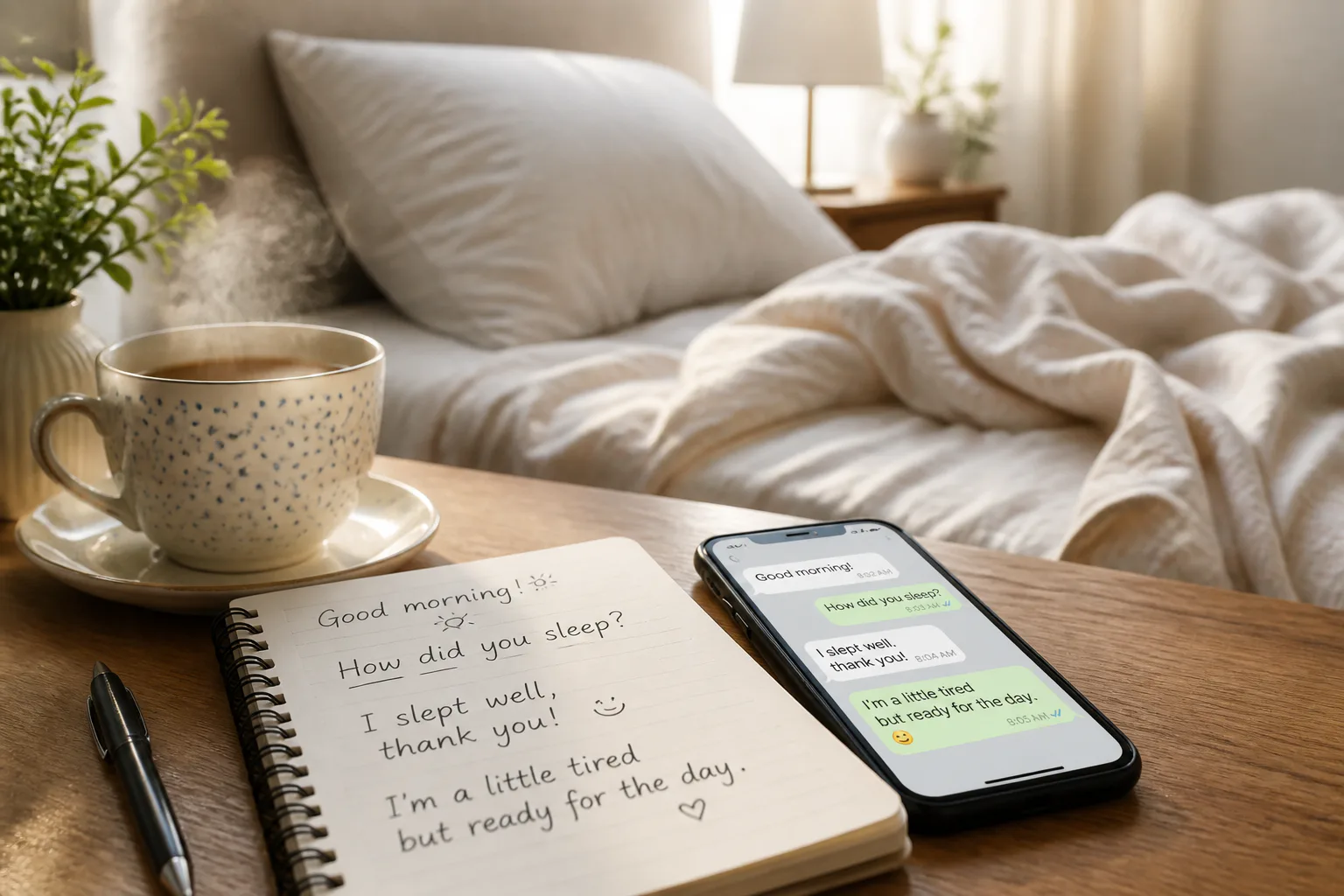
If you hear this phrase in the morning, the speaker is usually showing interest, concern, or affection. They are not only asking for facts. They are also checking how you feel. A simple reply such as “I slept okay” or “Not too bad” is common and polite.
What Does ‘How Did You Sleep’ Mean?
Basic meaning
The phrase asks about a person’s sleep during the previous night. More specifically, it asks about the quality of that sleep, not just whether the person slept at all. If someone says, “How did you sleep?” they usually want to know whether you slept well, badly, lightly, or restlessly.
- It is a common question in everyday spoken English.
- The tone is polite and friendly.
- It often carries a sense of care.
- It appears most naturally in close relationships and relaxed settings.
Literal and social meaning
Literally, the question is about sleep. Socially, it often means more than that. It can signal kindness, concern, or emotional closeness, much like asking someone how was your day after work. In both cases, the speaker is inviting a personal but ordinary update.
For example, a parent might ask a child this in the morning. A partner may ask it after a stressful night. A friend might use it if you mentioned feeling tired the day before.
How the grammar works
Grammatically, this is a past simple question. “How” asks about the condition or experience, “did” is the past auxiliary, and “you sleep” is the main verb phrase. So the structure focuses on a completed action in the past: last night’s sleep.
That structure also explains why it sounds natural in the morning. The sleeping has already happened, so English uses the past form.
Examples in conversation
Here are a few natural examples:
- “Good morning. How did you sleep?”
- “You looked exhausted last night. How did you sleep?”
- “How did you sleep after the trip?”
- “I know you were stressed. How did you sleep?”
Common short answers include:
- “I slept like a baby.”
- “I slept okay.”
- “I slept on and off.”
- “Not too bad.”
After that, a friendly follow-up keeps the exchange smooth. You can say, “Glad to hear that,” or “Sorry to hear that.” If the answer is neutral, something simple like “Hope tonight is better” also works.
When it sounds natural
This phrase sounds most natural in the morning, especially face to face or in a casual message. It fits moments when people are already talking in a personal way. It can also be useful when checking on someone who was sick, worried, or under pressure.
It is less suitable in formal writing or professional communication because sleep is personal. In a workplace, people usually choose broader questions unless they know each other well.
When and How to Use This Phrase
Common situations
Use this phrase in relaxed, human conversations. It works well with family, friends, partners, housemates, and anyone you know well enough to ask a personal morning question. It also fits caring situations, such as after a long trip, a difficult day, or a stressful event.
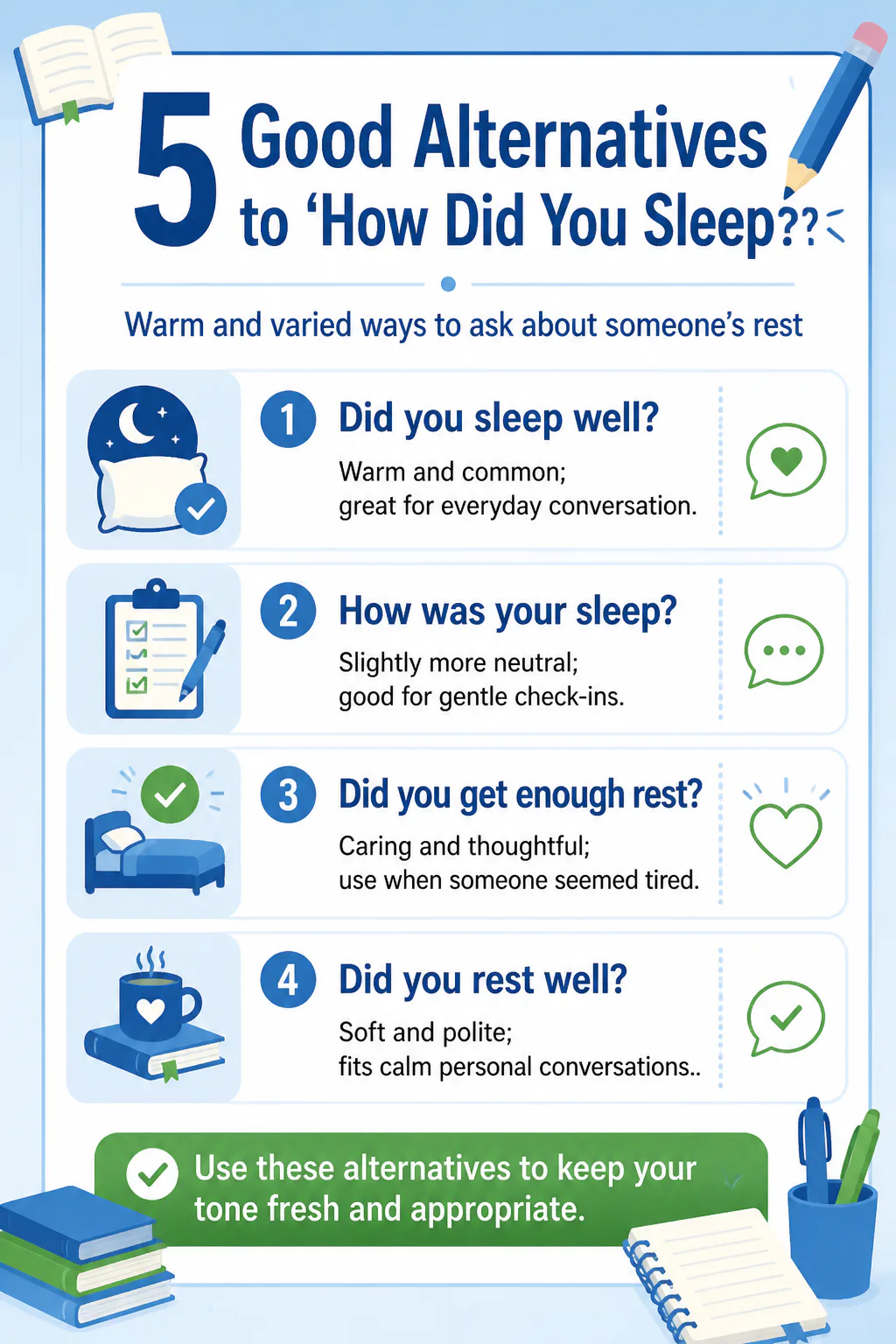
Repeated too often, though, it can sound routine or a little repetitive. English speakers often switch to alternatives such as “Did you sleep well?” or “Did you get enough rest?” A phrase like how’s your day going works in a similar way because it keeps the tone casual while changing the wording.
Good alternatives
| Phrase | Tone | Best use |
|---|---|---|
| Did you sleep well? | Warm and common | Everyday conversation |
| How was your sleep? | Slightly more neutral | Gentle check-in |
| Did you get enough rest? | Caring and thoughtful | When someone seemed tired |
| Did you rest well? | Soft and polite | Calm personal conversation |
When to avoid it
Do not use this phrase in formal business communication or with people you do not know well unless the setting clearly makes it appropriate. Because it is personal, it can sound too familiar in professional contexts. In those situations, a broader greeting is safer.
Responses
Simple reply examples
- “I slept like a baby.”
- “I slept okay.”
- “I slept on and off.”
- “Not too bad.”
- “Pretty well, thanks.”
- “Not great, but I’m fine.”
Friendly follow-ups
- If they slept well: “Glad to hear that.”
- If they slept badly: “Sorry to hear that.”
- If the answer is mixed: “Hope tonight is better.”
- If you want to keep talking: “Was it a late night?”
- If you want to stay brief: “Good, that’s nice.”
Mini dialogue models
- Person A: “How did you sleep?”
Person B: “I slept okay.”
Person A: “Glad to hear that.” - Person A: “How did you sleep?”
Person B: “I slept on and off.”
Person A: “Sorry to hear that.” - Person A: “Did you sleep well?”
Person B: “Not too bad.”
Person A: “That’s good.”
Social Context
Closeness matters
In English, this question is usually linked to familiarity. It sounds normal when there is some personal closeness, but it may feel too intimate if asked by a stranger or in a stiff professional setting. The phrase is polite, but it is still personal.
That is why context matters as much as wording. A close friend can ask it naturally, while a coworker may choose a more general morning greeting. In the same way, expressions like hope you are doing well feel broader and less personal.
Tone and repetition
Tone also changes the feel of the question. Said warmly, it sounds caring. Said too directly in the wrong setting, it can sound intrusive. Repeating the exact same phrase every day can also make it sound automatic rather than thoughtful.
Using alternatives helps. It lets you keep the caring meaning while adjusting the tone to the relationship and situation.
FAQs
Is “how did you sleep” grammatically correct?
Yes. It is a correct past simple question. It asks about a completed experience from the previous night.
Is “how did you sleep” formal or informal?
It is mostly informal. It is polite, but it is better suited to spoken English and personal conversations than to formal or business contexts.
Can I use it with someone I just met?
Usually no, unless the situation clearly makes it natural, such as sharing a trip or staying with the same host family. With new acquaintances, the phrase can feel too personal.
What are good alternatives?
Good alternatives include “Did you sleep well?” “How was your sleep?” and “Did you get enough rest?” These options let you adjust warmth, directness, and variety.
Best Practices
Quick rules
Use “how did you sleep” as a friendly morning question about last night’s sleep. It works best in casual spoken English with people you know well. Keep your reply simple, polite, and natural.
- Use it in personal, informal settings.
- Prefer it in morning conversation.
- Answer briefly unless the other person wants more detail.
- Switch to alternatives to avoid sounding repetitive.
- Avoid it in formal business communication.
Conclusion
Used casually and with the right person, “how did you sleep” is a natural way to show care while asking about someone’s night.