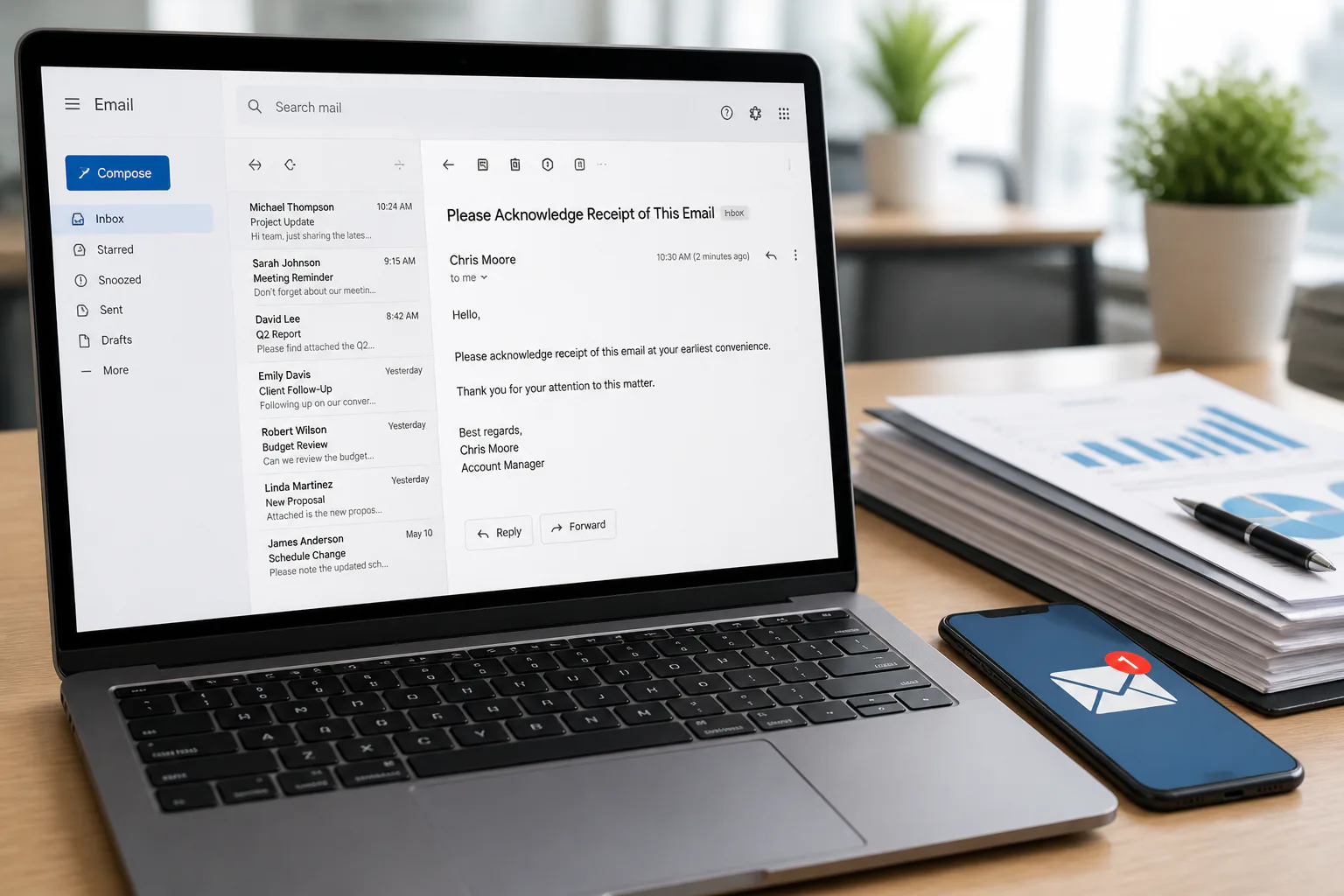
Please Acknowledge Receipt of This Email: Meaning and Professional Use
“Please acknowledge receipt of this email” means the sender wants the recipient to confirm that the message arrived. In professional communication, the phrase is used when receipt matters, such as with signed documents, invoices, payment instructions, applications, complaints, or compliance records. It is formal and clear, but in many workplaces it can sound stiff, so writers often choose a more natural alternative.
The key point is simple: an acknowledgment confirms delivery, not approval. If someone replies to acknowledge receipt, they are saying they got the email or attachment, not that they agree with it, finished reviewing it, or resolved the issue. In business settings, keeping that difference clear helps prevent missed deadlines, confused handoffs, and weak documentation.
Meaning of the Phrase
Literal meaning
The phrase asks the recipient to send a reply confirming that the email was received. In plain English, it means: please let me know this message reached you. It is a formal request, often used when the sender needs certainty that an important message did not get lost.
For example, a manager might write, “Please acknowledge receipt of this email and the attached contract.” A finance team might say, “Please acknowledge receipt of this invoice by return email.” In both cases, the sender is not asking for a full response yet, only a receipt confirmation.
Practical meaning at work
In real business use, the phrase serves as a record. It creates a written trail showing that the message was delivered and seen. That is why it appears so often in emails involving documents, deadlines, payments, formal complaints, and compliance-related communication.
It also reduces confusion during handoffs. If one person sends payment instructions or a signed file, a quick acknowledgment helps both sides know the process can move forward. That role is similar to other formal business phrases where tone matters, such as please be advised meaning, which can sound more serious than everyday workplace English.
What it does not mean
An acknowledgment email only confirms receipt. It does not mean the recipient approves the content, agrees with the request, completed a review, or accepts responsibility beyond receiving the message. This is an important distinction because many professionals assume a reply means more than it actually does.
For instance, “Received, thank you” means the file arrived. It does not mean, “I have checked every detail” or “I accept these terms.” If you need a review, approval, or action, ask for that separately.
Examples of correct use
- “Please acknowledge receipt of this email and the attached signed agreement.”
- “Kindly acknowledge receipt of the payment instructions sent below.”
- “Please confirm receipt of this application by return email.”
- “Let me know once you have received the complaint documents.”
Email etiquette to keep in mind
Although the phrase is correct, modern business English often prefers shorter and more natural wording. “Please confirm receipt” usually sounds smoother than “Please acknowledge receipt of this email,” especially in global teams where plain language is easier to understand. Short, specific wording also avoids sounding cold or robotic.
If you are sending an acknowledgment reply yourself, keep it brief and useful. A good response normally includes three parts: thanks or acknowledgment, what was received, and the next step if there is one. Even simple wording like “Thanks, I received the signed form and will review it this afternoon” feels warmer than dated replies such as well noted, which many readers find abrupt.
Why Is It Important to Request Acknowledgment?
Delivery and accountability
Requesting acknowledgment matters when the email contains information that cannot be overlooked. It helps confirm that a document, instruction, or deadline notice reached the right person. In busy inboxes, that small confirmation can prevent delays, disputes, and duplicate follow-ups.
- It also creates accountability.
- When both sides have a written record of receipt, there is less room for confusion about whether an attachment was sent, opened, or missed.
- That is especially useful in situations with business risk, internal handoffs, or time-sensitive decisions.
When and How to Use This Phrase Appropriately
Best situations
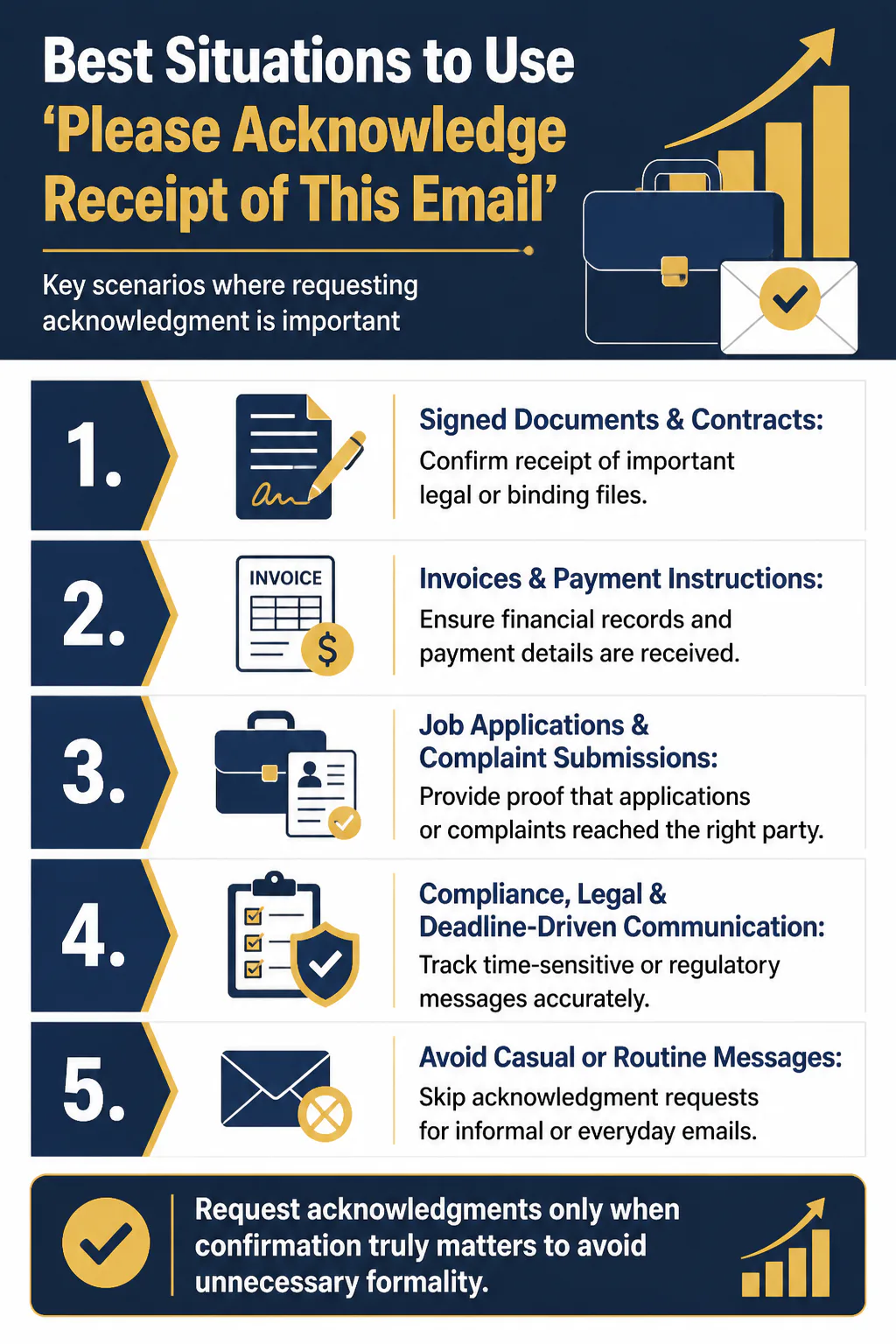
- Use it for signed documents, contracts, and formal attachments.
- Use it for invoices, payment instructions, and financial records.
- Use it for job applications or complaint submissions where proof of receipt matters.
- Use it for compliance, legal, or deadline-driven communication.
- Skip it for casual internal messages or routine updates.
Polite ways to phrase it
- “Please confirm receipt of this email.”
- “Please let me know once received.”
- “Kindly confirm receipt by return email.”
- “Please confirm that the attached file has been received.”
How to write the full message
- State what you are sending.
- Ask for receipt confirmation in one clear line.
- Add any next step or deadline if relevant.
One clear example is: “Attached is the signed agreement for your records. Please confirm receipt of this email. If everything is in order, we will proceed with the next step tomorrow.” That structure is clear without sounding demanding, much like choosing please see attached carefully instead of overloading an email with old-fashioned office wording.
Alternatives to ‘Please Acknowledge Receipt of This Email’
Modern options
- Please confirm receipt.
- Please let me know once received.
- Kindly confirm that you received this.
- Please reply to confirm receipt.
- Let me know when the document reaches you.
How the tone changes
| Phrase | Tone | Best use |
|---|---|---|
| Please acknowledge receipt of this email | Very formal | Compliance, legal, records |
| Please confirm receipt | Professional and modern | Most business emails |
| Please let me know once received | Polite and natural | Internal teams, clients, routine documents |
| Reply to confirm receipt | Direct | Time-sensitive situations |
Email Etiquette Tips for Requesting Receipt Confirmation
Keep it professional
- Use a polite tone, especially with clients or external contacts.
- Ask only when confirmation is actually necessary.
- Be specific about what you want acknowledged: the email, the invoice, or the attachment.
- Separate receipt confirmation from approval or action requests.
Avoid stiff wording
- Avoid dated lines like “Acknowledged with thanks” if they sound abrupt in your workplace.
- Prefer short, natural business English over overly formal wording.
- Do not make the request sound like an order unless urgency truly requires it.
- If working with international teams, choose the clearest phrasing possible.
Use Email Improver
If your sentence sounds too rigid, AI Grammar Buddy’s Email Improver can help rewrite stiff confirmation lines into clearer business English. That is especially useful when a correct phrase still feels colder than you intend. A small wording change can make the message sound more professional without losing clarity.
FAQs
Is “please acknowledge receipt of this email” polite?
Yes, it is polite and correct. It is simply formal, so in many modern workplaces “please confirm receipt” sounds more natural.
Does acknowledging receipt mean approval?
No. It only confirms that the message or document was received, not that it was reviewed, approved, or accepted.
When should I avoid using this phrase?
Avoid it in casual or routine emails where confirmation is unnecessary. In those cases, it can sound overly formal.
What is the best short reply to acknowledge receipt?
A brief reply works best, such as “Received, thank you” or “Thank you, I have received the signed document and will review it today.”
Conclusion
“Please acknowledge receipt of this email” is a formal way to request delivery confirmation, not approval. In business communication, it works best when the message is important and the wording stays brief, polite, and specific.

Related Posts
35 Other Ways to Say “However” (With Examples)

35 Other Ways to Say “You’re Welcome” (With Examples)