
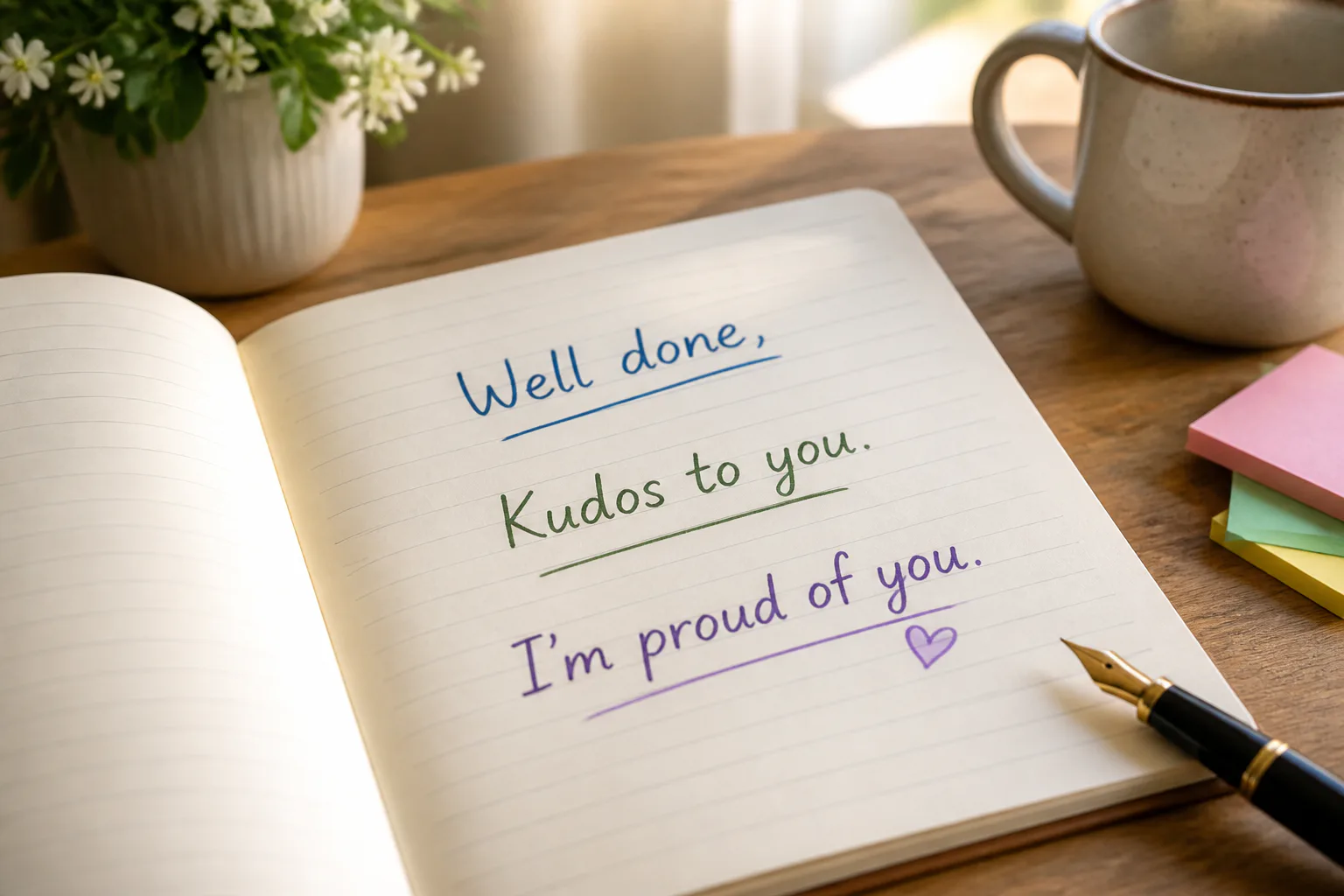
Proud of You Synonyms: Phrases for Every Situation
If you want better ways to say it, proud of you synonyms include simple options like “I’m proud of you,” “I am so proud of you,” “you have made me proud,” and warmer alternatives such as “that’s my boy” or “atta girl.” The best phrase depends on your relationship, the setting, and how much emotion you want to show. Some expressions sound supportive and affectionate, while others fit a polished workplace message.
There are more than 70 similar phrases built around this idea, so you have plenty of room to sound sincere without repeating the same line every time. The key is to match the words to the moment: casual praise for friends and family, measured recognition for work, and deeper encouragement for emotional milestones.
Common Synonyms for ‘Proud of You’
Direct phrases
- I’m proud of you, the most natural all-purpose choice. It works in almost any personal setting.
- I am so proud of you, adds stronger emotion. Use it for graduations, hard-won progress, or meaningful personal achievements.
- I am very proud of you, slightly more formal than “so proud.” Good for speeches, cards, or mentor-style praise.
- You have made me proud, highlights the result of someone’s effort. Best when you want to connect their action to your feelings directly.
- You should be proud of yourself, shifts the focus onto their own achievement. Useful when you want to build confidence as well as offer praise.
- You did an amazing job, praises performance rather than emotion. Good when you want the message to sound active and specific.
- Well done, brief, classic, and easy to use in both personal and professional settings.
- That was impressive, ideal when you want to sound admiring without being overly emotional.
How each phrase feels
Not every synonym carries the same tone. “I’m proud of you” feels warm and direct, while “well done” feels shorter and more reserved. “You should be proud of yourself” is especially useful when someone has worked hard and needs encouragement to recognize their own growth.
That tone shift matters in writing too. A manager might choose a line closer to keep up the good work when praising steady performance, while a parent or close friend can be more openly emotional.
When to use them
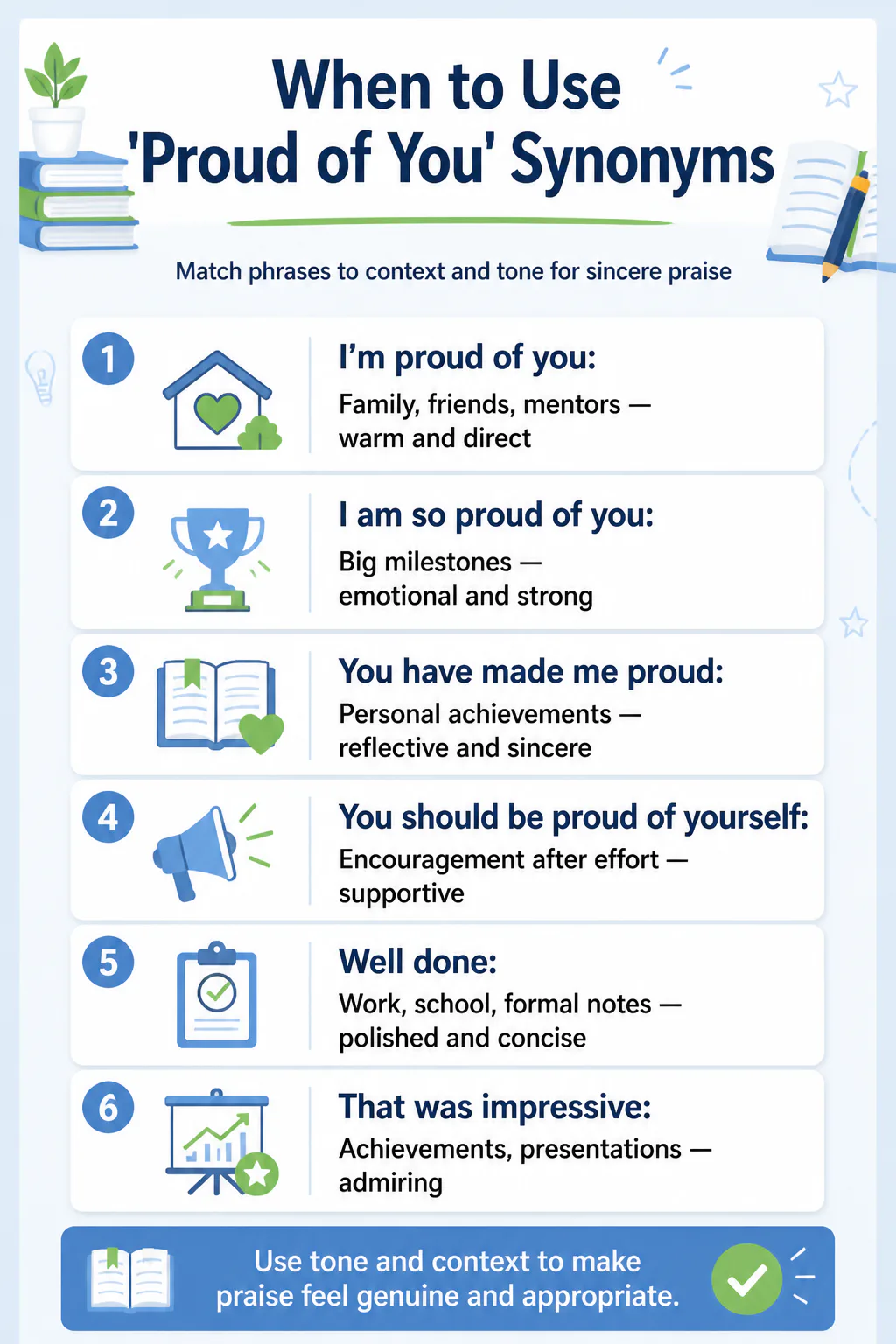
| Phrase | Best Context | Tone |
|---|---|---|
| I’m proud of you | Family, friends, mentors | Warm and direct |
| I am so proud of you | Big milestones | Emotional and strong |
| You have made me proud | Personal achievements | Reflective and sincere |
| You should be proud of yourself | Encouragement after effort | Supportive |
| Well done | Work, school, formal notes | Polished and concise |
| That was impressive | Achievements, presentations | Admiring |
Watch the meaning of “proud”
The word “proud” usually signals satisfaction, pleasure, or honor, but in other contexts it can also describe arrogance or self-importance. That is why surrounding words matter. If you are praising someone, keep the sentence clearly positive with words like appreciative, glad, honored, satisfied, or dignified.
You can also make the praise more concrete by naming the reason. Instead of only saying “I’m proud of you,” try adding what stood out: your effort, your progress, your leadership, or your persistence.
- “I’m proud of you for sticking with it.”
- “I am so proud of you for how you handled that challenge.”
- “You have made me proud with your hard work and patience.”
- “You should be proud of yourself for finishing something difficult.”
Casual Alternatives
Everyday praise
- That’s my boy, affectionate and familiar; best for close family or playful encouragement.
- Atta boy, upbeat and casual; good for quick praise after a success.
- Atta girl, similar to “atta boy,” often used in friendly or family settings.
- You crushed it, energetic and modern; great for sports, presentations, or personal wins.
- You nailed it, casual praise for doing something very well.
- Look at you go, playful and encouraging, especially for progress over time.
Best settings
These expressions work best when the relationship is relaxed. They sound natural with siblings, close friends, teammates, or kids, but they can feel too informal in a workplace email. If you want similar upbeat praise for effort rather than pride alone, phrases like keep up the great work can fit naturally in supportive conversations.
Professional Expressions
Polished choices
- I am very proud of your work, strong but professional, suitable for leaders, teachers, or mentors.
- Your efforts are appreciated, ideal when you want to stress contribution and consistency.
- You did an excellent job, clear, respectful, and useful in workplace feedback.
- Your achievement is impressive, polished recognition for awards, promotions, or formal announcements.
- You handled that exceptionally well, good for professional praise tied to a specific task.
- I’m pleased with what you accomplished, measured praise that still sounds positive.
Why formality matters
Professional praise should be clear and respectful without sounding overly intimate. In most workplaces, it helps to pair the compliment with the exact achievement, such as meeting a deadline, solving a problem, or leading a team well. Words tied to positive shades of pride, like honored, appreciative, and satisfied, help keep the message sincere.
A formal note can also combine pride with gratitude. That is why phrases close in tone to noted with thanks often work well when acknowledging both effort and results.
Encouraging Phrases
Warmer alternatives
- You inspire me, useful when their effort affects others, not just the outcome.
- I admire your strength, best for emotional resilience, recovery, or perseverance.
- You’ve come so far, emphasizes growth and progress over time.
- I knew you could do it, mixes pride with confidence in the person.
- You give me every reason to smile, affectionate and heartfelt, suited to close relationships.
- I’m proud of the person you’re becoming, ideal when recognizing character, not just one success.
Adding encouragement
These phrases are especially helpful when someone needs emotional support as much as congratulations. They fit moments involving recovery, personal growth, difficult choices, or quiet persistence. Instead of focusing only on a result, they recognize courage, character, and determination.
If the moment is deeply personal, avoid lines that sound too scripted. A short and honest sentence usually lands better than a dramatic one.
Tips for Choosing the Right Phrase
Match the relationship
Start with how close you are to the person. Family and close friends usually welcome affectionate lines like “that’s my boy” or “you crushed it,” while colleagues respond better to phrases such as “excellent job” or “your efforts are appreciated.” The closer the relationship, the more warmth and personality you can show.
Match the moment
Big milestones deserve stronger language than everyday wins. Graduation, recovery, or a major career breakthrough can carry “I am so proud of you,” while smaller successes often need only “well done” or “that was impressive.” Specific praise always sounds more genuine than a vague compliment.
Match the tone
Choose emotional language when the person needs encouragement, and choose concise language when the setting is formal. Also remember that “proud” has both positive and negative shades in English, so context matters. In praise, keep the meaning clearly positive by pairing it with effort, growth, achievement, or dignity.
FAQs
What is another way to say proud of you?
You can say “I’m proud of you,” “I am so proud of you,” “you have made me proud,” “well done,” or “you should be proud of yourself.” The best option depends on whether the moment is casual, formal, or emotional.
Is “well done” the same as “proud of you”?
Not exactly. “Well done” praises the result, while “proud of you” expresses a personal feeling about the person and their achievement.
Can I use casual phrases at work?
Only if the workplace culture is relaxed and you know the person well. In most professional settings, “excellent job,” “impressive work,” or “your efforts are appreciated” sound safer and more polished.
How do I make praise sound sincere?
Name the reason for your pride. A short line like “I’m proud of you for staying committed” feels more genuine than a general compliment with no detail.
Conclusion
The best proud of you synonyms are the ones that fit the person, the moment, and the tone you want to set. Whether you choose a casual phrase, a formal expression, or a heartfelt line, variety helps your praise sound more natural and personal.

Related Posts
30 Other Ways to Say “Thank You” (With Examples)
ONG Meaning in Text: What Does ONG Stand For?