Thank You for Your Concern: Meaning and Proper Usage
“Thank you for your concern” is a polite way to acknowledge someone’s care, interest, or worry about you or your situation. In everyday English, it often expresses gratitude, but its exact meaning depends heavily on tone, context, and the relationship between the speakers. Used well, it can sound warm and appreciative, but in some situations it can also feel formal, distant, or even slightly dismissive.
- It works best when someone has shown sympathy.
- It fits when someone has offered advice.
- It is appropriate when someone has checked on your well-being.
- It also suits situations where someone has expressed concern about a problem.
The phrase is common in both personal and professional communication because it is respectful and flexible.
Meaning of ‘Thank You for Your Concern’
Clear definition
“Thank you for your concern” means “I appreciate that you care enough to ask, worry, or pay attention.” The word “concern” here refers to care, worry, anxiety, or interest about a person or situation. So when you say the phrase, you are recognizing that someone has shown attention to something that affects you.
The phrase can be short and complete on its own, or it can introduce a longer response. For example, you can simply say, “Thank you for your concern,” or you can expand it: “Thank you for your concern, but I’m doing fine now.” That second version often sounds more natural in conversation because it gives the other person a little more clarity.
Literal and implied meaning
Literally, the phrase thanks someone for their concern. The implied meaning is often a bit deeper: it acknowledges another person’s care, shows respect for their intention, or recognizes that they are worried. Because of that, it is especially useful when someone is trying to be kind, even if you do not want to continue the discussion.
That is why the phrase can do two jobs at once. It can show real gratitude, and it can also create a polite boundary. A sentence such as “I appreciate your concern, but there’s nothing you can do” thanks the other person while also closing the topic.
Common contexts
You will often hear or use this phrase in situations like these:
- After someone asks about your health or well-being
- When a friend expresses worry about a personal problem
- In response to sympathy after bad news
- When a coworker or manager checks in about a difficult situation
- At the end of a letter or message acknowledging someone’s attention
In work settings, the phrase often sounds more formal than casual alternatives. For example, if someone gives you an update and you want a simpler acknowledgment, thank you for letting me know fits better than language about concern.
How tone changes meaning
This phrase is not always warm in the same way. Spoken gently, it sounds sincere and appreciative. Spoken very briefly or with a cold tone, it can suggest distance, as if you are saying, “I heard you, but I do not want to discuss this further.”
Because of that, the phrase is best judged by the full situation, not by the words alone. A caring text from a friend and a formal email from a colleague can both receive the same reply, but the feeling behind it will not be identical.
Useful example sentences
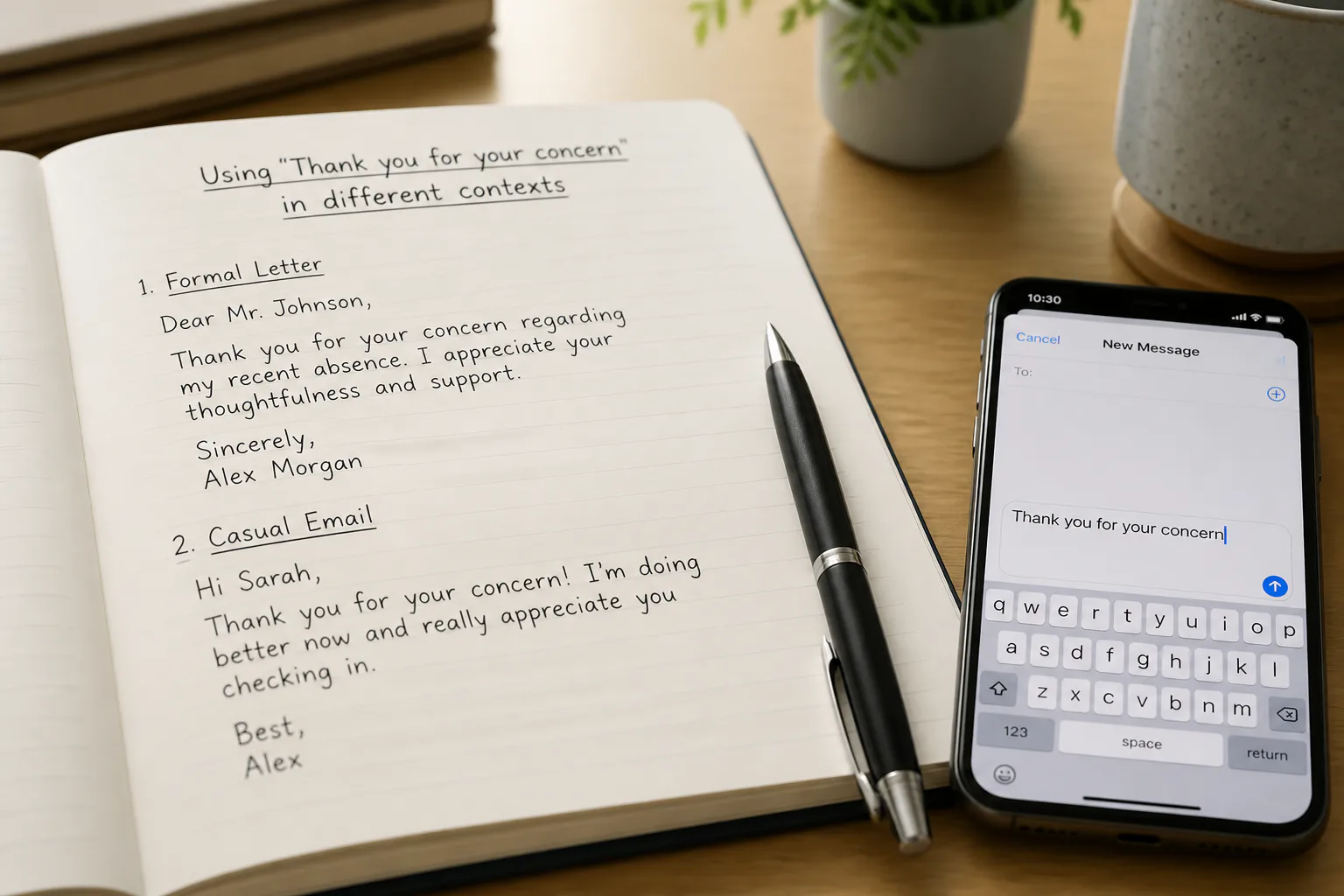
- “Thank you for your concern. I’m feeling much better now.”
- “Thank you for your concern, but I have already handled the issue.”
- “I appreciate your concern. It means a lot to me.”
- “Thank you for your concern. I’d prefer not to talk about it right now.”
When and How to Use This Phrase
Best situations
Use this phrase when someone has shown care or worry in a respectful way. It works especially well after expressions of sympathy, concern about your health, or questions about a difficult matter. In these moments, the phrase helps you sound polite even if you want to keep your answer brief.
You can use it in speech, texts, emails, and letters. It often appears at the end of a conversation when you want to acknowledge the other person’s kindness without extending the exchange too much.
How to make it sound natural
In casual conversation, the phrase can sound a little formal if used by itself. To make it feel more natural, add a short follow-up line so the reply feels clearer and more conversational, such as “Thank you for your concern. I’m okay now,” or “Thank you for your concern, but I need some time to think.”
In professional writing, it can be useful when you need to stay calm and respectful. If you are simply confirming a message rather than responding to worry, a phrase like noted with thanks can better match that purpose.
Tone
Sincere appreciation
When spoken warmly, this phrase shows genuine gratitude. It tells the other person that their care matters and that you value their support. This is common with family, friends, and thoughtful colleagues.
Formal politeness
In more distant relationships, the phrase can sound neutral and formal. It is still polite, but it does not always invite deeper conversation. That can be useful in workplace communication or in delicate situations where you want to remain courteous.
Polite distancing
Sometimes the phrase creates a boundary. You are not rejecting the other person directly, but you are signaling that the matter is private or already handled. In that case, your tone should stay calm, not sharp, if you want to avoid sounding rude.
English often changes meaning through tone in exactly this way. A similar shift happens with friendly reassurances such as no worries, which can sound relaxed, warm, or dismissive depending on delivery.
Examples in Conversation
Personal situations
- Friend: “I heard you were sick. Are you feeling any better?”
You: “Thank you for your concern. I’m doing much better now.” - Relative: “You seem stressed lately. Is everything okay?”
You: “I appreciate your concern. I’ve just had a busy week.” - Neighbor: “I was worried when I saw the ambulance outside.”
You: “Thank you for your concern. Everything is under control now.”
Professional situations
- Manager: “I know this has been a difficult week for you.”
You: “Thank you for your concern. I appreciate your understanding.” - Coworker: “Do you need help with this issue?”
You: “Thank you for your concern, but I’ve already taken care of it.” - Client: “We were worried about the delay.”
You: “Thank you for your concern. We are actively addressing the matter.”
Boundary-setting responses
- Acquaintance: “You should tell me what happened.”
You: “Thank you for your concern, but I’d rather keep it private.” - Colleague: “Are you sure you can handle this?”
You: “I appreciate your concern, and I’m managing it.”
Common Mistakes to Avoid
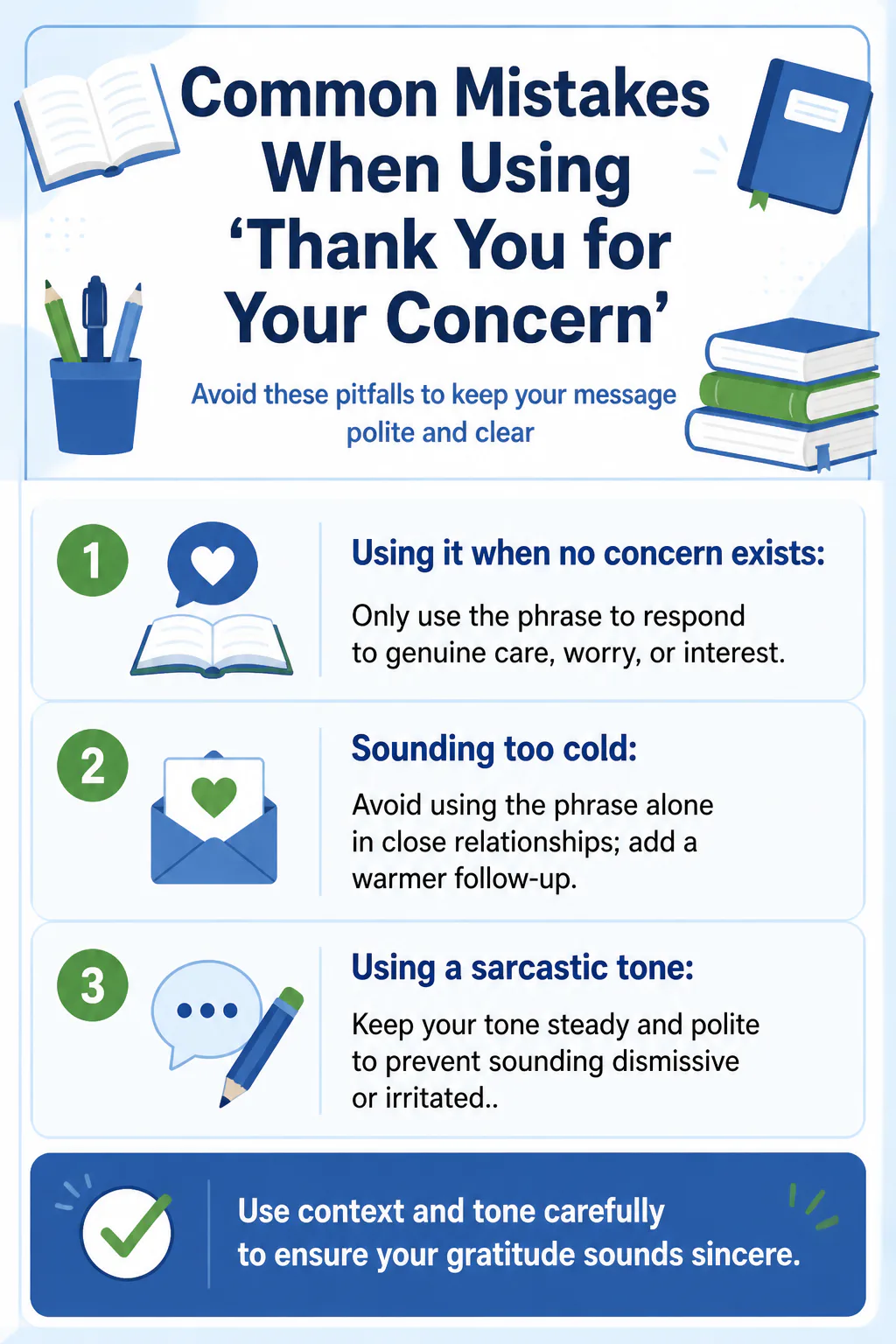
Using it when no concern exists
Do not use this phrase just because someone contacted you. It specifically responds to care, worry, or interest about a situation. If someone is only giving information, another acknowledgment will sound more natural.
Sounding too cold
By itself, the phrase can feel stiff in close relationships. If a friend is being genuinely supportive, adding a personal line makes your reply warmer and more natural. A bare “Thank you for your concern” can sound abrupt if the moment is emotional.
Using a sarcastic tone
The phrase can become sarcastic if your voice or wording suggests irritation. For example, saying it sharply after unwanted advice can make it sound like criticism rather than gratitude. If you need to set a boundary, keep your tone steady and polite.
Quick reminders
- Use it for care, worry, or sympathy
- Add context if you want to sound warmer
- Avoid it when you only need to confirm information
- Be careful that your tone does not sound dismissive
FAQs
Is “thank you for your concern” polite?
Yes. It is a polite and respectful phrase used to acknowledge someone’s care, interest, or worry.
Can “thank you for your concern” sound rude?
Yes, if it is said with a cold, sarcastic, or irritated tone. The words are polite, but tone can make them sound dismissive.
Is this phrase formal or informal?
It can work in both, but it often sounds more formal than everyday casual speech. In close personal conversation, many speakers add a warmer follow-up sentence.
What can I say instead?
You can say “I appreciate your concern,” “Thanks for checking on me,” or “Thank you for caring.” The best choice depends on how personal, warm, or formal you want to sound.
Conclusion
Used well, “thank you for your concern” helps you respond politely while matching the tone, context, and relationship in the conversation.