Glad to Hear That: Meaning, Usage, and Examples in American English
Glad to hear that is a polite English phrase people use to show pleasure, relief, or warm approval after hearing good news. In everyday American English, it often means more than simple happiness. It can also suggest empathy, shared relief, or pleasant surprise.
If someone says, “I passed my exam,” replying with “I’m glad to hear that” shows that you care about the person’s news and feel positive about it. The phrase sounds natural in conversations with friends, coworkers, teachers, neighbors, and even in polite emails.
What Does ‘Glad to Hear That’ Mean?
Basic meaning
The word glad is an adjective that means feeling pleasure, joy, or satisfaction. So when you say “glad to hear that,” you are saying that the information you just received makes you feel good. In many situations, it also carries a small sense of relief, as if the news turned out well.
For example, if a friend says, “My mother is feeling better,” the reply “I’m glad to hear that” means you are pleased by that news. It is not only about your feelings. It also shows kindness and attention to the other person.
Literal and implied meaning
Literally, the phrase means “I feel glad after hearing this.” In real conversation, though, it often implies a little more. It can mean, “That’s good news,” “I care about this,” or “I’m relieved things went well.”
This is why the phrase works so well in personal and professional settings. It is warm without being too emotional, and polite without sounding distant.
How the phrase is built
English speakers use glad in a few common patterns. One pattern uses a that-clause, such as “I’m glad that she succeeded.” Another uses an infinitive, such as “I’m glad to help” or “I’m glad to hear that.”
That structure makes the phrase very flexible. You can respond to news, offer help, or express appreciation with the same core word.
Examples in simple sentences
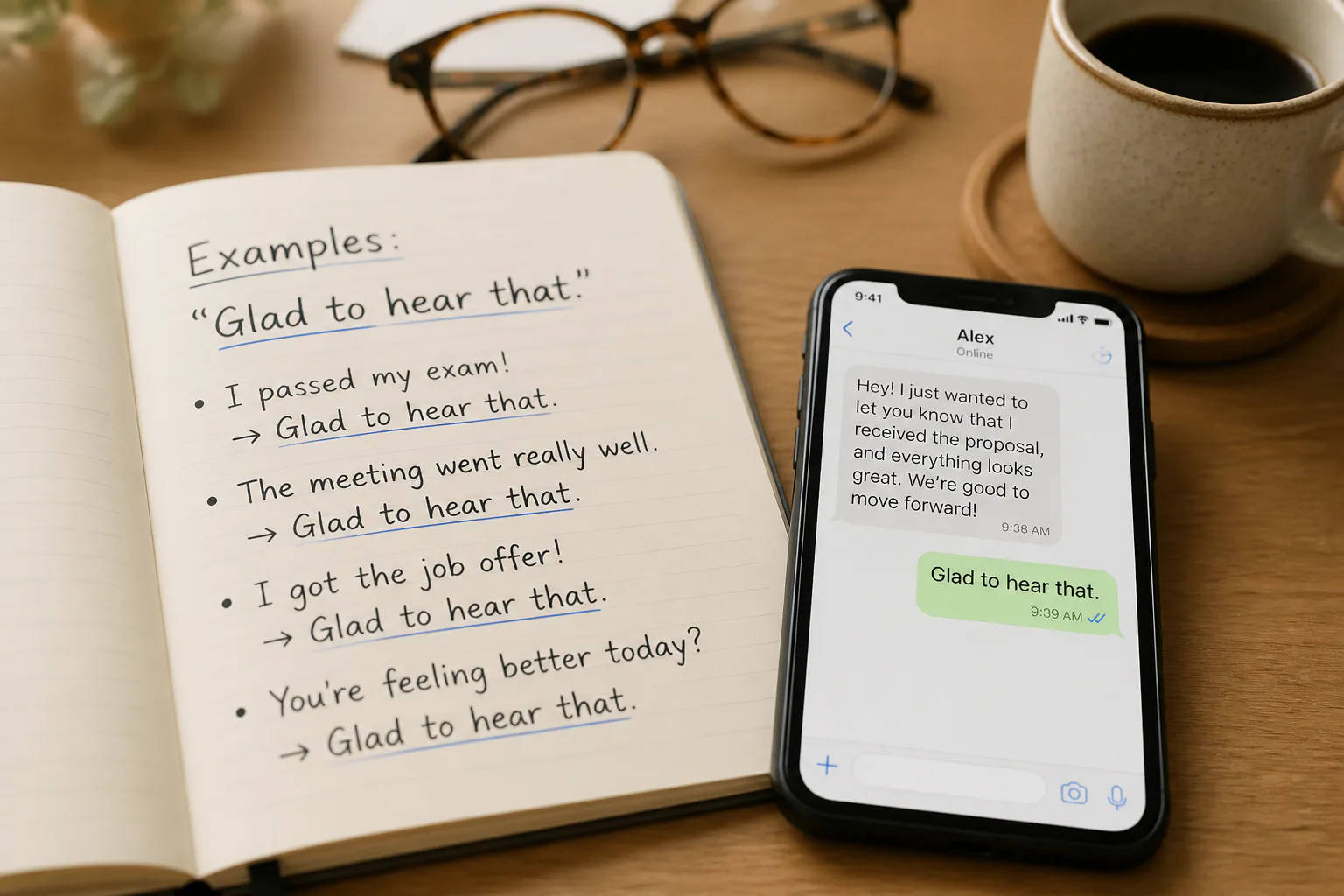
- “I got the job.” “I’m glad to hear that.”
- “The parcel arrived safely.” “I’m glad to hear that.”
- “He’s back home from the hospital.” “I’m glad to hear that.”
- “Our meeting went well.” “I’m glad to hear that.”
Close alternatives
You can often replace the phrase with similar responses, depending on tone. “I’m happy to hear that” is almost the same in meaning, though glad often sounds a bit more tied to relief or pleasant surprise. If you want more variety in friendly replies, you can also compare it with expressions like happy to help, which uses the same simple, warm tone in a different situation.
| Phrase | Main feeling | Typical use |
|---|---|---|
| I’m glad to hear that | Pleasure or relief | Good news from someone else |
| I’m happy to hear that | Pleasure | General positive response |
| That’s great news | Enthusiasm | More energetic reaction |
| Good to know | Approval or useful acknowledgment | Neutral or practical settings |
Using ‘Glad to Hear That’
Best situations
Use this phrase when someone shares positive information, especially if the news matters to them. It fits moments involving health, work, school, travel, family, or personal progress. It is especially useful when you want to sound caring but not overly dramatic.
For example, if a coworker says a project was approved, “I’m glad to hear that” sounds professional and warm. If a friend says they arrived safely, it sounds personal and sincere.
Tone and formality
The phrase sits comfortably in the middle of the formality range. It is polite enough for work and natural enough for casual speech. That balance makes it one of the safest responses to good news in American English.
In a more casual exchange, you might shorten it to “Glad to hear that” without “I’m.” In writing, especially in emails or messages, the full version usually sounds smoother.
When it sounds most natural
It sounds most natural after a person shares an update that deserves a human response, not just a factual acknowledgment. If you only need to confirm receipt of information, phrases like thank you for letting me know may fit better because they focus on the update itself rather than the positive outcome.
Examples of ‘Glad to Hear That’ in Conversation
Everyday dialogues
- Friend: “I finally found a new apartment.”
You: “I’m glad to hear that.” - Coworker: “The client accepted our proposal.”
You: “I’m glad to hear that. That’s a big relief.” - Family member: “Dad’s test results were normal.”
You: “I’m so glad to hear that.” - Neighbor: “Your package was left at my door, and I brought it inside.”
You: “I’m glad to hear that it arrived safely.”
Written examples
- “I’m glad to hear that your interview went well.”
- “We’re glad to hear that you reached home safely.”
- “I’m glad to hear that the issue has been resolved.”
- “I’m glad to hear that she succeeded.”
Natural intensifiers
Speakers often add small words to change the strength of the response. “So,” “really,” and “very” are common choices. If the news feels especially meaningful, Americans often say “I’m so glad to hear that” or “I’m really glad to hear that.”
Alternatives
Common alternatives
- That’s wonderful to hear.
- That’s great news.
- I’m delighted to hear that.
- I’m pleased to hear that.
- Good to know.
- I’m happy to hear that.
How they differ
- That’s wonderful to hear sounds warm and slightly more expressive.
- That’s great news sounds energetic and enthusiastic.
- I’m delighted to hear that sounds more formal or polished.
- I’m pleased to hear that works well in professional or polite writing.
- Good to know sounds more neutral and practical.
- I’m happy to hear that is very close in meaning to “I’m glad to hear that.”
Choosing the right one
The best choice depends on your relationship with the speaker and the type of news. In warm personal talk, “I’m so glad to hear that” often feels best. In more formal communication, “I’m pleased to hear that” can sound a little more polished. If you are building a broader bank of supportive expressions, pages on phrases like proud of you synonyms can also help you vary your tone in encouraging conversations.
Cultural Notes
American English nuance
In American English, “glad to hear that” is a standard polite response to positive news. It shows that you are listening and reacting with warmth. Because of that, it is common in both spoken conversation and short written messages.
Many speakers treat “glad” and “happy” as near equals here. Still, glad can sound a little more connected to relief or pleasant surprise, while happy can sound more general.
Common mistakes
A frequent mistake is using the phrase after bad news. If someone says, “I lost my job,” “I’m glad to hear that” would sound wrong and insensitive. Use it only when the information is good, reassuring, or welcome.
Another mistake is using it where only factual acknowledgment is needed. If your boss sends a neutral schedule update, “Good to know” may fit better than an emotional response.
Useful reminders
- Use it for good news, relief, or reassuring updates.
- Use the full form in polite writing: “I’m glad to hear that.”
- Use a stronger form for emotional news: “I’m so glad to hear that.”
- Do not use it for bad news or complaints.
FAQs
Is “glad to hear that” formal or informal?
It works in both. It is friendly enough for casual speech and polite enough for workplace messages and everyday emails.
Is “I’m happy to hear that” the same?
Yes, the meaning is almost the same. “Glad” often carries a little more relief or pleasant surprise, but in most conversations the two phrases are interchangeable.
Can I say just “Glad to hear that”?
Yes. In casual speech and text messages, dropping “I’m” is common. In formal writing, the full sentence usually sounds better.
Can “glad” mean something besides happiness?
Yes. It can also express willingness, as in “I’m glad to help” or “glad to do it.” In those cases, it means willing or pleased to do something.
Conclusion
“Glad to hear that” is a simple, reliable way to respond to good news in polite, natural American English.