
So Happy for You Meaning: Definition & Usage
The phrase so happy for you means you feel genuine pleasure about another person’s good news, success, or happiness. It is a warm, supportive expression used to congratulate someone without shifting attention to yourself. In everyday English, people say it when a friend gets a new job, a family member shares exciting news, or a colleague reaches an important goal.
- It sounds personal, kind, and emotionally sincere.
- It is idiomatic, so the full meaning comes from the phrase as a whole, not just from the individual words taken separately.
- Learners may understand the words “happy” and “you” but still need help with the phrase’s tone and best use.
What Does ‘So Happy for You’ Mean?
Core meaning
At its heart, “so happy for you” expresses joy on someone else’s behalf. You are saying that their good fortune, achievement, or positive change gives you happiness too. It often carries the same emotional purpose as congratulations, but it sounds more personal and empathetic.
The word “happy” usually means pleased or content. In this phrase, though, the focus is not your own success. The important part is for you, which shows that your happiness is connected to another person’s experience.
Why it is idiomatic
“So happy for you” is an idiomatic expression. That means its real meaning is slightly broader than a literal word-by-word reading. In natural English, it does not just report an emotion. It also signals support, kindness, and shared excitement.
English uses many expressions like this to add emotional nuance. If you hear someone say, “I’m so happy for you,” they are not simply stating a fact. They are also offering encouragement and showing that the moment matters.
How it sounds in real life
This phrase usually sounds warm, positive, and socially graceful. It works well when someone shares news such as an engagement, a promotion, a new home, a pregnancy, or a long-awaited achievement. In each case, the speaker is recognizing the other person’s joy and joining it politely.
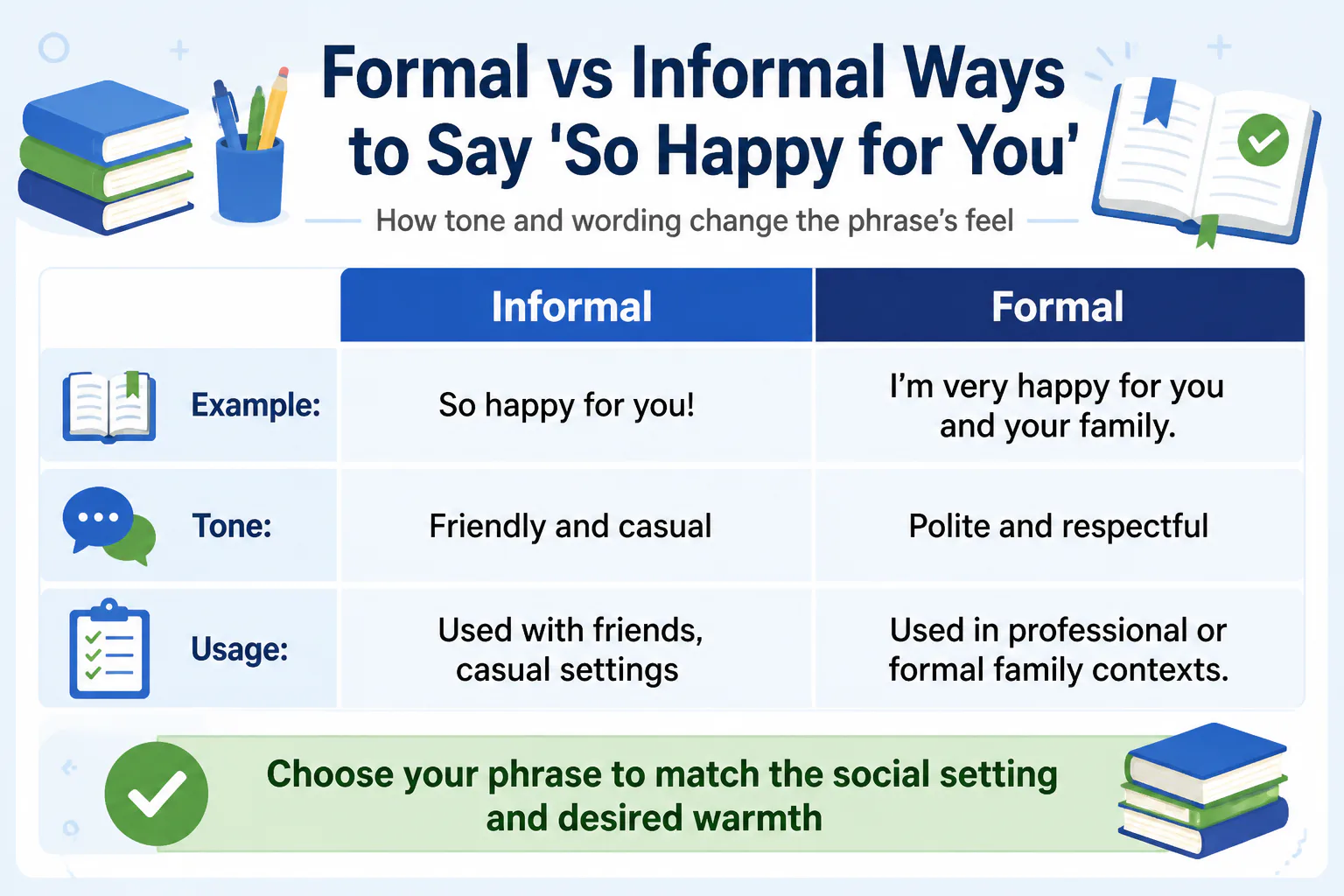
It can be short and casual, as in “So happy for you!” It can also be fuller and more formal, as in “I’m so happy for you and your family.” If you want a slightly different shade of meaning, you can compare it with phrases like glad to hear that, which often responds to good news in a lighter way.
Common situations
- A friend says they got accepted into their dream school.
- A coworker announces a promotion.
- A sibling shares engagement news.
- A neighbor says they finally bought a house.
- A classmate tells you they passed a difficult exam.
In all of these situations, the phrase shows that you are celebrating with the other person. It is especially useful when you want to sound caring without making a long speech.
What it does not mean
“So happy for you” is not the same as “I’m proud of you.” Pride usually suggests admiration for someone’s effort, growth, or character. Happiness for someone focuses more on their good outcome and the pleasure you feel because something good happened to them.
That difference matters in conversation. If someone worked hard for a result, you can say both. If you want to explore that contrast more, phrases related to proud of you often carry a stronger sense of approval or admiration.
Using ‘So Happy for You’
Best times to say it
Use this phrase when someone shares positive news and you want to respond with kindness and enthusiasm. It fits both personal and professional settings because it is supportive without being overly dramatic. You can say it to friends, relatives, coworkers, classmates, or even acquaintances.
Tone and delivery
The phrase works best when it sounds sincere. A gentle smile, an exclamation point in writing, or a few added words can make it feel warmer: “I’m so happy for you. You really deserved this.” In speech, tone matters a lot because a flat or exaggerated voice can make it sound sarcastic.
It also pairs naturally with other positive expressions. For example, if someone shares good personal news, you might answer with “I’m so happy for you” and then add something warm like it means a lot to me when talking about your relationship to their milestone.
Useful variations
- I’m so happy for you.
- I’m really happy for you.
- So happy for you!
- I’m very happy for you.
- That’s great news. I’m so happy for you.
These versions all work, but they differ slightly in intensity. “Really” and “so” sound natural and warm in speech. “Very happy for you” can sound a bit more formal.
Examples of ‘So Happy for You’ in Sentences
Everyday examples
- “You got the job? I’m so happy for you!”
- “After all your hard work, this success is wonderful. I’m so happy for you.”
- “You and your partner are engaged? So happy for you both.”
- “I heard you passed the exam. I’m really happy for you.”
- “That’s fantastic news about your new home. I’m so happy for you.”
- “You finally published your book. I’m so happy for you and proud of your effort.”
Formal and informal comparison
| Context | Example | Tone |
|---|---|---|
| Informal | So happy for you! | Friendly and casual |
| Neutral | I’m so happy for you. | Warm and natural |
| Formal | I’m very happy for you and your family. | Polite and respectful |
| Supportive | That’s great news. I’m so happy for you. | Encouraging and kind |
Common mistakes to avoid
- Using it for bad or serious news.
- Saying it with a tone that sounds forced or sarcastic.
- Confusing it with “I’m proud of you” when the meaning you want is different.
- Making the response about yourself right away.
For example, if someone says they lost a job, “I’m so happy for you” would be inappropriate. In that case, a supportive phrase should match the emotional situation instead.
Cultural Nuances
Why the phrase feels polite
This expression is valued because it acknowledges another person’s happiness without centering your own story. It tells the listener, “Your joy matters, and I want to honor it.” That makes it especially useful in cultures and social settings where empathy and emotional generosity are appreciated.
Sincerity matters
In spoken English, this phrase can become sarcastic if the voice, facial expression, or situation feels wrong. A stretched-out “I’m sooo happy for you” may sound genuine among close friends, but in another setting it can sound mocking. Context decides everything.
Written messages can also be misunderstood more easily because readers cannot hear your tone. Adding a small detail often helps: “I’m so happy for you. You’ve worked toward this for a long time.”
Similar expressions
English offers several nearby phrases, but each has a slightly different feel. “Congratulations” is direct and widely accepted. “I’m glad for you” is simpler and softer. “That’s great news” reacts to the event itself rather than emphasizing your shared emotion.
These small differences are common in English expressions. Just as some phrases such as happy to help show willingness and kindness, “so happy for you” shows shared joy and support.
FAQs
Is “so happy for you” formal or informal?
It works in both. The shorter version sounds more casual, while “I’m very happy for you” sounds slightly more formal and polished.
Can “so happy for you” sound sarcastic?
Yes. The words are positive, but tone and context can make them sound insincere. In normal use, though, the phrase is meant to be warm and genuine.
Is it the same as “proud of you”?
No. “So happy for you” focuses on the other person’s good news or success. “Proud of you” emphasizes admiration for their effort, growth, or character.
Can English learners use this phrase safely?
Yes. It is common, polite, and easy to use in happy situations. Just make sure the other person is sharing good news and that your tone sounds sincere.
Key Takeaways
Main points
“So happy for you” means you feel real joy about someone else’s success, good fortune, or happy news. It is a common English expression used to congratulate, support, and share positive emotion. The phrase works in casual and formal settings, and its strength comes from sounding sincere, empathetic, and focused on the other person.
- It expresses happiness on another person’s behalf.
- It is appropriate for good news, achievements, and milestones.
- It can be casual, neutral, or formal depending on wording.
- It should sound genuine, not exaggerated or flat.
Conclusion
Use “so happy for you” when you want to respond to good news with warmth, support, and sincere shared joy.