I Hope You Are Doing Well: Meaning, Usage, and Alternatives
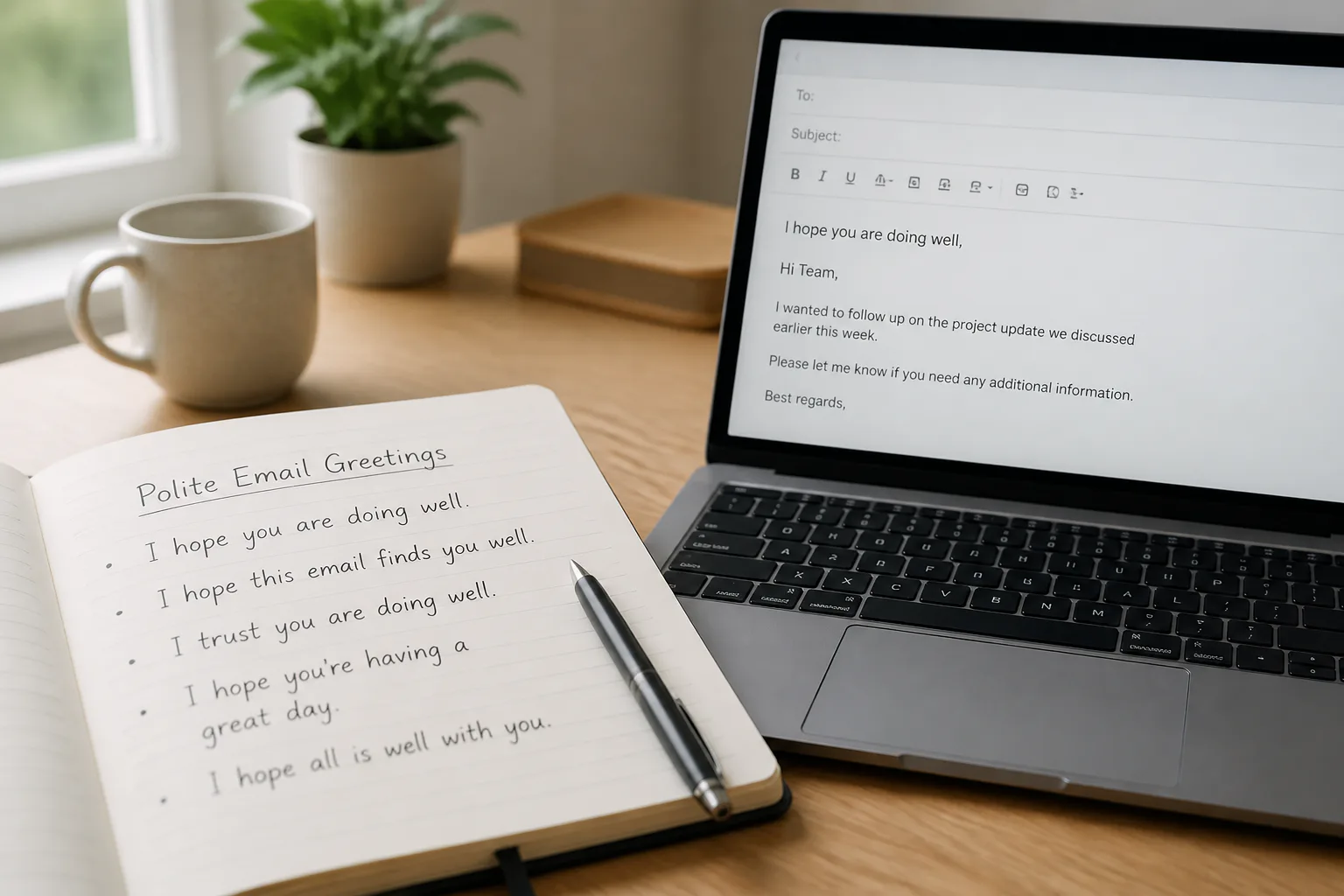
“I hope you are doing well” is a common English phrase used to open emails and other messages in a polite, friendly way. It shows goodwill and signals that you care about the other person’s well-being, even if only briefly. You will see it often in professional communication, but it also works in casual messages.
At the same time, the phrase is so common that some readers find it routine or a little impersonal. That does not make it wrong. It simply means the best choice depends on your relationship, your tone, and how natural you want your message to sound.
Meaning of ‘I hope you are doing well’
Literal meaning
The phrase means exactly what it says: you want the other person to be well. In plain English, you are expressing a positive wish about their health, mood, or general situation. It is a short way to begin a message with warmth before moving to the main point.
Implied meaning
Beyond the literal meaning, the phrase also works as a social courtesy. It tells the reader, I am not jumping straight into business. In many emails, especially at work, that small note of friendliness helps the message sound more respectful and human.
It is especially common at the start of professional emails, where writers want a clear and neutral opening. In that sense, it functions as both a greeting and a soft transition into the rest of the message.
Where people use it
You will most often find this phrase in emails, but it also appears in letters, direct messages, and other written correspondence. It fits both formal and informal settings, which is one reason it has become so widely used.
- Professional emails to coworkers, clients, or teachers
- First messages after some time without contact
- Polite follow-up notes
- Casual written messages to acquaintances
Why it can feel overused
Because many people use the same opening again and again, it can sound automatic. Readers may see it as polite but not very personal. If you want a similar tone with more variety, phrases such as everything is going well with you can sound a little fresher while keeping the same friendly intention.
Formal and shortened forms
The full form, “I hope you are doing well,” is better in formal writing. You may also see “Hope you’re doing well,” but that version leaves out the subject “I.” It is common in everyday English, yet the full sentence usually looks more polished in formal contexts.
Quick examples
- “I hope you are doing well. I am writing to follow up on our meeting.”
- “I hope you are doing well and having a productive week.”
- “Hope you’re doing well. Just checking in about the report.”
Usage
Professional settings
This phrase is very common in work emails because it is clear, friendly, and neutral. It works well when writing to a manager, client, colleague, or someone you do not know closely. Many writers choose it because it sounds polite without being too personal.
Informal settings
It also fits casual messages, though friends and family often use more natural or specific greetings. In a relaxed conversation, a phrase like how is your day going may sound more direct and personal than a standard email-style opening.
Best situations
The phrase works best when you want a safe, respectful opening. It is useful in first-time emails, follow-ups, and messages where the main purpose is business but you still want to sound warm.
| Context | How it sounds | Good fit? |
|---|---|---|
| Work email | Polite and professional | Yes |
| Email to a teacher | Respectful and friendly | Yes |
| Message to a close friend | A bit formal or distant | Sometimes |
| Urgent email | Can feel slow or routine | Often no |
Alternatives
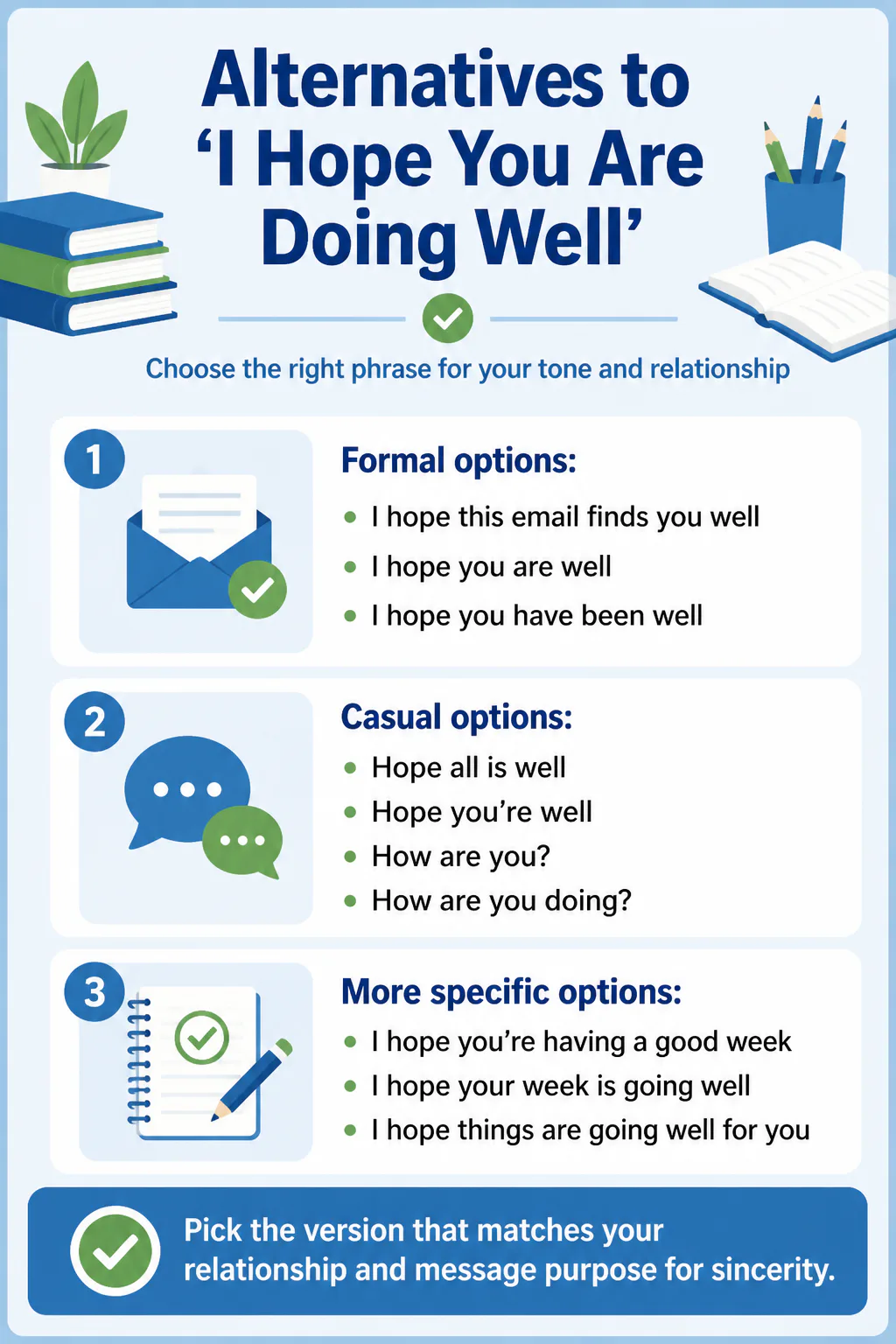
Formal options
- “I hope this email finds you well”
- “I hope you are well”
- “I hope you have been well”
Casual options
- “Hope all is well”
- “Hope you’re well”
- “How are you?”
- “How are you doing?”
More specific options
- “I hope you’re having a good week”
- “I hope your week is going well”
- “I hope things are going well for you”
How to choose
Choose the version that matches your relationship and purpose. “I hope this email finds you well” is more formal. “Hope all is well” is more casual. A more specific line often sounds more genuine because it feels less copied and pasted.
Etiquette
When it works well
Use this phrase when you want a friendly opening in a professional or neutral message. It is a good choice when you do not know the reader very well or when you want to sound courteous without becoming too personal.
When to be careful
Be careful with it in ongoing email threads, especially if several messages have already gone back and forth. Repeating the same opening can feel mechanical. In urgent notes, getting to the point quickly is often better than using a stock greeting.
How to sound more sincere
If you use the phrase, make the next sentence specific. Mention the meeting, project, week, or reason for writing. That small detail makes your message feel less generic, much like choosing the right follow-up wording in phrases such as looking forward to working with you instead of relying on a fixed line every time.
- Use the full sentence in formal emails.
- Keep the tone consistent with the rest of the message.
- Add a specific follow-up sentence when possible.
- Avoid repeating it in every message to the same person.
Examples in communication
Email openings
- “I hope you are doing well. I wanted to ask about the project timeline.”
- “I hope you are doing well. Thank you for your earlier message.”
- “I hope this email finds you well. I am reaching out regarding next week’s meeting.”
- “Hope all is well. Just checking whether you received my last email.”
More natural variations
- “I hope you’re having a good week.”
- “I hope things are going well for you.”
- “How are you doing?”
- “Hope you’re well.”
Better vs weaker use
- Better: “I hope you are doing well. I enjoyed your presentation on Monday and wanted to follow up.”
- Weaker: “I hope you are doing well. I hope you are doing well again. I am emailing about the file.”
- Better: “I hope you’re having a good week. Could you send the updated draft by Friday?”
- Weaker: “How are you? Send the report today.”
FAQs
Is “I hope you are doing well” formal?
Yes. It works in formal and informal writing, though it is especially common in professional emails. If you want a slightly more formal option, use “I hope this email finds you well.”
Can “Hope you’re doing well” be used instead?
Yes, but it is less formal because it leaves out the subject “I.” In polished or professional writing, the full sentence is usually the better choice.
Does the phrase sound insincere?
It can if it feels copied and repeated with no personal detail. Adding a specific follow-up sentence helps it sound more natural and thoughtful.
What is a good alternative?
Good alternatives include “Hope all is well,” “I hope this email finds you well,” and “I hope you’re having a good week.” The best choice depends on how formal or personal you want to sound.
Conclusion
“I hope you are doing well” works best as a polite opener when you match it to the situation and keep the rest of your message natural.