How’s Your Sleep: Meaning, Tone, and Replies
“How’s your sleep?” means “How well have you been sleeping?” or “Are you getting enough sleep?” In everyday English, it is a caring, conversational question about a person’s rest, not just a literal question about bedtime. People use it to check on someone’s wellbeing, especially if that person seems tired, stressed, or has mentioned rough nights before.
- The phrase is usually gentle and personal.
- It can sound casual between friends, warm in a family setting, or thoughtful in a close relationship.
- Most replies are simple and direct, such as “Pretty good,” “Not great lately,” or “I slept well last night.”
What Does ‘How’s Your Sleep’ Mean?
Core meaning
At its most basic level, “How’s your sleep?” asks about the quality or quantity of someone’s sleep. The speaker wants to know whether the other person is sleeping well, sleeping badly, or not getting much rest at all.
Here, “sleep” keeps its ordinary meaning: a natural state of rest marked by loss of wakefulness and awareness of your surroundings. In normal conversation, though, nobody is asking for a technical explanation. They are asking how your recent nights have been.
Literal and social meaning
Literally, the question is about rest. Socially, it often means more than that. It can signal concern, affection, or attention to someone’s overall state, much like asking how a person is feeling or whether their day is going well.
That is why the tone matters. If a parent asks it, it may sound caring. If a partner asks it, it can sound intimate. If a coworker asks after noticing you look tired, it often means, “You seem worn out. Are you okay?”
How it works in conversation
The phrase usually appears in short, informal exchanges. It is common after someone says they have been under pressure, staying up late, or struggling to rest. A similar morning question is how did you sleep, but “How’s your sleep?” often sounds broader because it can refer to your recent sleep pattern, not only one night.
For example, compare these two questions:
- “How did you sleep?” = asks about last night
- “How’s your sleep?” = asks about your sleep in general or lately
Common examples
These examples show the phrase in natural use:
- “You look exhausted. How’s your sleep lately?”
- “Now that the baby is home, how’s your sleep?”
- “You’ve had a lot on your mind. How’s your sleep these days?”
- “I know travel threw off your routine. How’s your sleep now?”
In each case, the speaker is checking on rest as part of a wider concern for the person’s wellbeing.
Typical response patterns
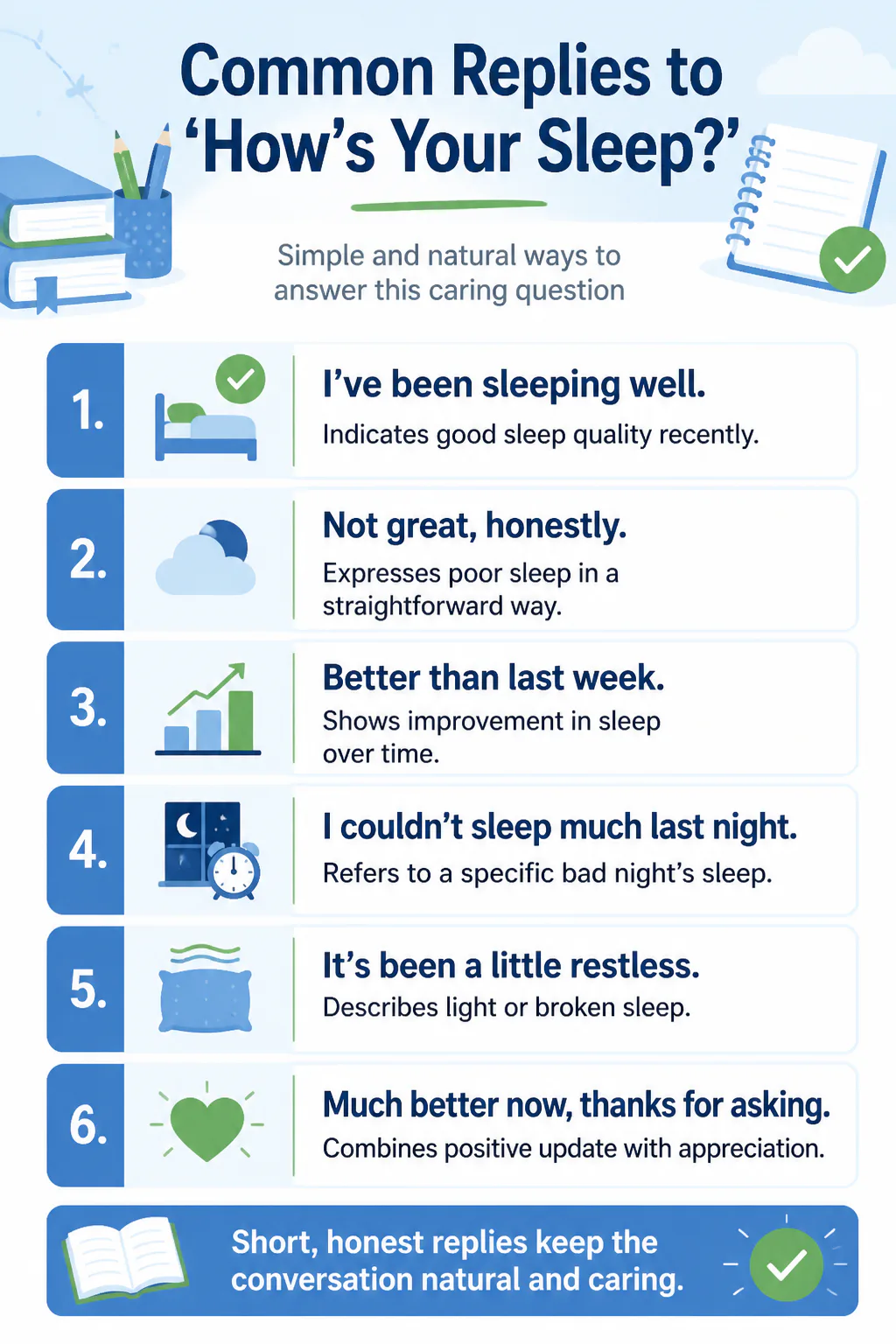
Most answers are short and honest. You do not need a long explanation unless you want to give one. The most natural replies usually describe whether your sleep has been good, bad, light, broken, or improving.
Common responses include:
- “I’ve been sleeping well.”
- “Not great, honestly.”
- “Better than last week.”
- “I couldn’t sleep much last night.”
- “It’s been a little restless.”
- “Much better now, thanks for asking.”
Related phrases and tone
English has many sleep-related expressions, and they help shape the tone around this question. Someone who says they need to “get some sleep” is speaking plainly. Someone who says they “didn’t get a wink of sleep” is using an idiomatic, more expressive form.
Other common phrases include:
- “sleep like a log”
- “sleep tight”
- “beauty sleep”
- “sleep on it”
These expressions show that sleep is not just a physical state in English. It also appears in warm, playful, and metaphorical language.
Usage
Everyday settings
People usually say “How’s your sleep?” in personal, low-pressure situations. It is common among family members, partners, close friends, and others who regularly check in on each other. The question often comes up after stress, travel, parenting changes, or a busy period.
It can also appear beside other gentle check-in phrases. For example, the same person who asks about sleep may later ask how’s your day, since both questions focus on everyday wellbeing rather than formal conversation.
Why people ask it
Usually, they ask for one of these reasons:
- They notice you look tired
- You previously mentioned poor sleep
- They want to show care in a small, natural way
- They are making morning conversation
In other words, the phrase is practical, but it is also relational. It helps people show attention without sounding too heavy or dramatic.
How to Respond to ‘How’s Your Sleep?’
Keep it simple
- Answer directly: “Good,” “Okay,” “Not great,” or “Better now.”
- Add detail if you want: “I’ve been waking up a lot” or “I’ve been sleeping much better this week.”
- Acknowledge the care if appropriate: “Thanks for asking.”
Natural reply examples
- “Pretty good lately.”
- “I’ve slept well this week.”
- “Not the best, to be honest.”
- “I had a restless night.”
- “Much better than before.”
- “Still a bit uneven, but improving.”
Etiquette tips
- You do not need to overshare if you do not want to.
- A brief answer is normal and polite.
- If the question is caring, a warm response fits best.
- If you want to continue the conversation, add one extra detail.
That same gentle tone often appears in follow-up lines such as wishing someone a good rest of your day, which keeps the exchange friendly and considerate.
Regional Use
General English use
“How’s your sleep?” is understandable across English-speaking regions. It is not a rare or confusing phrase. Still, it is more common in warm, informal speech than in highly formal settings.
In some places, speakers may prefer nearby versions such as “Did you sleep well?” or “How have you been sleeping?” The meaning stays almost the same, but the wording shifts slightly by habit, personality, and relationship.
Social nuance
Culturally, asking about sleep often shows care and concern. It can be a small act of kindness, especially when someone is under strain or going through change. That makes it more personal than a routine greeting like “How are you?”
Among close friends or family, the phrase can even feel affectionate. In looser social groups, it may be used only when there is a reason to ask, such as visible tiredness or a recent life event.
| Phrase | Usual focus | Tone |
|---|---|---|
| How’s your sleep? | Recent sleep quality or quantity | Caring, personal |
| How did you sleep? | Last night | Warm, everyday |
| Did you sleep well? | One night of sleep | Simple, direct |
| How are you? | General wellbeing | Broad, routine |
FAQs
Is “how’s your sleep” a common phrase?
Yes. It is a common conversational question used to ask about how well or how much someone has been sleeping.
Is it the same as “how did you sleep”?
Not exactly. “How did you sleep?” usually refers to one specific night, while “How’s your sleep?” often asks about sleep more generally or over a period of time.
Can “how’s your sleep” sound caring?
Yes. In many situations, it sounds thoughtful and caring because it shows interest in a person’s wellbeing.
What is the best short reply?
A simple, natural answer works best: “Good,” “Not great,” “Better lately,” or “I slept well.”
Conclusion
“How’s your sleep?” is a caring everyday question that asks about rest while also checking on how someone has been doing lately.