Have a Wonderful Weekend: Meaning, Tone, and Proper Use
“Have a wonderful weekend” is a polite way to wish someone an enjoyable, pleasant, and satisfying weekend. People use it at the end of conversations, emails, messages, and farewells, especially on Fridays or before days off. It works well in both personal and professional settings because it sounds warm without being too casual.
The phrase is simple, but its tone matters. It can sound friendly, thoughtful, and slightly more expressive than “have a nice weekend” or “have a good weekend.” Knowing when to use it, and when a shorter or more neutral option fits better, helps you sound natural in everyday English.
Meaning of ‘Have a Wonderful Weekend’
What the phrase means
“Have a wonderful weekend” means “I hope your weekend is very pleasant and enjoyable.” It is a goodwill expression, not a literal command. The speaker is offering a kind wish for the other person’s free time, rest, plans, or family time.
In this phrase, wonderful adds warmth and enthusiasm. It is stronger than “good” and a little more personal than “pleasant.” That is why the phrase often feels thoughtful without becoming too emotional.
What “wonderful” suggests
When English speakers choose “wonderful,” they usually want to sound especially kind or upbeat. The word suggests more than basic politeness. It implies that you hope the person has a truly enjoyable break, not just an ordinary one.
Still, the phrase remains common and natural. It does not sound exaggerated in most everyday exchanges, especially in workplaces, customer service, classrooms, or friendly messages.
How it works in context
You usually say this phrase near the end of an interaction. It often appears as a closing remark after work is finished for the week or when someone is about to leave. In speech, the tone is friendly and smooth, and in writing, it fits neatly at the end of an email or note.
For example, a manager might say it to a team member on Friday afternoon, and a neighbor might say it while ending a short conversation. If you want a slightly simpler version, you can compare it with have a great weekend, which is similarly warm but a bit more common in casual speech.
Examples of appropriate usage
Here are common and natural ways to use the phrase:
- “Thanks for your help this week. Have a wonderful weekend.”
- “It was nice seeing you today. Have a wonderful weekend.”
- “We can continue this on Monday. Have a wonderful weekend.”
- “Enjoy your time with your family, and have a wonderful weekend.”
- “Take care and have a wonderful weekend.”
These examples show that the phrase works best as a closing wish. It is especially effective when the conversation is ending and no further action is needed right away.
Polite alternatives with similar meaning
English offers several close alternatives, each with a slightly different feel. “Have a good weekend” is more neutral. “Have a great weekend” sounds cheerful and everyday. “Enjoy your weekend” is direct and natural, while a phrase like have a good rest of your day follows the same polite pattern for shorter time periods.
If you choose among these options based on relationship and setting, your English will sound more natural. That is why the best choice is not always the most enthusiastic one; it is the one that matches the moment.
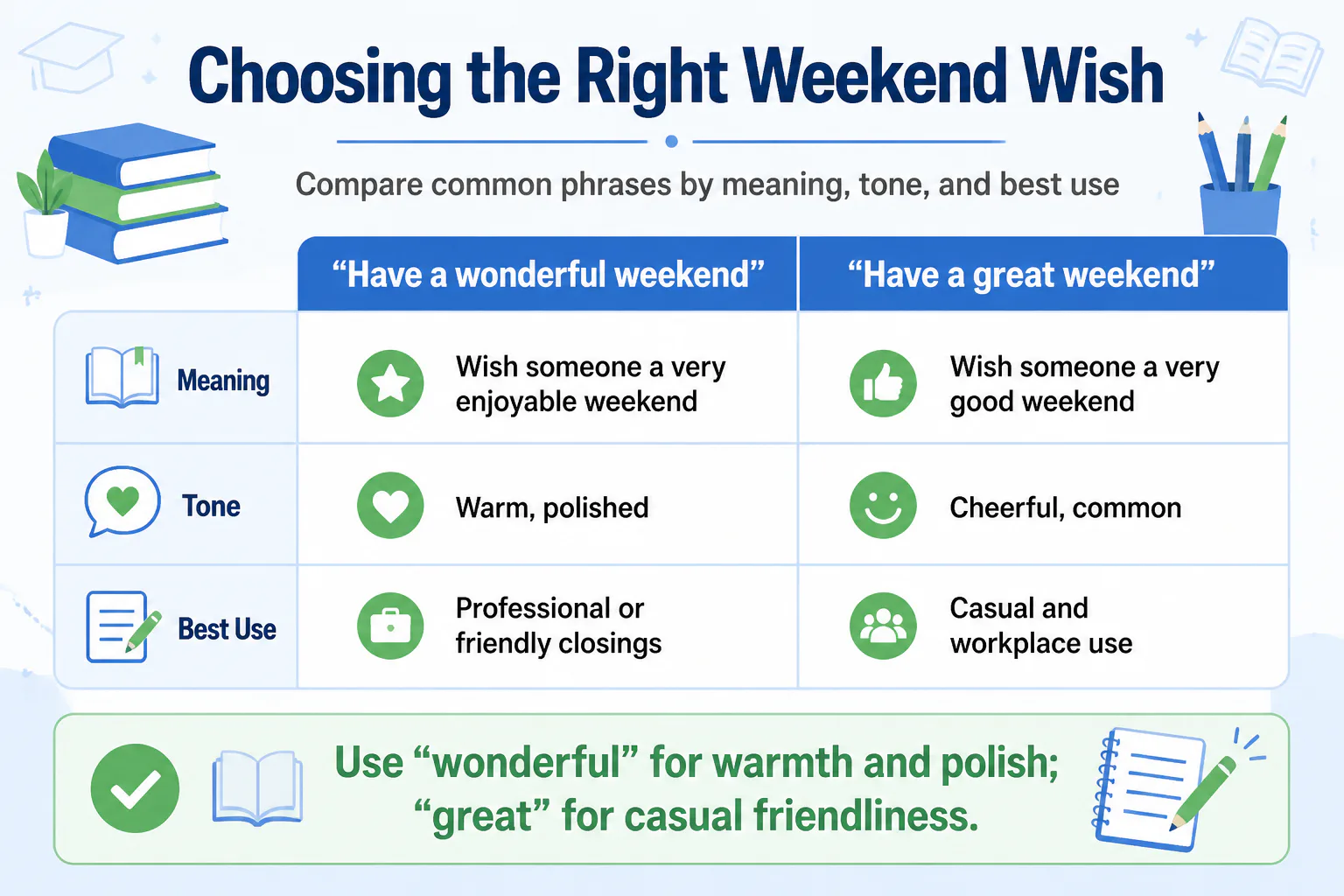
| Phrase | Meaning | Tone | Best Use |
|---|---|---|---|
| Have a wonderful weekend | Wish someone a very enjoyable weekend | Warm, polished | Professional or friendly closings |
| Have a great weekend | Wish someone a very good weekend | Cheerful, common | Casual and workplace use |
| Have a good weekend | Wish someone a pleasant weekend | Neutral, safe | Any setting |
| Enjoy your weekend | Tell someone to make the most of it | Direct, friendly | Informal or semi-formal use |
When and How to Use This Phrase
Common situations
Use the phrase when someone is about to begin their weekend and you want to end the interaction politely. It is most common on Friday, late Thursday, or before a holiday weekend. In offices, shops, schools, and everyday conversation, it works as a courteous closing.
You can say it to coworkers, clients, teachers, neighbors, friends, and service workers. In email, it often appears in the final line after the main message. In conversation, it usually comes after thanks, a goodbye, or a short closing comment.
How to place it naturally
The phrase sounds best at the end of a sentence or message. It often follows one brief remark, such as thanks, appreciation, or a reference to next week. In professional writing, that placement keeps the message clear and polite.
You might write, “I have attached the updated file. Have a wonderful weekend.” The same closing style appears in many polite workplace expressions, including phrases like looking forward to working with you, where tone helps shape the relationship.
Simple usage tips
- Use it near the end of a conversation or message.
- Say it when the weekend is actually approaching.
- Match it to the relationship: warm, but not overly intimate.
- Pair it with a brief closing such as “take care” or “thanks again.”
Formality
How it sounds
This phrase sounds positive, considerate, and respectful. It is warmer than “have a good weekend” but still appropriate in professional communication. That balance makes it useful when you want to sound kind without becoming too familiar.
It is not stiff or overly formal. Instead, it sits in the middle: polished enough for work, natural enough for everyday life, and friendly enough for social use.
Professional or personal?
It fits both. In the workplace, it can be a polished closing in emails, chats, or face-to-face exchanges. With friends or family, it sounds caring, though some people may choose simpler wording in very casual settings.
If your relationship is very informal, “have a great weekend” or “enjoy your weekend” can sound more relaxed. If the setting is formal but still human, “have a wonderful weekend” often feels just right.
Alternatives
Common options
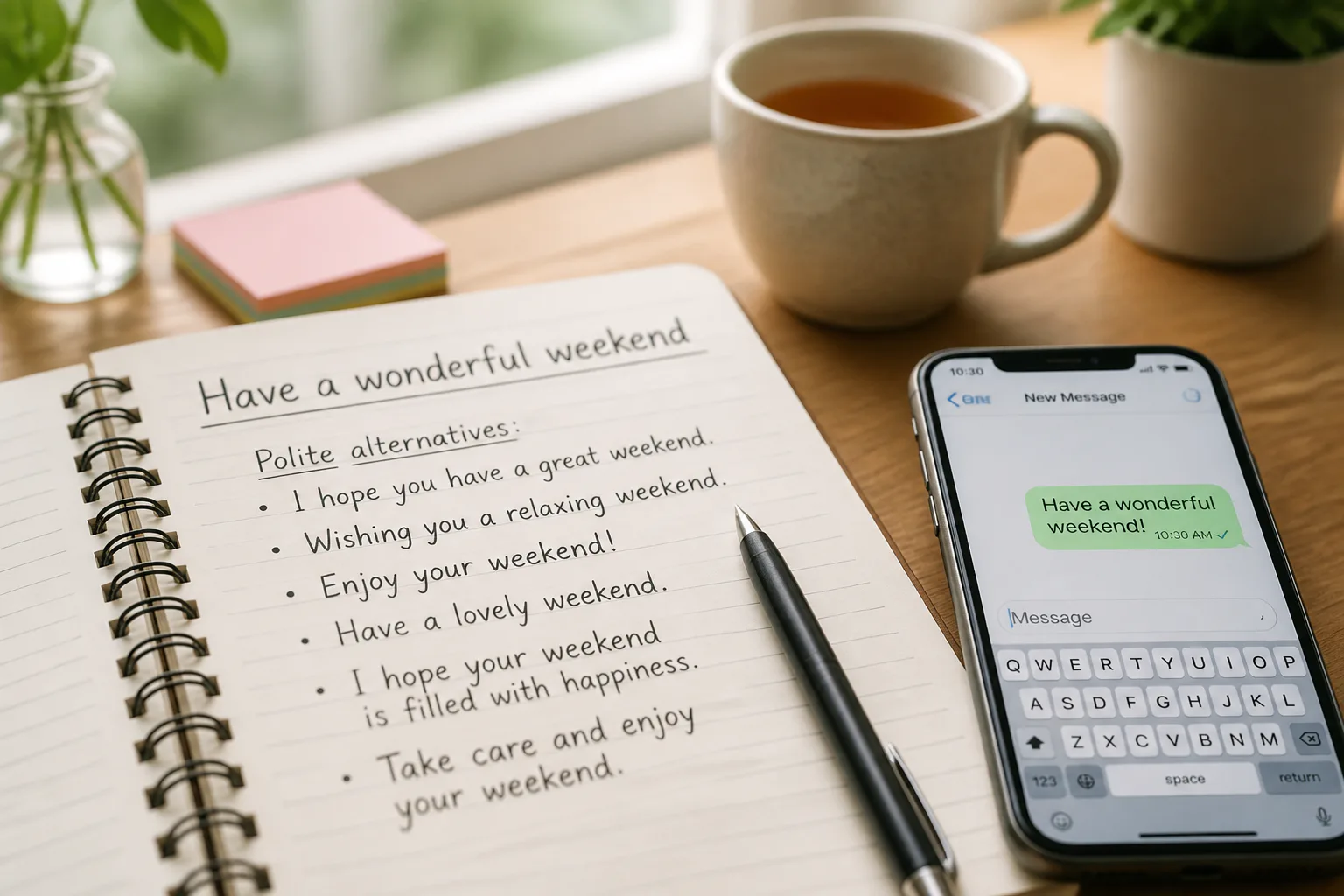
- Have a good weekend — neutral and safe in almost any setting.
- Have a great weekend — cheerful and common in speech and email.
- Enjoy your weekend, simple and direct.
- Wishing you a wonderful weekend, slightly more formal and polished.
- I hope you have a wonderful weekend, more personal and complete.
- Take care this weekend, caring, especially if someone has plans or travel.
- Hope you have a relaxing weekend, useful when rest is the main idea.
How to choose the best one
- Choose “good” if you want a neutral tone.
- Choose “great” if you want a casual, upbeat tone.
- Choose “wonderful” if you want warmth with polish.
- Choose “relaxing” if the person has had a busy week.
Common Mistakes to Avoid
Awkward or incorrect use
- Using it too early in the week. On Monday or Tuesday, it can sound odd unless a long weekend is about to begin.
- Repeating it too often in every message. In ongoing email threads, constant repetition can sound automatic.
- Using it in urgent or serious situations. If the topic is sensitive, a cheerful weekend wish may feel out of place.
- Choosing a tone that is too strong for the relationship. With very formal contacts, “have a good weekend” can be safer.
- Forgetting punctuation in writing. A clean closing such as “Thank you. Have a wonderful weekend.” reads better.
What sounds more natural
- Natural: “Thanks again for your help. Have a wonderful weekend.”
- Less natural: “Have a wonderful weekend to you.”
- Natural: “We will follow up next week. Have a wonderful weekend.”
- Less natural: “I am telling you to have a wonderful weekend.”
FAQs
Is “have a wonderful weekend” polite?
Yes. It is a polite, warm, and respectful expression that works well in both professional and social situations.
Is it too formal for everyday use?
No. It is slightly more polished than “have a good weekend,” but it still sounds natural in everyday English.
Can I use it in work emails?
Yes. It is a common and appropriate closing line in work emails, especially on Fridays or before a holiday break.
What is the difference between “wonderful” and “great”?
“Wonderful” sounds a little more thoughtful and polished. “Great” sounds more casual and conversational.
Conclusion
“Have a wonderful weekend” works well when you want a closing that sounds warm, polite, and natural in everyday or workplace English.