PU Meaning in Text: Text & Chat Uses
PU in text usually means a reaction of disgust, especially to something that smells bad or seems gross. In online chats, though, context matters: younger users also use it to mean pull up, and in some cases it works like phew after a stressful moment. If you want to understand pu meaning in text, the key is to look at the mood of the message, the platform, and the sentence around it.
It appears often in text messages, gaming chats, TikTok captions, and social media comments because it is short, expressive, and easy to type. The term comes from the older spoken expression “pee-yew,” a classic American way to react to a bad odor. That history explains why the smell-related meaning is still the most common one today.
What Does ‘PU’ Mean in Texting?
Most often, PU means “that stinks” or “gross.” People use it to show disgust, annoyance, or a strong reaction to something unpleasant. It can refer to an actual smell, like spoiled food or sweaty clothes, but it can also react to a situation, idea, or embarrassing story.
Main meaning
The most common use of PU is emotional reaction. It is the typed version of saying “pee-yew,” which has long been used in American speech to comment on something foul-smelling. In texting, that same reaction expands beyond smell and can also mean “ew,” “yuck,” or “that is nasty.”
- “PU, that trash bag has been sitting there all day.”
- “I just opened the fridge. PU.”
- “PU, that story was hard to read.”
How tone changes the meaning
Tone changes everything with PU. In one chat, it can sound serious and direct. In another, it can be playful, exaggerated, or sarcastic, especially in memes, jokes, and dramatic storytelling.
For example, “PU, your shoes stink” is a literal reaction to smell. But “PU, that plot twist was evil” uses the term more like dramatic online commentary. Slang shifts quickly, much like sm meaning in text, where the same short form can feel casual, emotional, or context-specific.
Other common meanings
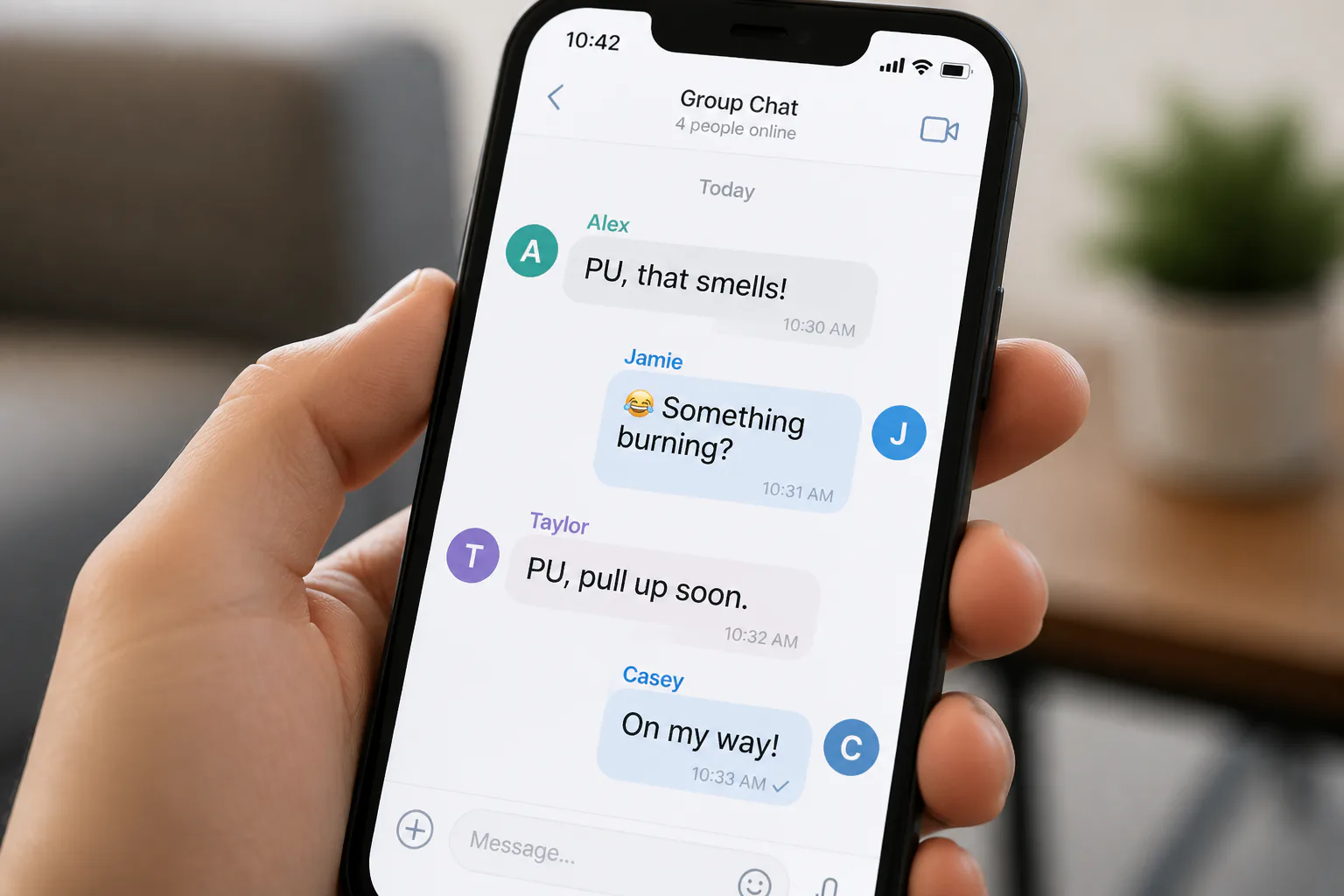
Among younger users, PU can also mean “pull up.” In that sense, it is an invitation to come over, show up, or join someone. This use is common on Snapchat, TikTok, Instagram, and WhatsApp.
- “We’re outside. PU.”
- “If you free later, PU.”
- “Game starting in 10, PU.”
Less often, PU can express relief, similar to “phew.” That use appears when someone finishes something difficult or escapes a problem. It is not the first meaning most readers think of, but it does show up in casual chat.
- “PU, I finally finished that exam.”
- “PU, thought I was going to miss the bus.”
Common misunderstandings
The biggest mistake is assuming PU always means one thing. If someone texts “PU tonight,” they probably do not mean disgust at all; they likely mean “pull up tonight.” If someone posts “PU” under a food photo or locker room joke, the disgust meaning is far more likely.
Another point of confusion is spelling. Some people write “P.U.” with periods, especially when echoing the older spoken phrase. Others just type “pu” in lowercase. Both point to the same basic slang idea, and meaning depends more on context than punctuation.
| Form | Most likely meaning | Example |
|---|---|---|
| PU | Disgust or bad smell | “PU, this milk is spoiled.” |
| PU | Pull up | “We at the park, PU.” |
| PU | Phew or relief | “PU, that was close.” |
| P.U. | Older style of disgust reaction | “P.U., what is that smell?” |
Common Examples
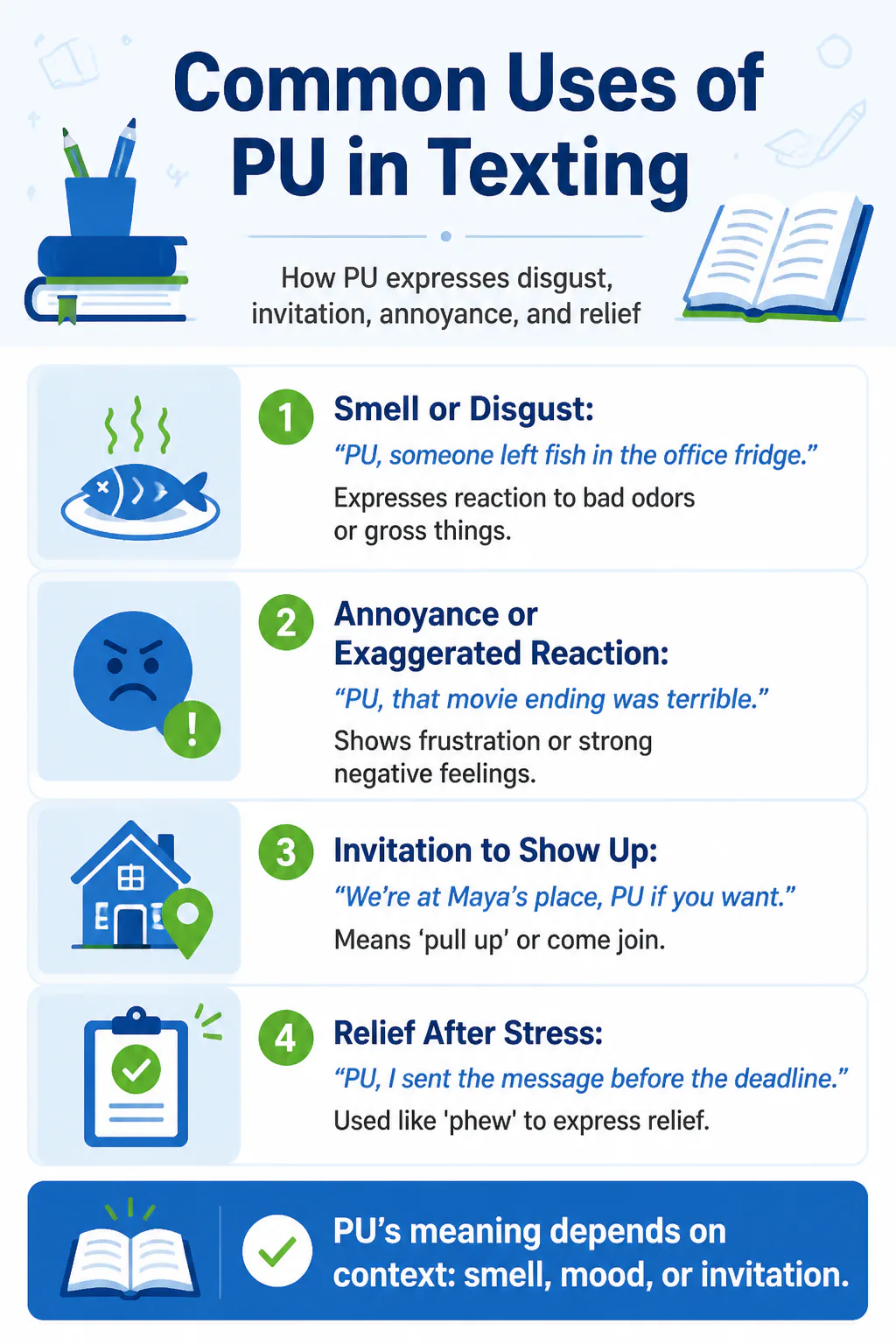
Smell or disgust
- “PU, someone left fish in the office fridge.”
- “Your gym bag? PU.”
- “PU that bathroom needs help.”
Annoyance or exaggerated reaction
- “PU, that movie ending was terrible.”
- “PU, why is homework piled up like this?”
- “PU, not another group project.”
Invitation to show up
- “We’re at Maya’s place, PU if you want.”
- “Everybody going downtown. PU.”
- “On my block right now, PU.”
Relief after stress
- “PU, I sent the message before the deadline.”
- “PU, thought I lost my wallet.”
Short slang often depends on social setting. A direct message, a caption, and a game chat can all shape meaning differently, which is also true with cm meaning in text and other brief chat abbreviations.
Related Uses
PU is flexible, but its core meanings stay fairly narrow. The smell or disgust sense is the oldest and most widely recognized, rooted in the spoken phrase “pee-yew.” Classic cartoons and older American entertainment helped spread that sound, which is why even people who do not text much often understand PU as a reaction to stink or grossness.
The “pull up” meaning is newer and more tied to younger online users. In that version, PU works as a quick invitation or call to appear somewhere. You may also see people capitalize it, leave it lowercase, or add punctuation, but the surrounding sentence usually makes the meaning obvious.
- Another possible overlap is with “pop up,” which some users use in chat to mean message me or reach out.
- That is less central than disgust or pull up, so it should not be your first guess unless the conversation clearly points there.
- If you read slang often, comparing terms like onb slang can help you see how online abbreviations change meaning based on audience and platform.
FAQs
Does PU always mean something smells bad?
No. That is the most common meaning, but PU can also mean “pull up” or express relief like “phew.” Read the full sentence and the conversation tone before deciding.
What does PU mean on Snapchat?
On Snapchat, PU often means “pull up,” meaning come through or show up. It can still mean disgust if the message is reacting to something gross.
Is PU rude in text messages?
It can sound rude if you use it toward a person or something they shared. Used jokingly with friends, it often feels playful, but in direct criticism it can come across as harsh.
Is PU the same as phew?
Not usually. PU more often signals disgust, while “phew” signals relief. Some chats use PU for relief, but that meaning is less common and more dependent on context.
Usage Tips
To use PU correctly, start with the most common meaning: a quick reaction to something gross, unpleasant, or smelly. If the message sounds like an invitation, especially on apps like Snapchat, TikTok, Instagram, or WhatsApp, then PU probably means “pull up.” If it follows a stressful moment, it can sometimes mean relief.
- Check whether the message is reacting to a smell, situation, or invitation.
- Notice the platform and age group of the people chatting.
- Watch for sarcasm, since PU is often exaggerated for humor.
- Avoid using it in formal writing, where it sounds too casual.
In short, pu meaning in text depends on tone, but the default meaning is still disgust. When you are unsure, read the line before and after it. That usually tells you whether the sender means “gross,” “pull up,” or a quick breath of relief.
Conclusion
PU in text most often means a disgusted reaction, but checking tone and context helps you tell when it means pull up or, less often, relief.