Have a Great Rest of Your Day: Meaning, Tone, and Usage
“Have a great rest of your day” means I hope the remaining part of your day goes well. It is a polite, friendly closing phrase used near the end of a conversation, email, message, or customer interaction. In everyday English, it sounds warm and considerate, especially when you are speaking to someone before the day is over.
The phrase is grammatically correct and easy to understand because the word “rest” here means the part that remains, not sleep or relaxation. Some people like it because it feels thoughtful and upbeat. Others find it a little long, so choosing it well matters if you want to sound natural.
Meaning of the Phrase
Literal meaning
At the most basic level, the phrase wishes someone well for the time left in their day. If it is 2 p.m. and you are ending a call, you are not talking about the whole day from morning to night. You are referring only to the remaining hours.
That is why “rest” in this expression means the remainder. It does not mean lying down, taking a break, or going to sleep. In simple terms, you are wishing the person well for whatever is still ahead of them that day.
Implied tone
The phrase also carries a social meaning. It tells the other person that you are ending the interaction politely and on a positive note. In that way, it works as a courteous sign-off in both conversation and writing.
Its tone is generally warm, optimistic, and considerate. Saying it can make an exchange feel a little more personal than a plain “goodbye,” especially in service, office, or semi-formal situations.
How it sounds in real use
People often use this phrase after a helpful exchange, a phone call, a meeting, or a short email. It fits best when part of the day has already passed. If the day is just beginning, a shorter wish such as have a great day usually sounds more natural.
Here are a few natural examples:
- “Thanks for calling. Have a great rest of your day.”
- “I appreciate your help today. Have a great rest of your day.”
- “It was nice speaking with you. Have a great rest of your day.”
- “Thanks again for your email. Have a great rest of your day.”
Why some people avoid it
Even though the phrase is correct, some speakers think it sounds a bit cumbersome or awkward because it is longer than necessary. In fast or casual speech, that extra length can make it feel slightly stiff. That does not make it wrong; it just means tone and context matter.
If you want to sound lighter or more natural, a shorter version can work better. For example, many speakers prefer have a good rest of your day, or simply “have a good day,” depending on the moment.
Simple usage rules
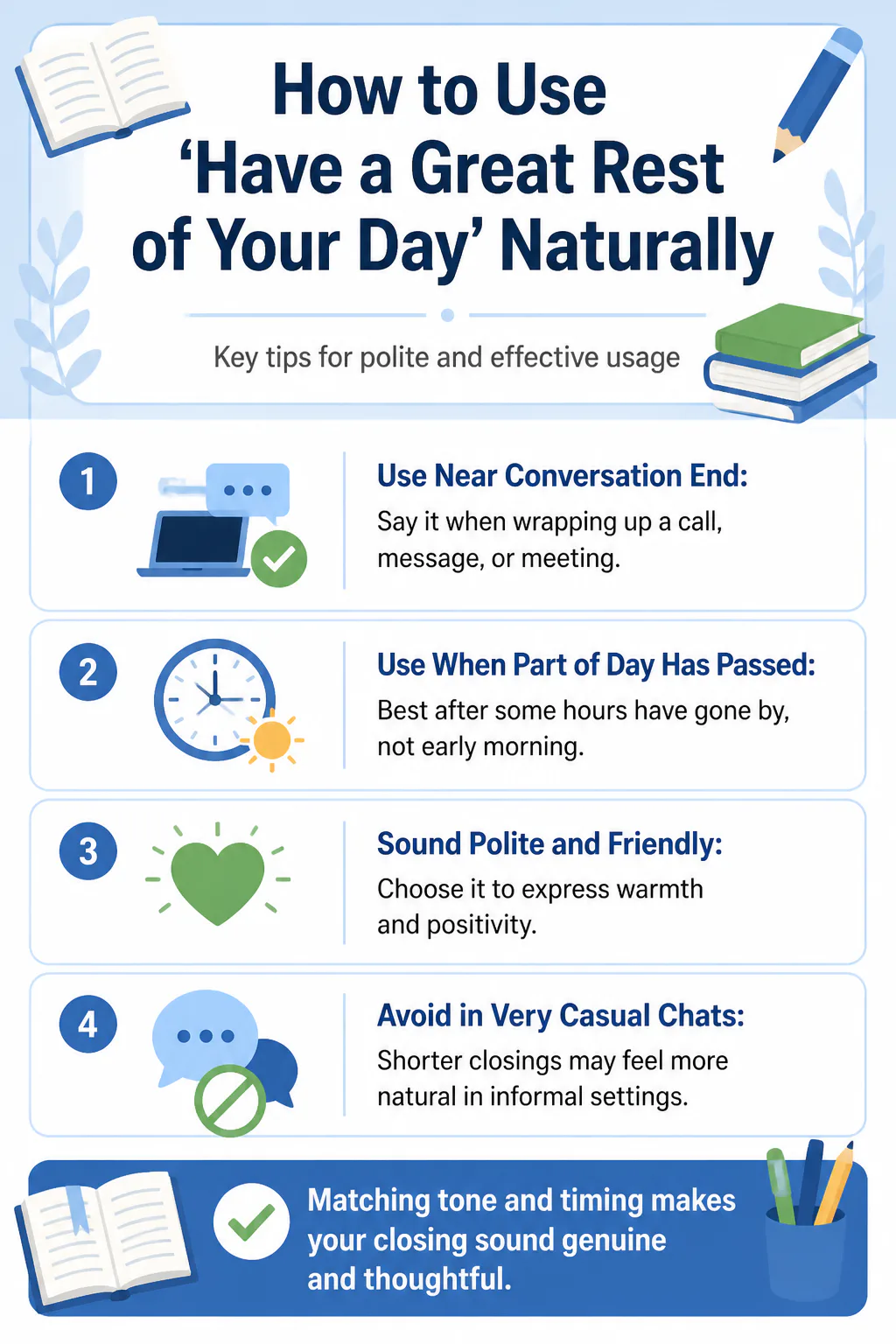
To use the phrase naturally, keep these points in mind:
- Use it near the end of a conversation or message.
- Use it when some part of the day is already over.
- Choose it when you want to sound polite, friendly, and positive.
- Avoid it if a shorter closing would sound smoother in a very casual exchange.
When and How to Use This Phrase
Best settings
This phrase works well in informal to semi-formal settings. You can use it in office discussions, business calls, formal conversations, and customer service because it sounds courteous without being cold. It is especially useful when you want a closing line that feels kind but still professional.
It is less necessary with very close friends or family, where people often choose shorter, more natural goodbyes. In those cases, plain endings such as “see you,” “talk later,” or “take care” may sound more relaxed.
How to place it
Use the phrase at the end of a sentence or message, usually after thanks or a closing remark. Pairing it with appreciation makes it sound especially natural. If you are writing, keep the rest of the message simple so the sign-off does not feel overly formal.
Examples of Usage in Conversation and Writing
Spoken examples
- After a phone call: “Thanks for your time today. Have a great rest of your day.”
- At the end of a meeting: “That answers my question. Have a great rest of your day, everyone.”
- In customer service: “I am glad I could help. Have a great rest of your day.”
- In an office chat: “I will send that over this afternoon. Have a great rest of your day.”
Written examples
- Email closing: “Thank you for the update. Have a great rest of your day.”
- Message to a colleague: “I received the file. Have a great rest of your day.”
- Reply to a client: “Please let me know if you need anything else. Have a great rest of your day.”
- Short note after support: “We appreciate your patience. Have a great rest of your day.”
What makes these sound natural
In each example, the phrase comes after a complete thought such as thanks, confirmation, or closure. That makes it feel like a genuine sign-off rather than a random sentence. The same pattern appears in many polite expressions, including have a safe trip, where the wish follows a clear context.
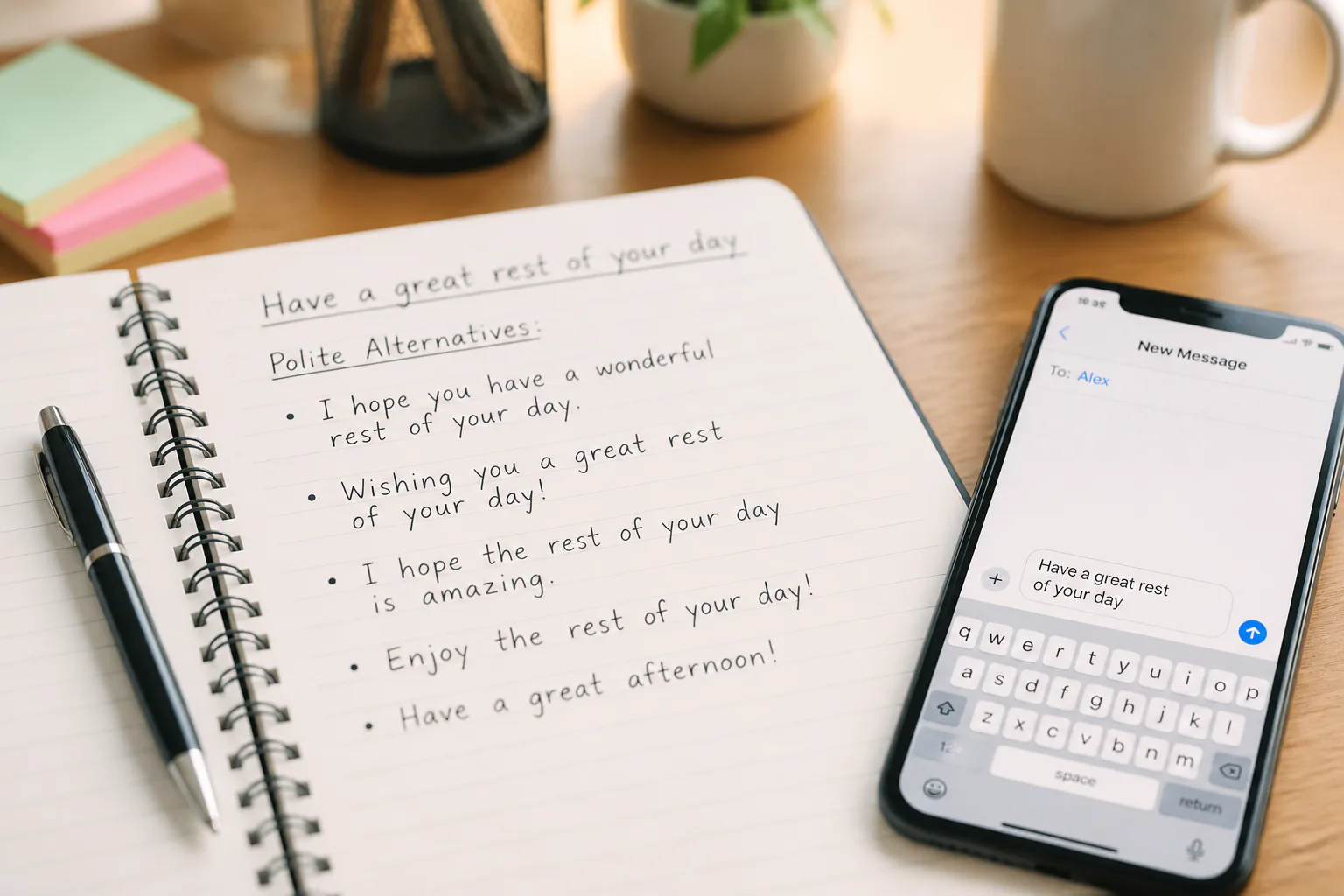
Polite Alternatives
Shorter options
- Have a good rest of your day
- Enjoy the rest of your day
- Have a good day
- Have a great day
- Take care
More formal choices
- It was a pleasure speaking with you
- Thank you, and enjoy the rest of your day
- I hope the rest of your day goes well
- Wishing you a pleasant afternoon
How to choose the right one
If you want warmth, use “have a great rest of your day.” If you want simplicity, choose “have a good day” or “take care.” If you want a slightly gentler version, “have a good rest of your day” can sound a bit less strong than “great” while keeping the same meaning.
| Phrase | Tone | Best Use |
|---|---|---|
| Have a great rest of your day | Warm and polite | Calls, emails, customer interactions |
| Have a good rest of your day | Friendly and softer | Everyday semi-formal use |
| Have a great day | Bright and simple | Earlier in the day |
| Take care | Casual and kind | Friends, coworkers, quick messages |
Common Mistakes
Common mistakes
- The most common mistake is using the phrase too early in the day when “have a great day” would sound simpler.
- Another mistake is using it in a setting so casual that it feels heavier than the conversation itself.
- The phrase is correct, but it should match the mood of the exchange.
Some speakers also overuse long sign-offs in every email or message. If every note ends with the same extended phrase, it can start to feel routine rather than thoughtful. Variety helps your writing sound more natural.
Good etiquette
Use this phrase when you want to show courtesy without sounding overly stiff. It works best after helping someone, thanking them, or finishing a respectful conversation. If you are unsure, choose the version that matches your relationship with the listener: shorter for casual moments, fuller for more polished ones.
A good rule is this: make your closing sound like something a real person would actually say in that moment. If “have a great rest of your day” feels smooth, use it confidently. If it feels too long, a simpler alternative is often the better choice.
FAQs
Is “have a great rest of your day” grammatically correct?
Yes. It is grammatically correct and clearly means you wish someone well for the remaining part of their day.
Is the phrase formal or informal?
It is usually informal to semi-formal. It fits polite office communication, business calls, and customer service well.
Does “rest” mean sleep here?
No. In this phrase, “rest” means the part of the day that remains.
What is a shorter alternative?
Common shorter options include “have a good day,” “enjoy the rest of your day,” and “take care.”
Conclusion
“Have a great rest of your day” is a polite choice when part of the day has already passed and you want your closing to sound warm, natural, and considerate.