IT Was a Pleasure Meeting You: Meaning and Proper Usage
It was a pleasure meeting you means you enjoyed meeting someone and want to express that appreciation politely. It is a warm, respectful phrase that works in both professional and personal settings, especially at the end of a conversation, after a meeting, or in a follow-up email. People use it to leave a positive impression and show goodwill without sounding overly casual.
The phrase fits naturally after networking events, job interviews, business meetings, introductions, and social gatherings. It is close in meaning to “It was a pleasure to meet you,” which is also correct. The main point in both versions is the same: you are telling the other person that the interaction was positive and meaningful.
Meaning
Core meaning
This phrase is a polite way to say, “I enjoyed meeting you.” It signals appreciation, respect, and a friendly attitude after an introduction or first meeting. Because it sounds sincere and polished, it is common in professional communication as well as everyday social conversation.
The tone is usually warm, professional, and appreciative. It does not sound too formal, but it still carries more polish than a casual “nice meeting you.” That balance is what makes it so useful in work settings, especially when you want to build rapport.
What it communicates
When you say it, you are doing more than just ending a conversation. You are also showing the other person that the meeting mattered and that you value the interaction. In networking and business contexts, that small gesture can help strengthen a connection and leave a strong final impression.
This is one reason the phrase appears so often in follow-up notes. A closing line such as “It was a pleasure meeting you” pairs well with other polite expressions like looking forward to working with you when the relationship is expected to continue.
When it fits best
You normally use the phrase after you have already met the person. That can happen in person, over a video call, at the end of an interview, or in an email sent shortly afterward. The past tense “was” matters because it refers back to a meeting that has already happened.
Common situations include a first introduction, a conference conversation, a client meeting, or being introduced through a mutual contact. It can also work after a friendly social encounter if you want to sound thoughtful rather than casual.
Examples and close alternatives
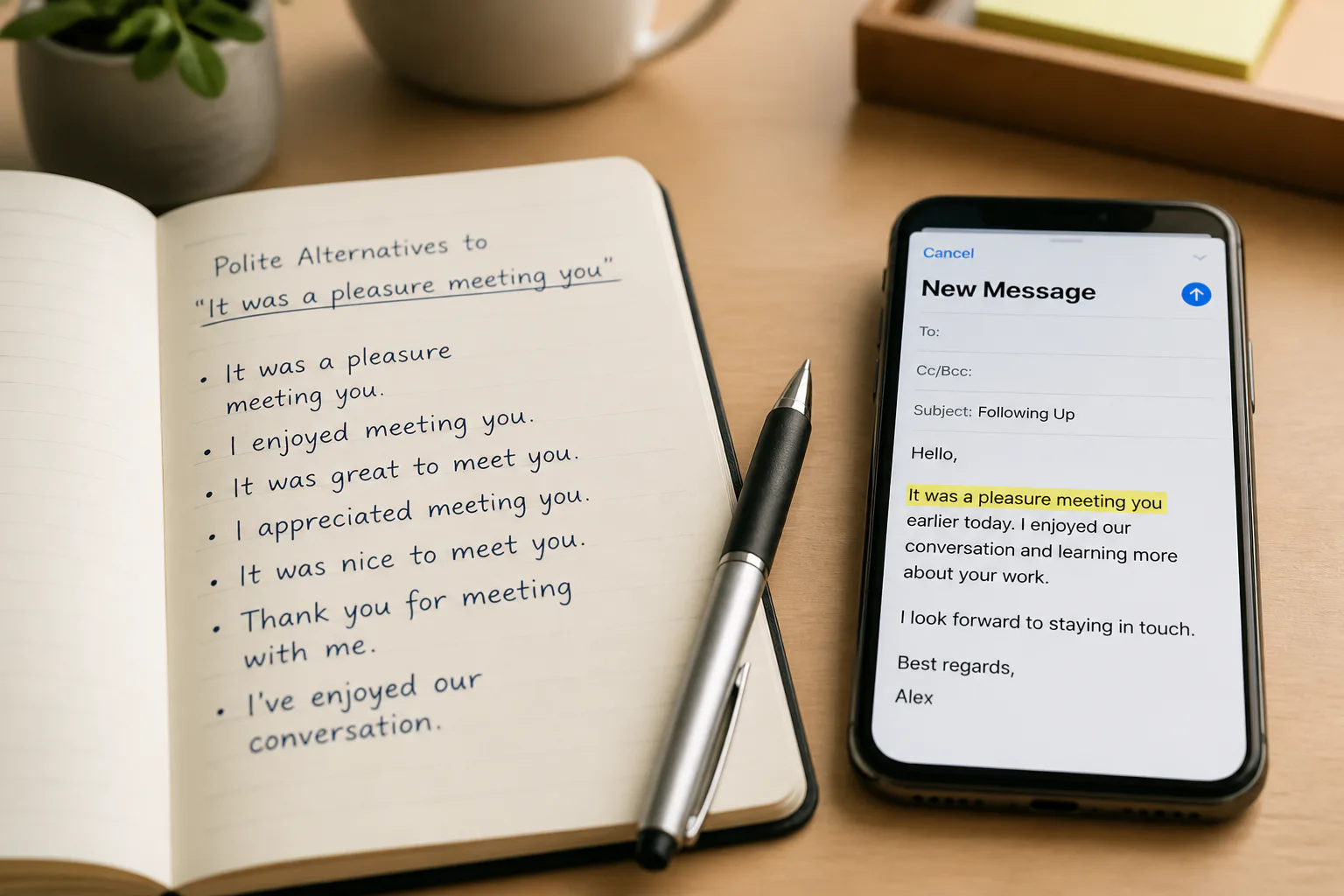
For example, you might say, “It was a pleasure meeting you at the conference today,” or “It was a pleasure meeting you and learning more about your team.” If you want a slightly different tone, you can use alternatives such as “I really enjoyed meeting you,” “It was wonderful meeting you,” or “I’m glad we had the chance to meet.”
Both “It was a pleasure meeting you” and “It was a pleasure to meet you” are correct when the article a is included. They are often interchangeable, and most readers will hear them the same way. If you want your message to sound natural, choose the version that feels most like your usual speaking style.
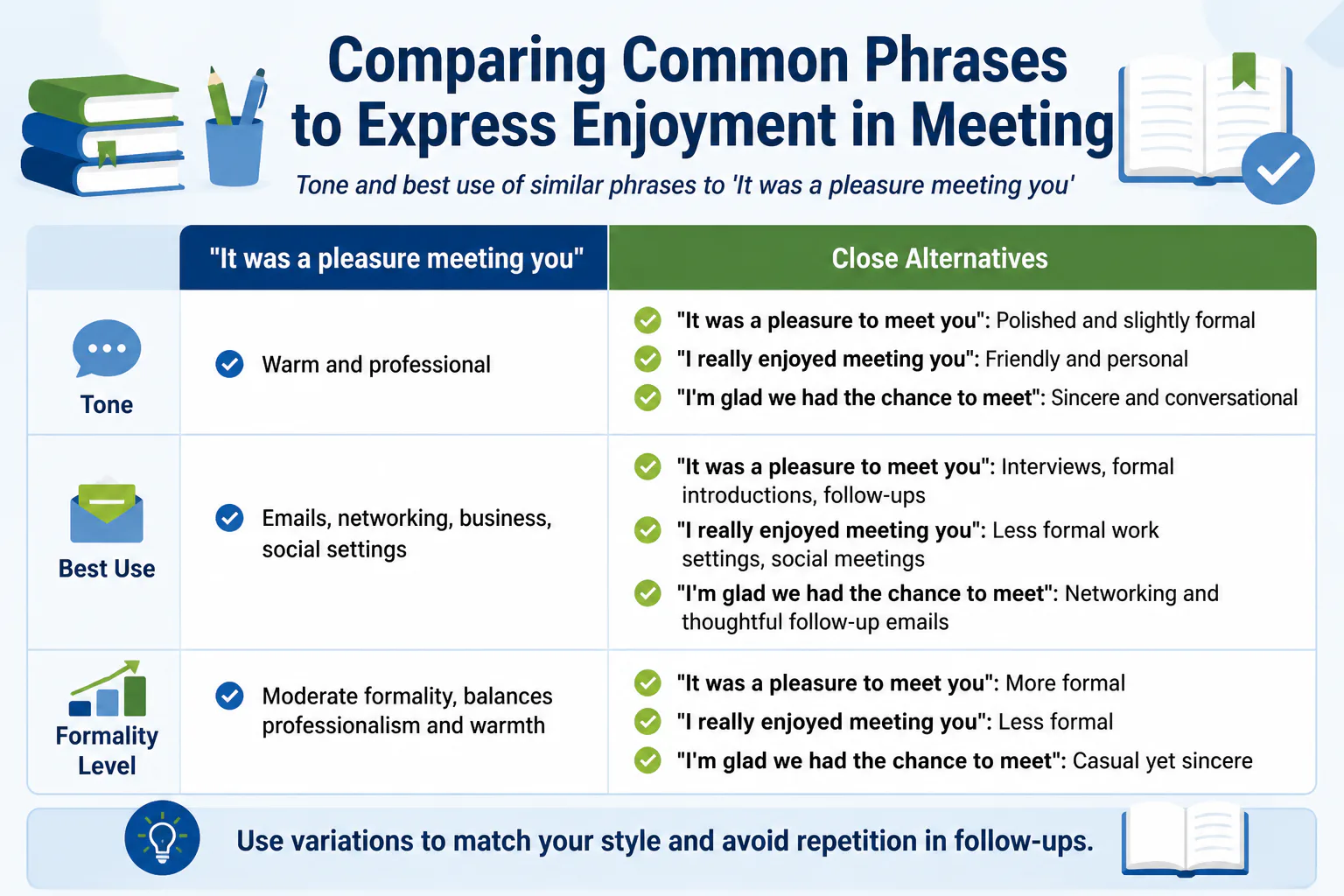
| Phrase | Tone | Best use |
|---|---|---|
| It was a pleasure meeting you | Warm and professional | Emails, networking, business, social settings |
| It was a pleasure to meet you | Polished and slightly formal | Interviews, formal introductions, follow-ups |
| I really enjoyed meeting you | Friendly and personal | Less formal work settings, social meetings |
| I’m glad we had the chance to meet | Sincere and conversational | Networking and thoughtful follow-up emails |
When and How to Use This Phrase
Best situations
- After a job interview
- At the end of a business meeting
- In a networking follow-up email
- After meeting a client or colleague for the first time
- At the end of a social gathering or introduction
How to say it well
- Use it near the end of your conversation or message.
- Add context if helpful: “It was a pleasure meeting you yesterday.”
- Keep the tone sincere rather than overly dramatic.
- Pair it with a next step in professional settings.
- Use the other person’s name if you want a more personal touch.
In email, the phrase often works best as part of a closing sentence rather than standing alone. If you are writing a follow-up, a calm opener like hope you are doing well can lead naturally into a thank-you and then this phrase near the end.
Examples
Email examples
- It was a pleasure meeting you today. Thank you for taking the time to speak with me.
- It was a pleasure meeting you at the networking event. I enjoyed learning more about your work.
- It was a pleasure meeting you yesterday, and I appreciate your insights on the project.
- It was a pleasure meeting you. I look forward to staying in touch.
Conversation examples
- It was a pleasure meeting you. Enjoy the rest of the event.
- It was a pleasure meeting you, Daniel. Thanks for the conversation.
- It was a pleasure meeting you. I am glad we had the chance to talk.
- It was a pleasure meeting you today. I hope our paths cross again soon.
Natural sign-offs
In professional writing, this phrase sounds strongest when it is connected to a clear purpose. For instance: “It was a pleasure meeting you, and thank you for letting me know about the next steps.” That structure works well because polite follow-up often combines appreciation with clarity, much like thank you for letting me know does in routine business emails.
Alternatives
More formal options
- It was a pleasure to meet you.
- It was wonderful meeting you.
- I appreciated the opportunity to meet you.
Friendly but professional options
- I really enjoyed meeting you.
- I’m glad we had the chance to meet.
- It was great connecting with you.
How tone changes
Small wording changes can make your message feel more formal, more conversational, or more personal. “It was wonderful meeting you” sounds warmer and a little more expressive, while “It was a pleasure to meet you” feels slightly more formal. “I really enjoyed meeting you” feels more relaxed and human, which can be useful in less rigid workplace settings.
Using variation also helps you avoid sounding repetitive. If you send many follow-up emails, rotating between a few natural alternatives keeps your writing polished without losing the same respectful meaning.
Common Mistakes to Avoid
Grammar and wording
One common mistake is dropping the article and writing “It was pleasure meeting you.” That is incorrect. You need a: “It was a pleasure meeting you” or “It was a pleasure to meet you.”
Timing and tone
Another mistake is using it before the meeting has actually happened. Because the phrase refers to a completed interaction, it belongs after the conversation or in a follow-up message. If the meeting is still happening, a present-tense phrase would make more sense.
Less natural variations
Be careful with “It was a pleasure to have met you.” Although it is grammatical, it is less common and can suggest the interaction is firmly finished or that you do not expect to meet again. In some contexts, it can sound oddly distant or even unsettling.
Overuse and context
Finally, avoid using the exact phrase too often with the same person. Repeating it in every message can feel mechanical rather than sincere. In cross-cultural communication, a direct but simple alternative such as “I enjoyed meeting you” can sometimes sound more natural if you want to keep the tone light and clear.
FAQs
Is “It was a pleasure meeting you” professional?
Yes. It is professional, polite, and widely used in interviews, meetings, networking, and follow-up emails.
Is “It was a pleasure meeting you” correct grammar?
Yes. It is grammatically correct, as is “It was a pleasure to meet you.” The key is to include the article “a.”
Which is better: “meeting you” or “to meet you”?
Both are correct and usually interchangeable. “Meeting you” can sound a bit more conversational, while “to meet you” can sound slightly more formal.
Can I use this phrase in a social setting?
Yes. The phrase works in both professional and informal situations, especially when you want to sound thoughtful and respectful.
Conclusion
“It was a pleasure meeting you” is a simple phrase that helps you sound polite, sincere, and professional when closing a conversation or follow-up message.