
Thinking of You Hope You’re Feeling Better: Meaning, Tone, and When to Say IT
The phrase thinking of you hope you’re feeling better is a caring way to tell someone they are on your mind and that you want them to recover, feel calmer, or get through a hard time. It combines emotional presence with a gentle wish for improvement, which is why it works so well in texts, emails, and everyday conversation. People use it when someone is sick, stressed, injured, sad, or simply having a rough period.
What makes this expression meaningful is that it does more than say “get well.” It tells the other person that their well-being matters to you. That small note of empathy can strengthen relationships and make support feel more personal.
Meaning of the Phrase
Core meaning
This phrase joins two ideas: “thinking of you” and “hope you’re feeling better.” The first part shows emotional attention. The second part expresses a wish that the person’s physical health or emotional state is improving.
Together, the phrase means: “You matter to me, I know you have been going through something difficult, and I sincerely hope you are doing better.” That is why it feels warmer than a plain get-well message. It offers comfort without demanding a response.
Emotional tone
The tone is gentle, polite, and supportive. It does not sound dramatic or overly formal, which makes it widely accepted in personal and professional settings. You can use it with a close friend, a family member, a coworker, or someone you do not know very deeply but still want to treat with care.
In many cases, the phrase also suggests patience. You are not pushing the person to recover quickly. You are simply acknowledging their situation and sending goodwill.
What it communicates
When you say this phrase, you usually communicate several things at once:
- You remember what the person is going through.
- You care about their comfort and well-being.
- You want to offer encouragement without being intrusive.
- You are keeping the message kind, respectful, and easy to receive.
That balance matters. A supportive message should feel sincere, not performative. In the same way that phrases like hope you’re doing well carry social warmth, this phrase adds a stronger note of empathy because it responds to difficulty rather than ordinary daily life.
How context shapes the meaning
The exact meaning shifts slightly depending on the situation. If someone has the flu, it points to physical recovery. If someone has been anxious, overwhelmed, or grieving a setback, it speaks more to emotional healing.
That flexibility is one reason the phrase is so useful. It fits many situations without sounding vague, as long as the other person knows you are responding to something real in their life.
Practical examples
Here are a few natural ways the phrase can sound in real communication. You might say, “Hey, you’ve been on my mind a lot lately. I hope you’re feeling better.” Or, if you want a softer tone, “Just wanted to check in and say I’m thinking of you and hope you’re feeling better.”
You can also make it broader when the situation is emotional rather than medical: “I’ve been thinking of you this week and hope things are getting a little easier.” That keeps the same caring structure while matching the person’s experience more closely.
How to sound more empathetic
The phrase works best when it sounds human rather than copied. A short detail can help, such as mentioning the person’s recovery, a recent difficult week, or the fact that you wanted to reach out. If you need a more neutral wellness line for everyday communication, expressions like hope you are doing well messages fit lighter situations better.
Keep your wording simple. Do not overexplain, and do not make the message about your own worry. The goal is to let the other person feel seen, supported, and not pressured.
When and Why to Use This Phrase
Appropriate situations
Use this phrase when someone is ill, recovering from an injury, feeling emotionally low, dealing with stress, or moving through a difficult period. It is appropriate when you want to acknowledge their situation kindly but do not want to say too much.
It also works well in professional communication. A short note to a colleague or client can sound compassionate and respectful without becoming too personal. That is one reason this wording remains widely accepted in emails, texts, and face-to-face conversation.
Why it matters
- Small phrases of support often have a big emotional effect.
- They remind people they are not forgotten, which can be comforting during recovery or stress.
- Replies such as thanks for your concern often come naturally because the message feels thoughtful rather than forced.
Use it when you want to offer warmth, maintain connection, and show good manners. In short, it helps you sound caring without crossing personal boundaries.
Examples of Using the Phrase in Messages
Personal messages
- “Hey, you’ve been on my mind a lot lately. I hope you’re feeling better.”
- “Just wanted to let you know I’m thinking of you and hope you’re having a wonderful day.”
- “Thinking of you and hoping each day feels a little easier.”
- “I’ve been thinking of you this week and hope you’re feeling better soon.”
Professional messages
- “I just wanted to say I am thinking of you and hope you’re feeling better.”
- “Wishing you a smooth recovery. I hope you are feeling better each day.”
- “Please take care of yourself. We are thinking of you and hope you’re feeling better.”
Alternative wording
- “Wishing you a speedy recovery.”
- “Get well soon.”
- “Sending healing thoughts your way.”
- “Thinking of you during your recovery.”
These alternatives can sound warmer or more specific depending on the relationship. If you want the message to feel less repetitive, changing the wording while keeping the same caring intent is a good choice.
Tips for Writing Empathetic Get Well Messages
What to include
- Acknowledge the person: mention that they have been on your mind.
- Wish them comfort: say you hope they are feeling better or recovering well.
- Keep it simple: short messages often feel more sincere than long speeches.
- Match the situation: use recovery language for illness and gentler support language for stress or sadness.
What to avoid
- Do not demand updates if the person may be tired or overwhelmed.
- Do not minimize their experience with lines that sound dismissive.
- Do not make the message about your own discomfort.
- Do not use humor unless you know the person would welcome it.
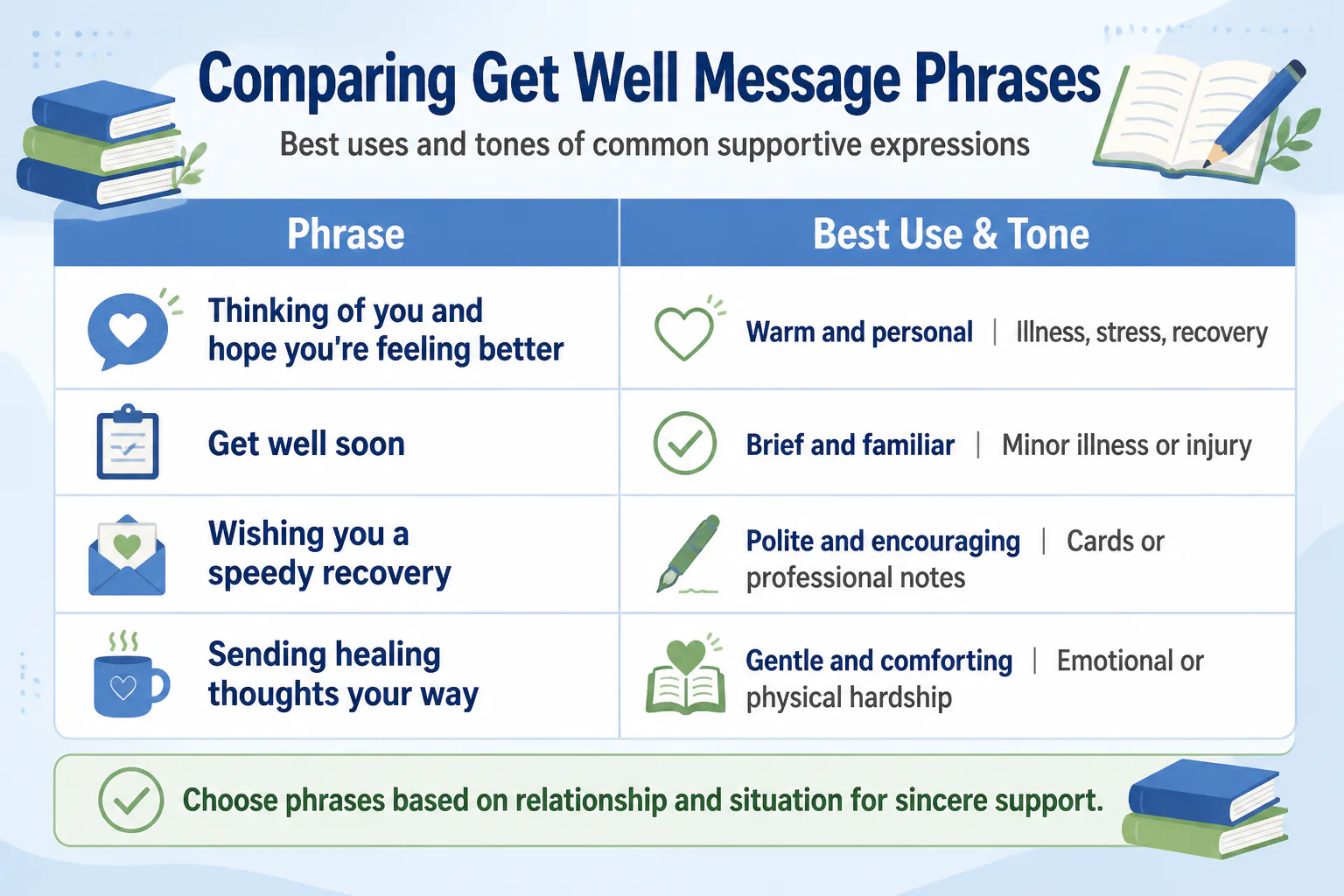
Quick comparison
| Phrase | Best use | Tone |
|---|---|---|
| Thinking of you and hope you’re feeling better | Illness, stress, recovery | Warm and personal |
| Get well soon | Minor illness or injury | Brief and familiar |
| Wishing you a speedy recovery | Cards or professional notes | Polite and encouraging |
| Sending healing thoughts your way | Emotional or physical hardship | Gentle and comforting |
FAQs
Is this phrase only for illness?
No. It also fits emotional strain, stress, sadness, or any difficult period when you want to express care and support.
Is it appropriate at work?
Yes. It is polite, respectful, and compassionate, which makes it suitable for professional messages when a coworker or client is going through a hard time.
Does “thinking of you” sound romantic?
Not by itself. In most contexts, it simply means you care and the person has been on your mind. Tone and relationship determine whether it feels friendly, familial, or romantic.
Should I use an alternative instead?
Use an alternative if you want the message to feel more personal or better matched to the situation. The best wording is the one that sounds sincere and fits your relationship with the person.
Conclusion
This phrase is useful because it lets you show care in a simple, respectful way when someone is having a hard time.