

Rest in Peace Synonym: Respectful Alternatives and Usage
A rest in peace synonym can help you express sympathy in a way that feels more personal, gentle, or appropriate to the moment. While “rest in peace” remains a widely recognized and respectful phrase, many people prefer alternatives that better fit a sympathy card, obituary, memorial engraving, or tribute. The key is choosing words that honor the person and match the beliefs, tone, and relationship involved.
Common Synonyms for ‘Rest in Peace’
Choose classic memorial phrases
- In loving memory. A timeless phrase for obituaries, memorial cards, and engraved tributes. It does not directly address the deceased, so it feels formal and universally appropriate. Example: “In loving memory of a cherished father and friend.”
- Gone but never forgotten. A warm expression that emphasizes lasting remembrance. It fits sympathy messages and social tributes especially well. Example: “Gone but never forgotten; your kindness remains with us.”
- Forever in our hearts. Personal and affectionate, this phrase works well when you want to focus on emotional closeness. It is common in cards, captions, and memorial keepsakes. Example: “Forever in our hearts, always loved.”
- You will be deeply missed. Best when speaking directly about loss and absence. This phrase is especially suitable for condolences to family, coworkers, or close friends. Example: “You will be deeply missed by everyone who knew you.”
Use gentle modern alternatives
- Rest easy. A softer, more modern alternative that feels warmer and less formal than “rest in peace.” It suits personal notes and heartfelt messages where a simple tone feels right. Example: “Rest easy, dear friend.”
- May you be at peace. Calm and compassionate, this phrase can be used in both secular and spiritual settings. It expresses a wish for peace without sounding too formal. Example: “May you be at peace, and may your loved ones find comfort.”
- May your soul rest in peace. A more personal, faith-based variation of the classic phrase. It works best when the family or deceased held spiritual beliefs. Example: “May your soul rest in peace and your memory live on.”
Pick spiritual expressions carefully
- May you find eternal peace. Suitable for spiritual cards, obituaries, and memorial services. It expresses hope for lasting peace beyond life and carries a thoughtful, reflective tone. Example: “May you find eternal peace and everlasting rest.”
- Sleep in heavenly peace. A distinctly spiritual phrase often used when religious belief is central to the family or ceremony. Because it is faith-specific, use it only when that tone is welcome. Example: “Sleep in heavenly peace, beloved child of God.”
- Rest with the angels. Tender and comforting, this is often used in religious condolences, especially for someone seen as gentle or deeply loved. It can feel intimate, so it is best for families who openly use faith-based language. Example: “May she rest with the angels.”
Honor a life of impact
- Rest in power. This alternative is often used for activists, public figures, or people who made a significant impact. It does not simply mourn the loss; it honors strength, purpose, and legacy. Example: “Rest in power; your voice changed lives.”
- Your legacy lives on. Appropriate when you want to emphasize achievements, influence, or the values a person leaves behind. It fits speeches, obituaries, and public remembrance. Example: “Your legacy lives on in the people you inspired.”
Match the phrase to the setting
Not every alternative works equally well in every setting. A short epitaph often needs something concise like “In loving memory” or “Forever in our hearts,” while a sympathy card allows fuller expressions of comfort. If you want more phrasing ideas for memorial messages, these beautiful ways to say rest in peace can help you compare tone more closely.
| Phrase | Tone | Best Use |
|---|---|---|
| In loving memory | Formal, timeless | Obituaries, engravings, memorial cards |
| Rest easy | Warm, gentle | Personal notes, messages, tributes |
| Forever in our hearts | Affectionate, personal | Family tributes, keepsakes, captions |
| May you find eternal peace | Spiritual, reflective | Services, obituaries, faith-based cards |
| Rest with the angels | Religious, tender | Condolences for religious families |
| Rest in power | Honoring, strong | Activists, leaders, public figures |
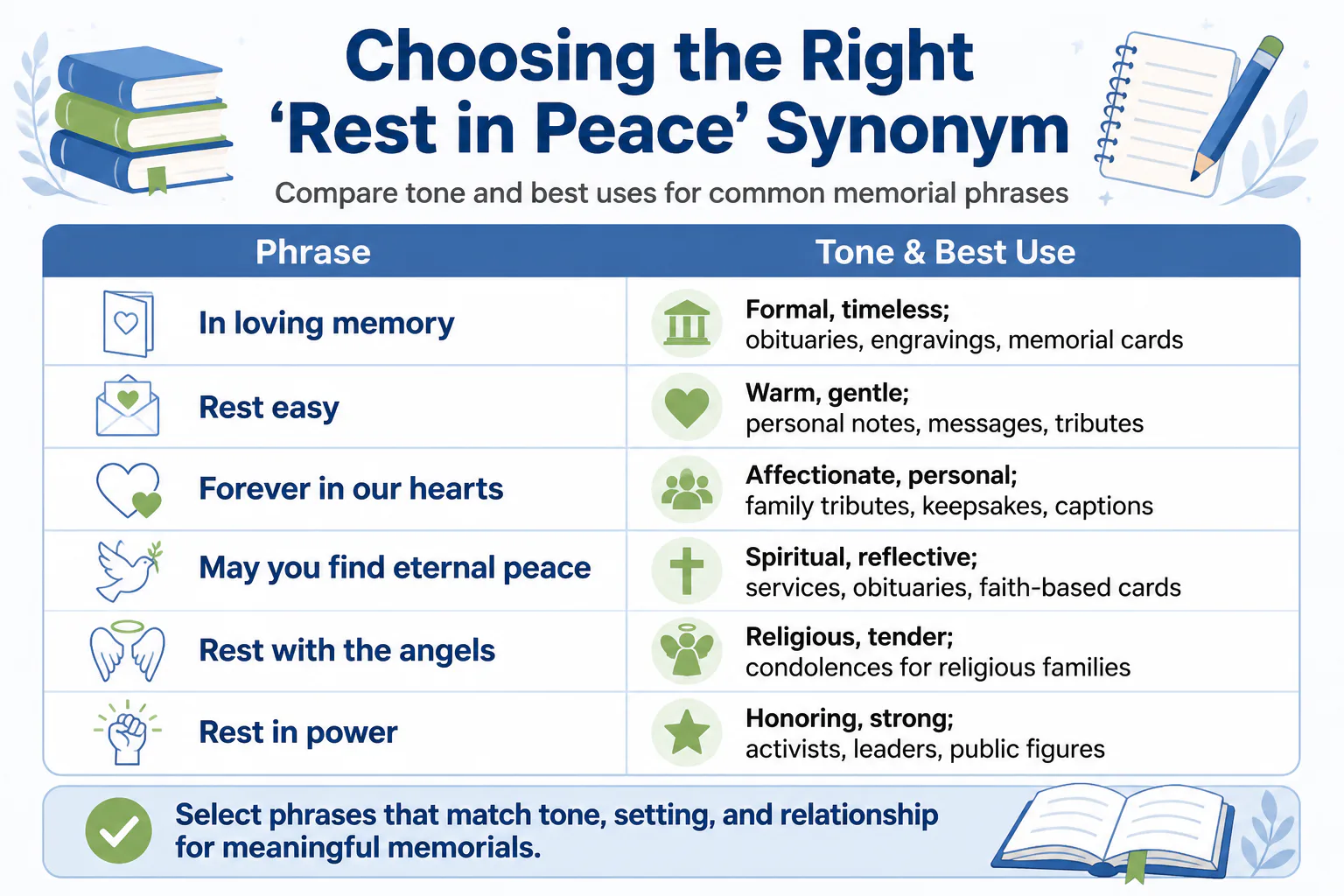
Usage Context
Consider beliefs and culture
Synonyms for “rest in peace” vary in tone from poetic and personal to spiritual and religious. Before choosing one, think about the deceased person’s beliefs, the family’s culture, and the setting in which the words will appear. Phrases like “Sleep in heavenly peace” or “Rest with the angels” can be comforting, but only when that faith-centered language reflects the family’s values.
Adjust formality to the moment
Formal memorials usually call for restrained wording such as “In loving memory” or “May you find eternal peace.” More personal messages can sound warmer with phrases like “Rest easy” or “Forever in our hearts.” If you are comparing a few options before writing, it helps to review what to say instead in order to match tone to the occasion.
Think about your relationship
A public tribute often works best with dignified, widely understood language. A private note to someone you knew well can be more intimate, such as “You will be deeply missed” or “I will always remember them with love and fondness.” The closer your relationship, the more natural it is to choose words that sound personal rather than ceremonial.
Examples of Usage in Condolences and Epitaphs
Write sympathy card messages
- “I am so sorry for your loss. May you be at peace.”
- “My deepest heartfelt condolences to you and your family.”
- “You will be deeply missed and lovingly remembered.”
- “I will always remember them with love and fondness.”
- “Gone but never forgotten.”
Create epitaph-style lines
- “In loving memory.”
- “Forever in our hearts.”
- “May you find eternal peace.”
- “Rest easy.”
- “May your soul rest in peace.”
Shape public memorial tributes
For public remembrance, clarity and dignity matter most. If the person was known for service, leadership, or activism, “Rest in power” can be more fitting than the traditional phrase because it honors both loss and impact. You can also compare a few rest in peace other term options before posting a tribute or writing a program note.
- “Rest in power; your work and courage will not be forgotten.”
- “Forever in our hearts, always remembered with gratitude.”
- “May you find eternal peace, and may your loved ones find strength.”
- “You will be deeply missed by all whose lives you touched.”
FAQs
What is a good synonym for rest in peace?
Good choices include “In loving memory,” “Rest easy,” “Forever in our hearts,” and “Gone but never forgotten.” The best one depends on whether you want the tone to feel formal, personal, spiritual, or modern.
Is rest easy the same as rest in peace?
It carries a similar meaning, but the tone is softer and less formal. “Rest easy” often feels warmer and more personal than the traditional expression.
When should I use rest in power?
Use it for someone whose life symbolized influence, activism, leadership, or meaningful public impact. It is less common in traditional family condolences unless that stronger tone suits the person being honored.
Are religious alternatives always appropriate?
No. Phrases such as “Sleep in heavenly peace” and “Rest with the angels” should be used only when the deceased or family hold beliefs that make those expressions welcome and comforting.
Conclusion
Choosing the right rest in peace synonym helps you match your message to the person, the family, and the moment with more care.

Related Posts

30 Other Ways to Say “Thank You” (With Examples)

ONG Meaning in Text: What Does ONG Stand For?