Enjoy Your Weekend: Meaning and Polite Usage
Enjoy your weekend is a polite, friendly phrase used to wish someone happiness, rest, or fun during their days off. People often say it at the end of a conversation on Friday, before a holiday, or anytime the weekend is about to begin. It works well in both professional and casual English, which is why it appears so often in emails, meetings, text messages, and everyday goodbyes.
The phrase sounds natural because it does two things at once: it expresses goodwill and gently closes the conversation. In simple terms, you are telling the other person, “I hope your weekend is pleasant.” You can use it on its own or choose a close variation if you want your message to sound warmer, more cheerful, or more personal.
What Does ‘Enjoy Your Weekend’ Mean?
Literal meaning
Literally, the phrase means “take pleasure in your weekend.” The key word enjoy means to experience joy, satisfaction, or pleasure. So when you tell someone to enjoy their weekend, you are wishing them a good experience during their time away from work, school, or routine duties.
It is not a command in a strict sense. In real conversation, it functions as a warm wish. That is why it sounds kind rather than forceful.
Implied meaning
The implied meaning is often broader than just “have fun.” Depending on the situation, it can mean “rest well,” “take care,” “I hope you get a break,” or “I hope something nice happens for you.” In a busy workplace, it can even carry a sense of relief at the end of a stressful week.
Because of that, the phrase fits many moods. It can sound upbeat, supportive, polite, or caring without becoming too personal.
Why people say it
People use this expression because it is simple, safe, and appropriate in many settings. It is especially common when ending meetings, saying goodbye to coworkers, or closing a message before the weekend begins. In many cases, it signals the end of the exchange in a pleasant way.
If you want a slightly different tone, English offers many similar farewells. Some speakers prefer have a great weekend when they want the message to sound a little brighter and more energetic.
Professional and casual use
One reason this phrase is so useful is that it sits comfortably between formal and informal language. It is professional enough for customer communication and office emails, but still natural with friends and family. That balance makes it one of the easiest weekend wishes to use correctly.
In professional settings, it sounds courteous and respectful. In casual settings, it sounds warm and easygoing. The exact feeling depends on your tone of voice, punctuation, and relationship with the listener.
How to use it naturally
To use the phrase naturally, place it near the end of a conversation or message. You do not usually build a long explanation around it. It works best as a closing line after the main point has already been made.
- Email close: “Thanks again for your help. Enjoy your weekend.”
- Office goodbye: “See you Monday. Enjoy your weekend.”
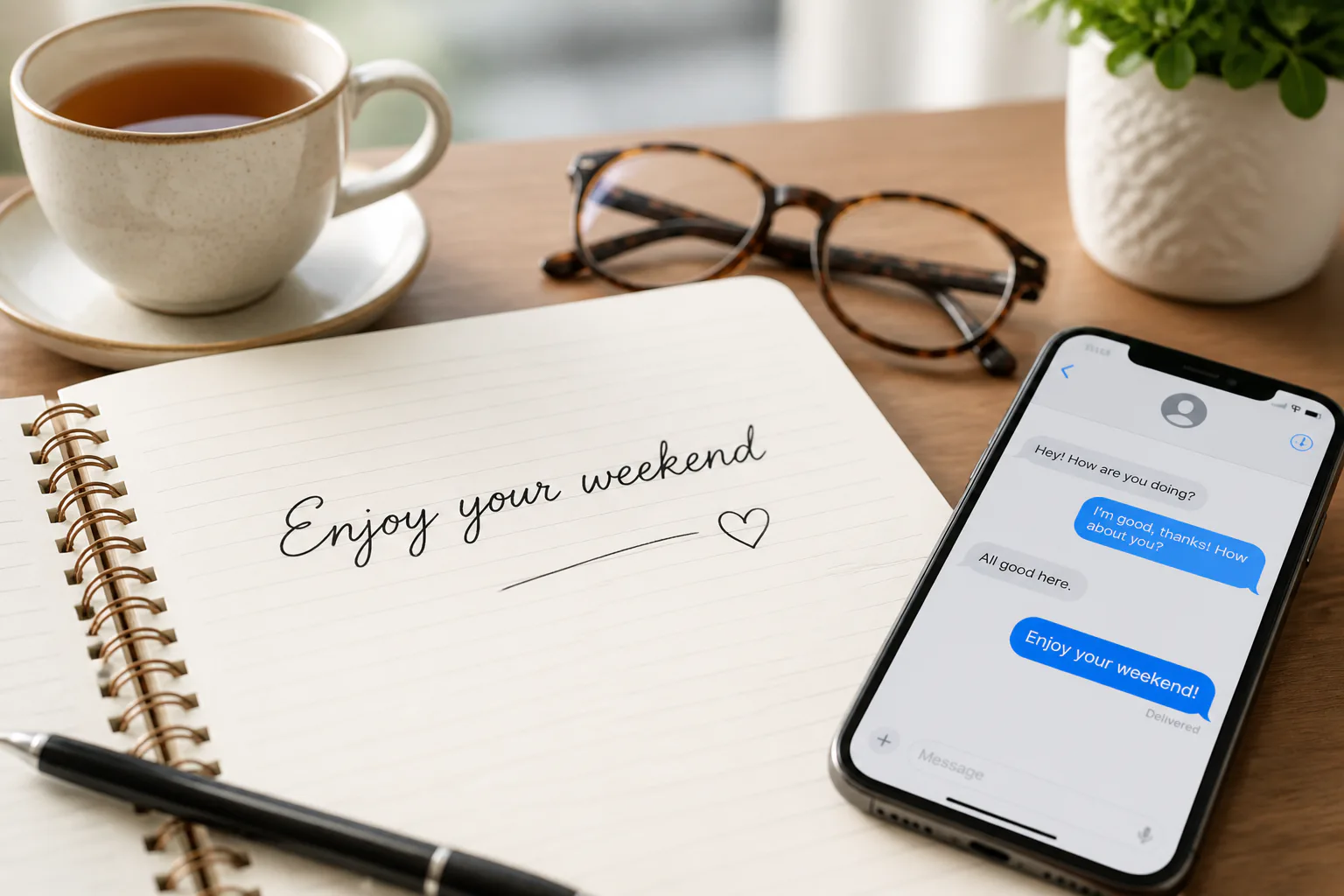
- Text message: “Hope everything goes well tomorrow. Enjoy your weekend!”
- Customer message: “We appreciate your business. Enjoy your weekend.”
Common tone differences
Small wording changes create slightly different tones. “Enjoy your weekend” is neutral and polite. “Have a wonderful weekend” sounds warmer, while “Have a relaxing weekend” sounds more caring, especially after a demanding week.
If you are unsure which version to use, the original phrase is a safe choice. It is widely accepted and rarely sounds out of place.
Common mistakes to avoid
The main mistake is using the phrase in the wrong moment. Saying it on a Monday or in the middle of the week sounds odd unless a holiday weekend is about to start. It also feels unnatural if the conversation is serious or upsetting, because cheerful closings do not fit every context.
- Do not use it too early in a conversation.
- Do not force it into sad or tense situations.
- Do not repeat the exact same closing in every message if variety would sound more genuine.
- Do not make it overly enthusiastic in formal situations unless that matches your workplace culture.
When and How to Use ‘Enjoy Your Weekend’
Best situations
Use the phrase when the weekend is about to begin and you want to end a conversation politely. It fits professional emails, short workplace chats, text messages, and casual goodbyes. Friday afternoon is the most common time, but it also works before a long weekend or holiday break.
Some speakers choose have a nice weekend when they want a softer and simpler farewell, especially in routine office or customer exchanges.
Matching the relationship
Your relationship with the other person affects the best wording. With coworkers, clients, or teachers, a neutral version is often best. With close friends or family, you can sound more personal by adding warmth or a specific wish.
| Context | Best tone | Example |
|---|---|---|
| Work email | Polite and professional | “Thanks for the update. Enjoy your weekend.” |
| Friend text | Warm and cheerful | “You worked hard this week. Enjoy your weekend!” |
| Customer message | Courteous and neutral | “We appreciate your time. Enjoy your weekend.” |
| After a stressful week | Calm and caring | “Take it easy and enjoy your weekend.” |
Alternatives
Useful options
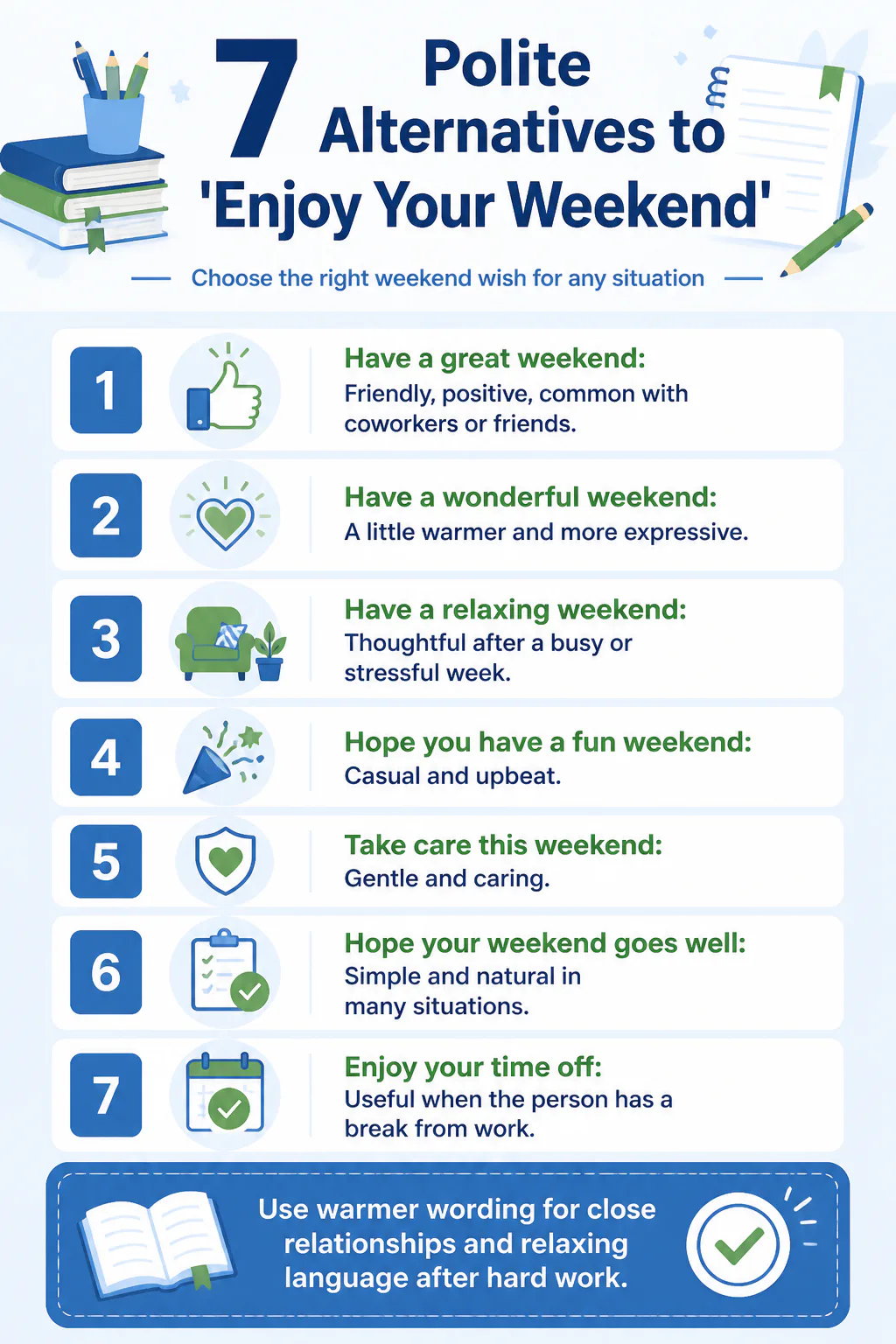
- Have a great weekend, friendly, positive, and common with coworkers or friends.
- Have a wonderful weekend, a little warmer and more expressive.
- Have a relaxing weekend, thoughtful after a busy or stressful week.
- Hope you have a fun weekend, casual and upbeat.
- Take care this weekend, gentle and caring.
- Hope your weekend goes well, simple and natural in many situations.
- Enjoy your time off, useful when the person has a break from work.
- See you Monday, have a good weekend, natural in workplace conversation.
How to choose the right one
- Use neutral wording for professional situations.
- Use warmer wording for close relationships.
- Choose relaxing or restful language after hard work.
- Choose fun or cheerful language for social plans.
If you want a warmer version without sounding too informal, have a wonderful weekend adds a little more feeling than the standard phrase.
Examples in Everyday Conversation
Workplace examples
- “Thanks for finishing that report. Enjoy your weekend.”
- “I will review the file on Monday. Enjoy your weekend.”
- “Great meeting today. Have a relaxing weekend.”
Casual examples
- “It was nice seeing you. Enjoy your weekend!”
- “Hope you get some rest. Have a good weekend.”
- “Have fun at the concert and enjoy your weekend.”
Short dialogues
- Coworker: “I sent the final version.” You: “Perfect, thanks. Enjoy your weekend.”
- Friend: “I am finally done with exams.” You: “That is great. Enjoy your weekend and get some rest.”
- Manager: “We can continue this next week.” You: “Sounds good. Have a great weekend.”
- Customer: “Thanks for your help today.” You: “You are very welcome. Enjoy your weekend.”
FAQs
Is “enjoy your weekend” professional?
Yes. It is polite, professional, and widely used in workplaces, customer communication, and office emails.
Is it better than “have a nice weekend”?
Neither phrase is better in every case. “Enjoy your weekend” sounds slightly more active and warm, while “have a nice weekend” sounds simple and neutral.
Can I say it in a text message?
Yes. It works very well in texts, especially on Fridays or before a holiday weekend.
How do I respond to “enjoy your weekend”?
A natural reply is “Thanks, you too,” or “Thank you, enjoy yours too.” In professional situations, brief replies are perfectly acceptable.
Conclusion
“Enjoy your weekend” is a dependable phrase because it is polite, friendly, and easy to use in both work and everyday life. Once you understand its tone and timing, you can use it confidently or choose a suitable alternative for the situation.