Have a Nice Weekend: Meaning and Proper Use
“Have a nice weekend” is a polite English phrase used to wish someone an enjoyable and relaxing weekend. People commonly say it at the end of a conversation, email, or message, especially on Fridays. It works in both casual and professional settings, which is why it is such a familiar part of everyday English.
The phrase sounds friendly, neutral, and safe. At the same time, tone matters: in some very formal business situations, it can sound a little casual, and if you repeat it too often, it can feel flat. Knowing when to use it, and how to vary it, helps you sound natural and thoughtful.
What Does ‘Have a Nice Weekend’ Mean?
Basic meaning
The phrase means I hope your weekend is pleasant. It is a goodwill expression, not a literal instruction. When you say it, you are offering a friendly wish for the other person to enjoy their time off, rest, or personal plans.
In everyday English, this expression is easy to understand and widely accepted. It does not suggest anything specific about what the person should do. It simply communicates warmth, politeness, and a positive closing tone.
Tone and intent
“Nice” gives the phrase a soft, pleasant feeling. Compared with “good,” it focuses more on comfort and enjoyment than on success or achievement. That is why “have a nice weekend” often sounds relaxed and socially smooth.
Still, it is a fairly neutral expression. If you use it every week with the same people, it can start to sound routine. In that case, changing the wording can make your message feel more personal, much like switching between have a great day and other simple closings depending on the situation.
Common examples
Here are a few natural spoken examples:
- “See you on Monday. Have a nice weekend!”
- “Thanks for your help today. Have a nice weekend.”
- “It was great talking with you. Have a nice weekend.”
It also works well in writing. You often see it at the end of short professional or personal messages.
- “Thanks again for the update. Have a nice weekend.”
- “I appreciate your time. Have a nice weekend.”
- “Looking forward to speaking next week. Have a nice weekend.”
How formal is it?
This phrase fits best in everyday communication, friendly office culture, customer service, and casual business exchanges. It is polite without sounding stiff. That makes it useful when you want to end a conversation warmly but simply.
In very formal business writing, though, some people prefer a more restrained closing. A phrase such as “wishing you a pleasant weekend” can sound more polished. If you are already choosing between close alternatives, you may also notice that have a great weekend feels slightly warmer and more energetic than “have a nice weekend.”
Why people use it so often
People use this phrase because it is safe, familiar, and kind. It works with coworkers, clients, neighbors, classmates, and friends. You do not need a close relationship with someone to say it naturally.
It also helps close an interaction smoothly. Instead of ending a message abruptly, it adds a small social touch that feels considerate and complete.
How to Use ‘Have a Nice Weekend’
Best situations
You usually say this near the end of the workweek, especially on Friday. It fits best as a closing line after the main conversation is finished. In speech, email, text messages, and work chat, it signals that the exchange is ending on a positive note.
Common situations include talking with a coworker before leaving work, ending a customer email, or finishing a message to someone you will not speak with again until next week. If the setting is relaxed, the phrase sounds natural and polite.
Simple usage tips
- Use it near the end of a conversation or message.
- Say it on Thursday or Friday, or before someone starts their weekend.
- Match the tone to the relationship and setting.
- Change the wording sometimes so it does not sound automatic.
A similar pattern appears in other friendly closings. For example, expressions such as good rest of your day serve the same social purpose: they end the exchange politely while showing basic friendliness.
Alternatives
Common alternatives
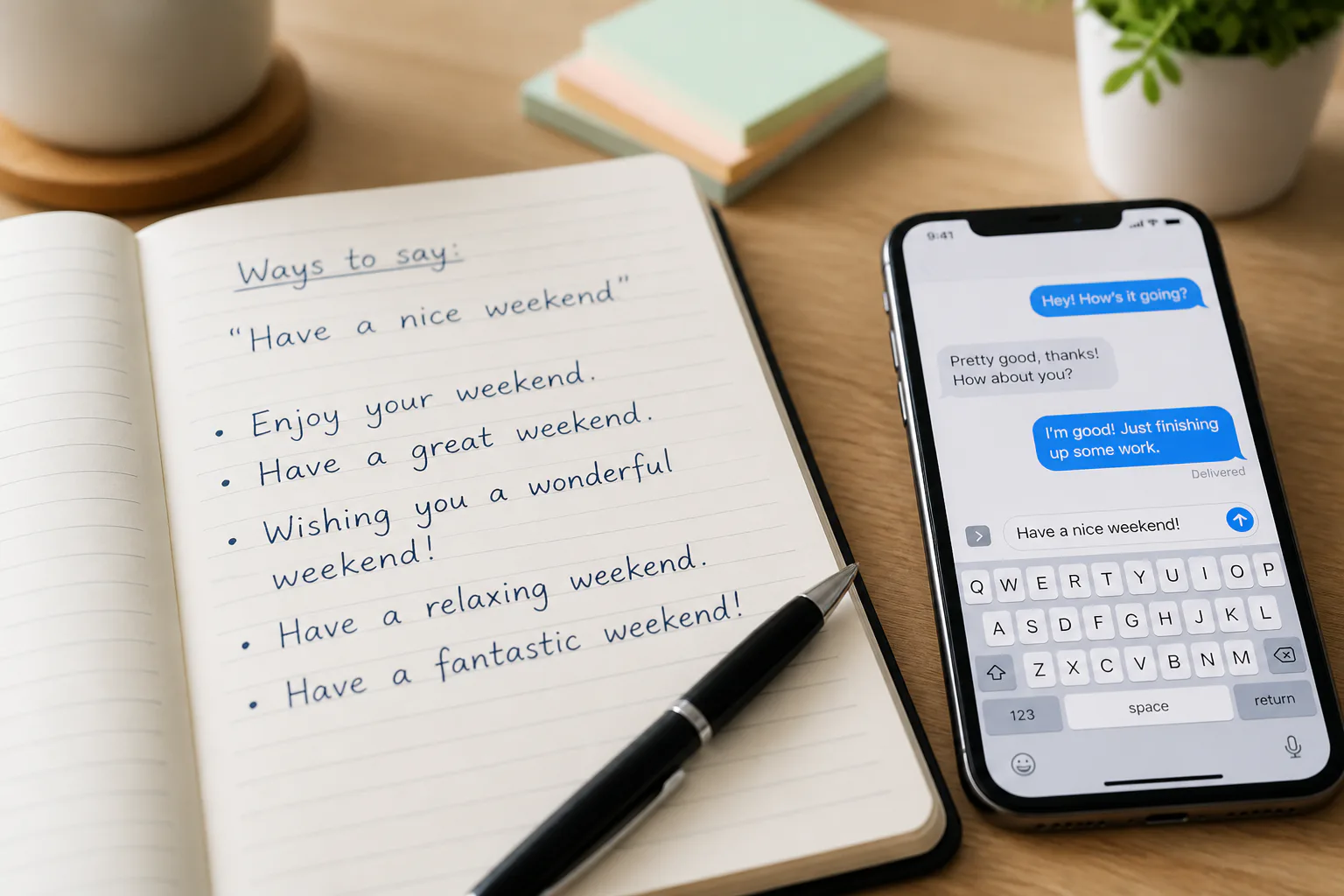
- Have a great weekend – warmer and more upbeat
- Enjoy your weekend – casual and natural
- Have a wonderful weekend – more enthusiastic and affectionate
- Wishing you a great weekend – polished and suitable in writing
- Have a pleasant weekend – more formal and restrained
- Have a good weekend – very common and close in meaning
Tone differences
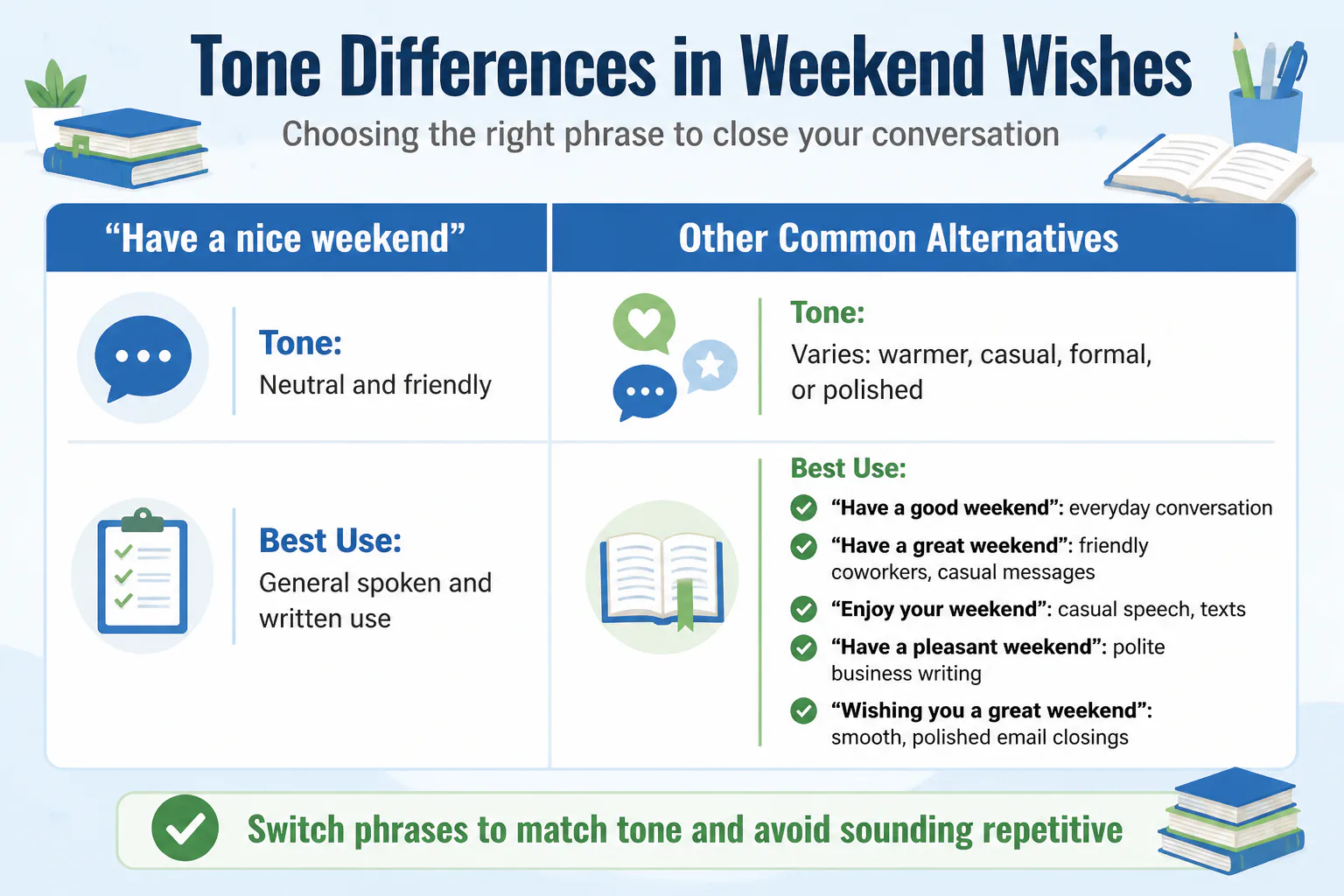
| Phrase | Tone | Best use |
|---|---|---|
| Have a nice weekend | Neutral and friendly | General spoken and written use |
| Have a good weekend | Natural and common | Everyday conversation |
| Have a great weekend | Warmer and more lively | Friendly coworkers and casual messages |
| Enjoy your weekend | Relaxed and direct | Casual speech and texts |
| Have a pleasant weekend | More formal | Polite business writing |
| Wishing you a great weekend | Smooth and polished | Email closings |
Which one should you choose?
- Choose “nice” if you want a safe, standard option.
- Choose “good” if you want something equally common and natural.
- Choose “great” or “wonderful” if you want more warmth.
- Choose “pleasant” or “wishing you a great weekend” in more formal writing.
US Cultural Notes
How it sounds in American English
In US English, this phrase is a normal part of polite small talk. It is common in offices, stores, schools, and service settings. People often say it even when they do not know each other well, because it is seen as courteous rather than overly personal.
American communication often values friendly closings in short interactions. Saying “have a nice weekend” helps maintain that tone. It shows social awareness and basic kindness without asking for a long reply.
What to watch for
The phrase is generally safe, but context still matters. In a very formal business exchange, it can sound a little casual, so a more polished variation may fit better. Also, repeating the exact same wording every Friday can make it feel automatic rather than sincere.
For that reason, many speakers switch between “nice,” “good,” “great,” and “wonderful” depending on mood and audience. Even a small change in adjective can make your closing sound warmer, more respectful, or more personal.
FAQs
Is “have a nice weekend” correct English?
Yes. It is a correct, natural, and widely used English expression. It is common in both speech and writing.
Is it formal or informal?
It is neutral to slightly informal. It works well in casual and professional contexts, but it may be too casual for very formal business writing.
What is the difference between “have a nice weekend” and “have a good weekend”?
They are often interchangeable. “Nice” leans toward pleasantness and enjoyment, while “good” can suggest a broader positive outcome.
Can I use it in an email?
Yes. It is very common at the end of emails, especially on Fridays. In formal emails, you may prefer a variation such as “wishing you a pleasant weekend.”
Conclusion
“Have a nice weekend” is a simple, polite closing that works well in everyday English, especially when you match it to the setting and vary it when needed.

Related Posts
35 Other Ways to Say “However” (With Examples)
35 Other Ways to Say “You’re Welcome” (With Examples)